Samsung Galaxy Z Fold 8 Wide Leaks: A Strategic Pivot to Larger Foldables?
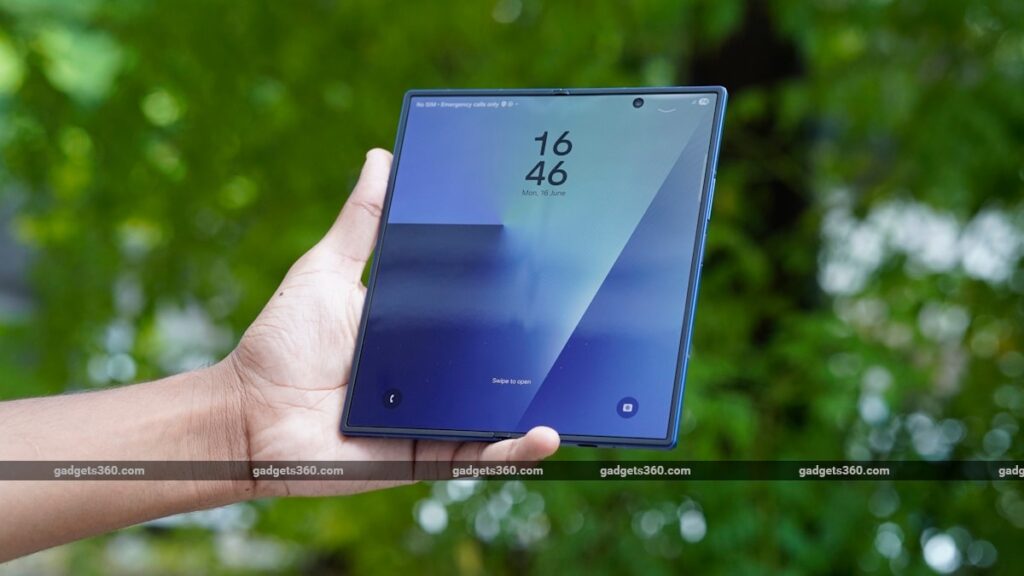
Table of Contents
The Paper Trail: Samsung’s Foldable Strategy Leaks in Singapore
Regulatory databases are often the most reliable crystal balls in the tech industry. When a device hits a certification portal, it is rarely a fluke; it is a signal that mass production is nearing completion and regional distribution is being mapped. The latest signal comes from Singapore’s Infocomm Media Development Authority (IMDA), where a new device bearing the model number SM-F971B has appeared, widely identified by industry insiders as the Samsung Galaxy Z Fold 8 Wide.
This isn’t just another incremental update to the Fold series. The “Wide” moniker suggests a fundamental shift in how Samsung approaches the aspect ratio of its inner and outer displays. For years, Samsung has clung to a narrower cover screen that some users find cramped, often likened to a remote control. With the emergence of the Z Fold 8 Wide, Samsung appears to be responding to the pressure from Chinese competitors like Honor and Huawei, who have pushed the boundaries of “wide” foldables that feel more like standard smartphones when closed.
- Regulatory Confirmation: The SM-F971B has officially appeared in the IMDA database, confirming its existence.
- Connectivity Suite: Certification confirms support for 5G, NFC, Wi-Fi, Bluetooth, and Ultra-Wideband (UWB).
- Strategic Shift: The “Wide” branding suggests a redesigned aspect ratio to improve the cover screen experience.
- Broader Lineup: Leaks suggest a tiered approach for 2026, potentially including “Wide” and “Ultra” variants alongside the standard Fold 8 and Flip 8.
Breaking Down the IMDA Filing: What SM-F971B Tells Us
While regulatory filings are notoriously sparse on hardware specs—you won’t find RAM counts or processor clock speeds here—they provide a definitive blueprint of the device’s communication capabilities. The SM-F971B filing confirms that the Galaxy Z Fold 8 Wide will be a flagship-tier device in terms of connectivity. Specifically, the inclusion of Ultra-Wideband (UWB) is a critical detail.
UWB allows for precise spatial awareness, enabling the device to act as a digital key for cars or to find lost items via Samsung SmartTags with centimeter-level accuracy. The presence of 5G and NFC is standard, but the confirmation of these features in the Singaporean market indicates a global rollout strategy targeting high-density urban environments where these technologies are most utilized.
The Indian Connection: BIS Database Clues
The IMDA leak doesn’t exist in a vacuum. It corroborates earlier sightings on the Bureau of Indian Standards (BIS) database. In those filings, we saw a cluster of model numbers: SM-A857B and SM-F776B (likely the Z Flip 8 series), and more tellingly, SM-D642B and SM-F971B. The fact that Samsung is registering multiple “F” and “D” series models suggests a diversification of the Fold line. We are no longer looking at a single foldable; we are looking at a foldable ecosystem.
The Aspect Ratio War: Why “Wide” Matters
To understand why a “Wide” model is a big deal, we have to look at the current pain point of the Galaxy Z Fold series: the cover screen. Current iterations maintain a relatively narrow profile that requires a level of adaptation from the user. In contrast, competitors like the Honor Magic V3 have moved toward a more traditional smartphone width on the outer display, making the transition between “phone mode” and “tablet mode” far more seamless.
A Galaxy Z Fold 8 Wide would theoretically solve this by widening the chassis. This would likely result in:
- Better Typing Experience: A wider QWERTY layout on the cover screen, reducing typos.
- Improved Ergonomics: A device that feels less like a “slab” and more like a standard handset when closed.
- Larger Internal Canvas: A wider inner screen that pushes the device further into tablet territory, enhancing multitasking and the S-Pen experience.
What This Means for the Consumer
For the average user, this indicates that Samsung is finally moving away from a “one size fits all” foldable. If the rumors of a Z Fold 8, Z Fold 8 Wide, and Z Fold 8 Ultra hold true, Samsung is mirroring the strategy of its S-series smartphones. There will be a baseline model for the budget-conscious (or size-conscious) and a premium “Wide/Ultra” model for power users who prioritize screen real estate and productivity.
This diversification also suggests that Samsung is acknowledging a gap in the market. There is a specific demographic of users who want a foldable but find the current Fold too narrow to use as a primary phone. The “Wide” variant is a direct bid to capture this segment.
Technical Comparison: Expected Shifts
| Feature | Z Fold 8 (Standard) | Z Fold 8 Wide (Projected) |
|---|---|---|
| Cover Screen Ratio | Narrow/Tall | Standard Smartphone Width |
| Inner Display | Square-ish | Wider Aspect Ratio |
| Target Audience | Generalist/Compact focus | Power Users/Productivity |
| UWB Support | Standard | Confirmed (via IMDA) |
Industry Implications: The Counter-Attack
Samsung’s dominance in the foldable market is no longer uncontested. In China, foldables are evolving at a pace that dwarfs the global market. The push toward thinner profiles and wider covers is a direct response to the success of these regional players. By introducing a “Wide” variant, Samsung is effectively hedging its bets. They can keep the original Fold’s compact nature for those who like it while offering a more competitive alternative to those lured by the broader displays of the competition.
Furthermore, the mention of a potential “Ultra” model suggests that Samsung may be planning to integrate more aggressive hardware—perhaps under-display cameras (UDC) that are truly invisible or a more robust integrated S-Pen slot—to justify a higher price point. This creates a luxury tier that allows Samsung to maintain its high margins while scaling the volume of its foldable sales.
Expert Perspective: The Engineering Challenge
Widening a foldable isn’t as simple as adding more glass. It changes the center of gravity and puts different stresses on the hinge mechanism. From an engineering standpoint, a wider device requires a more sophisticated hinge to ensure the screen doesn’t crease more prominently over time. Samsung has made strides with its “Flex Hinge,” but a wider canvas increases the surface area for potential failure points.
We expect Samsung to utilize a new generation of Ultra-Thin Glass (UTG) that can handle the increased tension of a wider fold. If the SM-F971B is indeed a wider chassis, we should look for updates regarding the thickness of the device. The goal is likely to maintain a slim profile while increasing the width—a difficult balancing act that will determine whether the Z Fold 8 Wide is a success or an ergonomic failure.
Frequently Asked Questions
What is the SM-F971B?
The SM-F971B is the model number for a Samsung device recently spotted on the Singaporean IMDA database. Based on industry leaks and naming conventions, it is believed to be the Samsung Galaxy Z Fold 8 Wide.
When will the Galaxy Z Fold 8 Wide be released?
While Samsung hasn’t officially confirmed a date, the company typically holds its Galaxy Unpacked event in July. Given the current regulatory filings, a July 2026 launch is the most probable window.
Will the Z Fold 8 Wide be more expensive than the standard Fold?
It is highly likely. Given the “Wide” branding and potential for larger screens and more materials, it would likely sit above the standard Z Fold 8 in the pricing hierarchy, similar to how the S-Ultra models sit above the base S-series.
Does the Z Fold 8 Wide support the S-Pen?
Although the IMDA filing doesn’t explicitly mention the S-Pen, the Z Fold series is built around S-Pen productivity. It is almost certain that the Wide model will support it, and there is speculation it may even feature a built-in slot.
What is the difference between a “Wide” and an “Ultra” foldable?
Based on current leaks, the “Wide” model focuses on the aspect ratio and screen dimensions of the cover and inner displays. An “Ultra” model would likely focus on top-tier specifications, such as a superior camera system, a larger battery, or advanced display technology (like LTPO 4.0).
Final Analysis: A Calculated Risk
The appearance of the Galaxy Z Fold 8 Wide on the IMDA database is more than a technicality; it’s a signal of intent. Samsung is moving away from the rigid design language of the first few Fold generations and is finally embracing a more flexible, user-driven approach to hardware. By diversifying the lineup, Samsung is attempting to solve the most common complaint about foldables: that they are either too narrow as phones or too bulky as tablets.
Whether the SM-F971B delivers a truly “natural” smartphone experience remains to be seen, but the move toward a wider form factor is the right strategic play. In a market where competition is no longer just about the hinge, but about the utility of the screen, Samsung’s pivot to a “Wide” variant could be the key to maintaining its lead in the foldable era.