SteamOS on Intel Handhelds: Can Valve Break AMD’s Grip on the Gaming Market?
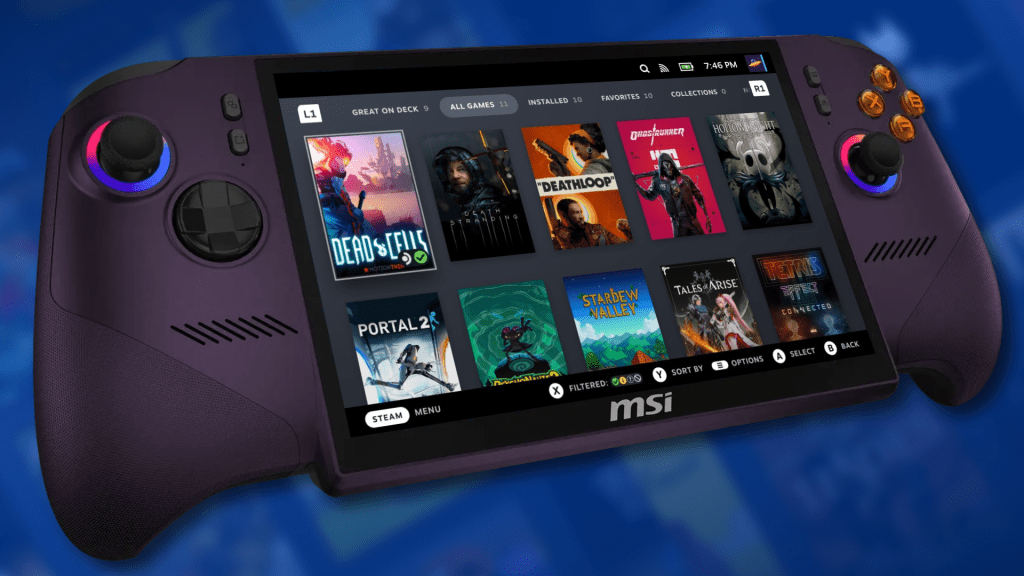
Table of Contents
The Handheld Pivot: Moving Beyond AMD
For the better part of three years, the handheld gaming PC market has been an AMD monoculture. From the original Steam Deck to the Asus ROG Ally and the Lenovo Legion Go, the hardware ecosystem has relied almost exclusively on AMD’s integrated graphics and Zen architecture. While Valve didn’t invent the handheld PC, they defined the user experience, creating a symbiotic relationship between hardware and the SteamOS environment.
That equilibrium is currently shifting. Intel, having struggled to gain a foothold with the first iteration of the MSI Claw, is pivoting toward the Arc G3 platform. More importantly, Valve appears to be actively preparing SteamOS for Intel-based silicon. This isn’t just a software update; it is a strategic move that could detach the handheld experience from AMD’s dominance and potentially sideline Windows 11 as the default OS for portable gaming.
- Intel Integration: Valve is testing SteamOS builds on Intel hardware, specifically focusing on the MSI Claw and upcoming Arc G3 (Panther Lake) devices.
- Performance Gap: Early beta builds on Lunar Lake show Windows 11 still leads in raw performance, contrary to the “Linux boost” typically seen on AMD hardware.
- Strategic Shift: The move toward Intel-compatible SteamOS reduces Valve’s reliance on a single chip vendor and pressures Microsoft’s handheld OS strategy.
- The Anti-Cheat Hurdle: Kernel-level anti-cheat remains the primary barrier preventing SteamOS from completely replacing Windows.
Decoding the Hardware: Lunar Lake to Panther Lake
To understand why this transition matters, we have to look at the silicon. The current Intel-powered handheld, the MSI Claw, launched with Core Ultra processors that faced criticism for inefficiency and driver instability. However, the landscape changes with Lunar Lake (Core Ultra Series 2) and the upcoming Panther Lake (Arc G3 platform).
Lunar Lake focuses heavily on power efficiency and AI integration, which are critical for handhelds where battery life is the primary pain point. The upcoming Panther Lake architecture, utilizing the Arc G3 graphics, is designed to compete directly with AMD’s Ryzen Z1 Extreme. At Computex, early demos of Arc G3-powered devices from Acer and OneXPlayer showed promising frame rates, though they were running a heavily modified Windows 11 interface with Xbox branding.
The technical challenge for Valve is that SteamOS is built on Arch Linux. While Linux drivers for Intel graphics are generally robust, the specific power-management profiles and controller mappings for handhelds are proprietary and complex. Recent reports from VideoCardz and ETAPrime indicate that beta builds for the MSI Claw are already in the wild, though they currently suffer from “shaky” controller inputs and imprecise hardware tuning.
The Performance Paradox: Linux vs. Windows
In the AMD ecosystem, the general rule of thumb is that SteamOS (via the Proton compatibility layer) often outperforms Windows 11 on the same hardware. This is due to the lower overhead of a Linux kernel compared to the background processes of a full Windows installation.
On the MSI Claw 8 AI+ (Lunar Lake), the trend is currently reversed. Early benchmarks show that games are running slightly slower on the SteamOS beta than on Windows 11. This is an expected result for beta software; Intel’s graphics drivers for Linux are not yet optimized for the specific TDP (Thermal Design Power) envelopes of handheld gaming. For SteamOS to be viable, Valve needs to optimize the Mesa drivers to ensure that the Arc G3 hardware isn’t being throttled or mismanaged by the kernel.
What This Means for the Consumer
For the average gamer, the arrival of stable SteamOS on Intel hardware removes the “AMD Tax.” When a single vendor controls the chip market, innovation can stagnate, and pricing remains rigid. Competition between Intel and AMD typically drives down the cost of components and accelerates the release of new features.
More importantly, this addresses the “Windows Friction.” Most handheld users find Windows 11 cumbersome on a 7-inch screen. The start menu is poorly scaled, and the OS expects a mouse and keyboard. SteamOS provides a console-like experience—booting directly into a library of games with a cohesive UI. If users can get that experience on an Intel-powered device with superior battery life (a potential Lunar Lake advantage), the incentive to buy a Steam Deck specifically diminishes, but the incentive to buy some SteamOS handheld increases.
The Anti-Cheat Wall and the Linux Dilemma
Despite the technical promise, SteamOS faces a ceiling: kernel-level anti-cheat. Games like Call of Duty, Valorant, and Fortnite utilize anti-cheat software that operates at the deepest level of the operating system. Because SteamOS uses a Linux kernel, these games simply will not launch without a Windows environment.
This is why the “Dual Boot” or “Windows-with-Steam-UI” approach remains popular. While Valve has made massive strides with Proton, they cannot force game developers to change their security models. Consequently, Intel handhelds will likely remain hybrid devices for the foreseeable future—marketed as SteamOS machines but shipping with a Windows recovery partition for the few “must-play” titles that refuse to run on Linux.
Broader Implications: The Nvidia and Arm Factor
The expansion of SteamOS isn’t just about Intel. There is a larger play happening regarding architecture. Nvidia’s RTX Spark—an Arm-based processor—is making inroads into the laptop and portable market. Historically, Valve has stayed away from Arm, but that is changing with the Steam Frame VR headset, which utilizes Qualcomm silicon.
If Valve successfully ports SteamOS to Intel, it proves the OS is platform-agnostic. The logical next step is an Arm-compatible version of SteamOS. Imagine a high-efficiency Nvidia-powered laptop running a lightweight, gaming-optimized SteamOS. It would eliminate the bloat of Windows while providing the power efficiency of Arm and the raw performance of Nvidia GPUs.
Comparing the Handheld Ecosystems
| Feature | Steam Deck (AMD) | MSI Claw (Intel) | Future Arc G3 Devices |
|---|---|---|---|
| Default OS | SteamOS | Windows 11 | Windows 11 / SteamOS (Beta) |
| Graphics Architecture | RDNA 3 | Intel Arc | Arc G3 / Panther Lake |
| UI Experience | Console-like | Desktop/Tablet | Hybrid / Potential SteamOS |
| Battery Optimization | High (Tuned) | Moderate | Expected High (Lunar Lake) |
| Game Compatibility | High (via Proton) | Universal (Native) | Universal / High |
FAQ: SteamOS and Intel Handhelds
Will SteamOS be officially available for the MSI Claw?
While Valve has not released a formal “certified” version for the MSI Claw, beta builds are already circulating. It is highly likely that community-supported or semi-official builds will become the standard for Intel handhelds as driver support matures.
Do I need to delete Windows to install SteamOS?
Not necessarily. Many users opt for dual-booting, allowing them to use SteamOS for the majority of their library and Windows 11 for games with strict anti-cheat requirements.
How does the Arc G3 compare to AMD’s Z1 Extreme?
Initial data suggests the Arc G3 (Panther Lake) aims for a higher performance-per-watt ratio. While the Z1 Extreme is currently the gold standard for power, Intel’s new architecture focuses on reducing power leakage and improving integrated GPU throughput.
Will my games be lost if I switch from Windows to SteamOS?
Games installed on a Windows partition (NTFS) are not natively readable by SteamOS (ext4/Btrfs) without specific configuration. You would generally need to re-download your games or format the drive to a compatible Linux filesystem.
Is SteamOS better than Windows for gaming?
For a handheld experience, yes. It offers better sleep/wake cycles, a dedicated gaming UI, and simpler power management. However, Windows is superior for general productivity and games with kernel-level anti-cheat.
The Market Verdict
Valve is playing a long game. By decoupling SteamOS from specific AMD hardware, they are positioning their operating system to be the “Android of Gaming.” They don’t need to manufacture every device; they just need the software to be the layer that every handheld manufacturer wants to use.
If Intel can stabilize the Arc G3 platform and Valve can refine the Linux drivers, the handheld market will enter a new era of diversification. The question is no longer whether you want a Steam Deck, but whether you want the SteamOS experience on the hardware that best fits your budget and battery needs. For now, the beta builds on the MSI Claw are a glimpse into a future where the “Windows Handheld” becomes a niche, and the “Steam Machine” becomes the standard.