Surface Laptop 8 Leaks: Intel Panther Lake and the Shift in Microsoft’s Hardware Strategy
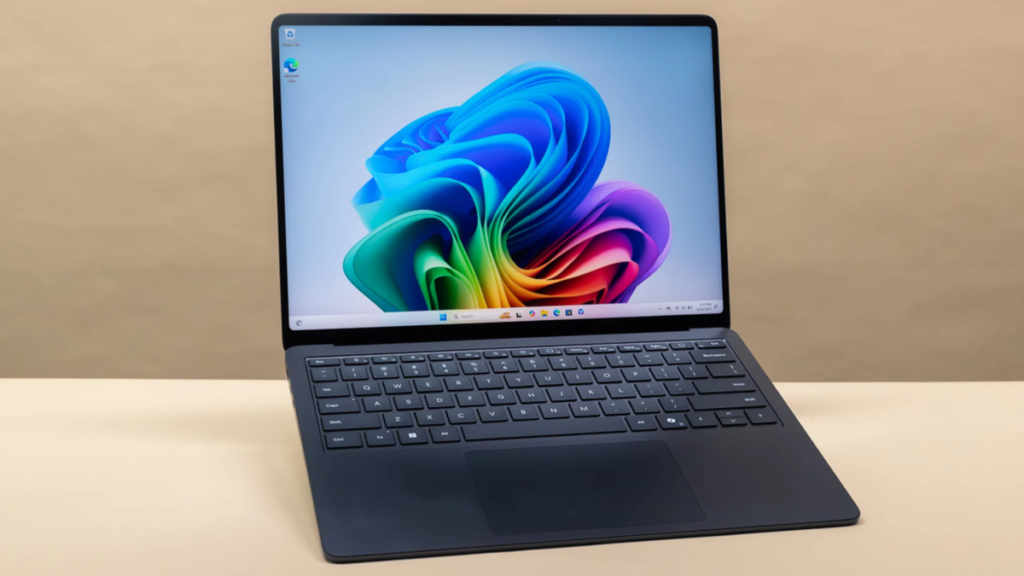
Table of Contents
The Paper Trail of a Hardware Leak
In the world of hardware reporting, the most reliable precursors to a product launch aren’t press releases, but the accidental footprints left in benchmark databases. This week, that footprint appeared in the form of two Geekbench 6 listings for an unreleased device: the Surface Laptop 8. Though Microsoft acted quickly to scrub the listings by Thursday morning, the data captured by Notebookcheck and first spotted by Mashable provides a technical blueprint for Microsoft’s next move in the competitive laptop space.
The leak isn’t just about a new model number; it signals a pivotal shift in how Microsoft is balancing its relationship with Intel and Qualcomm. While the current generation leaned heavily into the ARM-based Snapdragon X series to chase battery life and AI efficiency, the Surface Laptop 8 appears to be doubling down on Intel’s next-generation architecture to reclaim raw performance leadership.
- Hardware Core: The device features the Intel Core Ultra X7 368H (Panther Lake), marking a significant jump in architectural efficiency.
- Business Focus: The leaked name specifically mentions “Surface Laptop for Business,” suggesting an Intel-first rollout for enterprise clients.
- Display Evolution: Reports indicate a move toward optional OLED panels, finally closing the gap with MacBook Pro and Dell XPS displays.
- Strategic Pivot: Microsoft may be flipping its release calendar, prioritizing Intel-based machines in Spring 2026 before launching Snapdragon X2 variants in the summer.
Deconstructing the Panther Lake Architecture
The centerpiece of these leaks is the Intel Core Ultra X7 368H. To understand why this matters, we have to look at the transition from Meteor Lake to Panther Lake. Intel is shifting its focus toward a more modular “tile” based design, aiming to maximize performance-per-watt to compete directly with Apple’s M-series silicon.
According to the Geekbench 6 results, the X7 368H is paired with Arc B390 graphics and 32GB of RAM. While the raw scores are comparable to the slightly lower-tier X7 358H, the real story lies in the multi-core performance. In scenarios like 4K video rendering or complex compilation, the leaked Surface Laptop 8 is performing on par with the M5 MacBook Air. This suggests that Intel is successfully narrowing the efficiency gap that previously plagued x86 laptops.
The presence of Arc B390 graphics is also noteworthy. Intel’s integrated graphics have evolved rapidly, and the B-series indicates a move toward the Battlemage architecture. For the average user, this doesn’t mean the Surface Laptop becomes a gaming rig, but it does mean significantly better acceleration for AI-driven creative tools in Adobe Premiere or DaVinci Resolve.
The Enterprise Divide: Why ‘For Business’ Matters
The full identifier in the leak—”Microsoft Corporation Surface Laptop for Business 13.8in 8th Ed Intel”—is a critical piece of evidence. It reveals that Microsoft is continuing to treat its consumer and enterprise lines as two distinct entities with different hardware trajectories.
Historically, enterprise customers have been slower to adopt ARM (Qualcomm) due to legacy software compatibility. A company relying on a proprietary 15-year-old ERP system cannot risk the translation layers of Prism (Microsoft’s ARM emulator). By earmarking the Intel Panther Lake chips for the “For Business” edition, Microsoft ensures that the most stable, compatible platform remains the gold standard for corporate fleets.
However, this creates a strange dichotomy. If the Intel version is the “business” machine and the Snapdragon version is the “consumer” machine, Microsoft is essentially betting that consumers care more about battery life and “AI PC” buzzwords, while businesses care about absolute stability and raw x86 power.
A Shift in the 2026 Release Cycle
The timing of this leak coincides with a reported shift in Microsoft’s product cadence. For the first time in several years, the sequence of releases appears to be inverted. Following reports from Windows Central, we are seeing a trend where Intel-based Surface Pros and Laptops are slated for a Spring 2026 launch, with Snapdragon X2 variants trailing behind in the summer.
Industry analysts suggest this is not a choice, but a necessity. Supply chain constraints surrounding the next generation of Qualcomm Snapdragon X2 chips may be forcing Microsoft to lead with Intel. This is a strategic risk; the industry has spent the last 18 months pivoting toward “Copilot+ PCs,” a branding exercise heavily tied to the NPU (Neural Processing Unit) performance of Qualcomm chips. If Microsoft launches an Intel version first, it must prove that Panther Lake’s NPU can match the AI capabilities of the Snapdragon X2.
Hardware Evolution: Beyond the CPU
While the CPU takes the headlines, the leaked specs and secondary reports point toward a much-needed aesthetic and functional overhaul. The 13.8-inch form factor remains, but the internals are evolving.
The OLED Transition
The most anticipated update is the optional OLED display. For years, the Surface Laptop has relied on high-quality LCDs, which, while color-accurate, lack the infinite contrast and deep blacks of OLED. Moving to OLED would not only improve visual fidelity for media consumption but also potentially reduce power consumption when using dark mode—a key synergy with the power-efficient Panther Lake chips.
Improved Haptics and Refined Chassis
Reports suggest a refinement in haptic feedback. The Surface line has always boasted one of the best keyboards in the industry, but the trackpad has occasionally lagged behind the precision of Apple’s Force Touch. Improved haptics would allow for a more consistent feel across the entire surface of the trackpad, removing the “dead spots” often found in mechanical diving-board designs.
The Economic Context: Price Hikes and Component Costs
It is impossible to discuss the Surface Laptop 8 without addressing the elephant in the room: pricing. Earlier this month, Microsoft announced price increases across its current lineup, attributing the move to rising costs for memory and high-performance components.
This suggests that the Surface Laptop 8 will likely launch at a higher price point than its predecessor. When you combine the cost of an OLED panel, 32GB of LPDDR5x RAM, and the premium Intel Panther Lake silicon, the “starting price” for the 8th Edition may push it further into the luxury bracket. This puts Microsoft in a precarious position where it must justify the cost through significant performance leaps, rather than incremental updates.
What This Means for the Consumer
For the end-user, this leak clarifies the choice they will face in 2026. The decision will no longer be just about “Windows vs. Mac,” but about “Stability vs. Efficiency.”
If you are a professional who needs 100% software compatibility and maximum multi-core power for heavy workloads, the Intel-based Surface Laptop 8 is the clear target. The Panther Lake architecture promises a bridge between the raw power of old-school Intel chips and the efficiency of modern silicon. On the other hand, those prioritizing a 20-hour battery life and a lightweight AI experience will likely wait for the Snapdragon X2 models arriving in the summer.
Frequently Asked Questions
When will the Surface Laptop 8 be released?
While Microsoft has not officially confirmed a date, leaks and reports from Windows Central suggest an Intel-based version could arrive in Spring 2026, with Snapdragon variants following in the summer.
What is the difference between Panther Lake and previous Intel chips?
Intel Panther Lake (the architecture used in the Core Ultra X7 368H) focuses on a more modular design to increase power efficiency and integrate a significantly more powerful NPU for AI tasks, aiming to compete with ARM-based processors.
Will the Surface Laptop 8 have an OLED screen?
Current industry reports indicate that an optional OLED display is planned for the 8th Edition, which would provide better contrast and deeper blacks than the current LCD panels.
Is the Surface Laptop 8 better than the MacBook Air M5?
Early Geekbench 6 leaks show that the Core Ultra X7 368H performs similarly to the M5 in multi-core scenarios. However, actual “better” performance will depend on thermal management and real-world battery life, which cannot be determined from benchmarks alone.
Why is there a “Business” and “Consumer” version?
Microsoft differentiates these to provide enterprise customers with guaranteed x86 compatibility (Intel) while offering consumers the latest in AI-integrated, battery-efficient hardware (Qualcomm).
The Verdict on the Leak
The appearance of the Surface Laptop 8 in Geekbench is more than a simple slip-up; it is a roadmap. By pairing Panther Lake with a business-centric label, Microsoft is hedging its bets. They are embracing the ARM revolution for the masses but keeping the Intel engine humming for the corporate world. For those waiting to upgrade, the promise of OLED and a more efficient Intel core makes the 8th Edition a compelling reason to hold onto your current device for a few more months.