SpaceX Goes Public: Analyzing the $75 Billion IPO and the Dawn of the Trillionaire Era
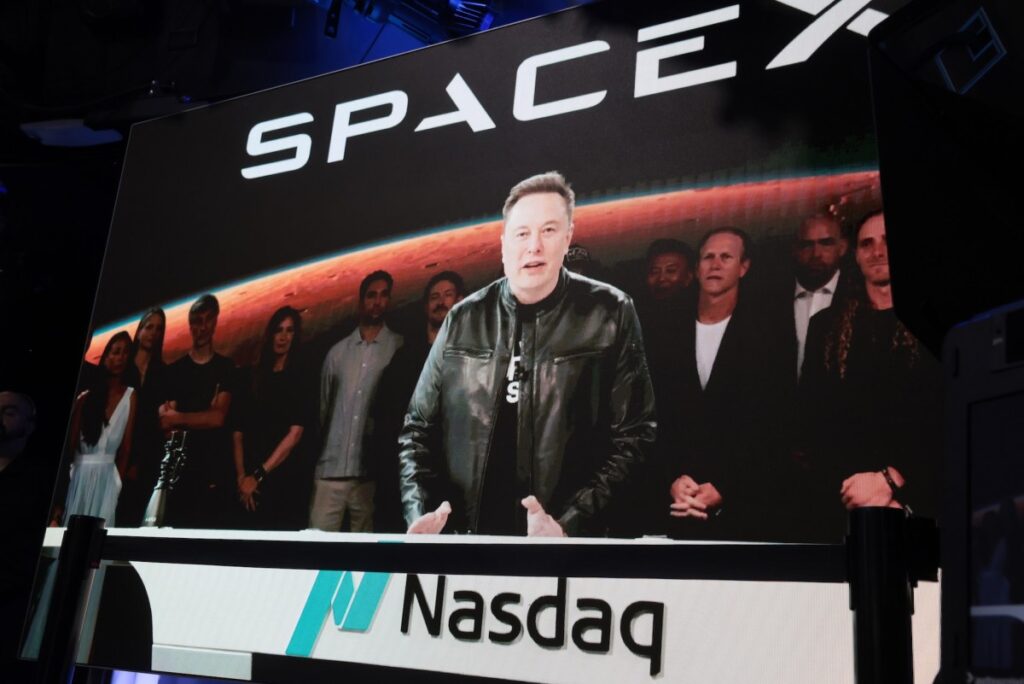
Table of Contents
The financial world witnessed a seismic shift on Friday as SpaceX officially transitioned from a closely guarded private entity to a publicly traded company on the Nasdaq. The scale of the offering is unprecedented: pricing 555.6 million shares at $135 each to raise a staggering $75 billion, marking it as the largest initial public offering (IPO) in global history.
- Historic Scale: SpaceX raised $75 billion in its IPO, the largest ever recorded, with shares closing their first day at $160.95.
- Financial Paradox: Despite the massive valuation, the company reported a $4.9 billion loss on $18 billion in revenue for 2025, adding to a cumulative loss of over $37 billion.
- Voting Control: Elon Musk maintains a “monarchical” grip on the company, holding approximately 85.1% of the voting power.
- Employee Windfall: An estimated 4,400 employees are projected to reach millionaire status following the public debut.
The Market Debut: From Pricing to Closing Bell
The anticipation surrounding the SpaceX IPO translated into immediate volatility and high demand. While the offering was priced at $135 per share, the stock opened at $150 on the Nasdaq, an immediate 11% surge. By midday, the momentum climbed further, with shares soaring 30% before eventually settling at a closing price of $160.95, representing a 19% gain from the IPO price.
This surge was accompanied by record-breaking retail activity. Robinhood reported an unprecedented spike in traffic, as individual investors scrambled to gain exposure to the aerospace leader. The institutional appetite was equally voracious, with Goldman Sachs and Morgan Stanley netting approximately $500 million in underwriting fees for managing the complex transaction.
An interesting detail emerged from the internal celebrations: several SpaceX insiders were photographed wearing green shoes. This is a deliberate nod to the “green shoe option” (formally known as the over-allotment option), a contractual provision allowing underwriters to sell up to 15% more shares than originally planned if demand exceeds expectations. Given the stock’s performance, it is highly likely this option was triggered.
Dissecting the S-1: The Financial Reality vs. The Narrative
For years, SpaceX operated in the shadows, revealing only fragmented data about its revenue and costs. The S-1 registration statement has finally pulled back the curtain, revealing a business model that is as high-risk as it is high-reward.
The Revenue-Loss Gap
The most striking figure in the filing is the company’s burn rate. In 2025, SpaceX generated over $18 billion in revenue but suffered a net loss of $4.9 billion. When viewed longitudinally, the company has lost more than $37 billion since its inception. This suggests that while the company is scaling rapidly, it is still heavily reliant on capital infusions to fund its most ambitious projects.
The Starlink Engine
The S-1 confirms that the company’s valuation is no longer solely tied to launching satellites for others. Starlink has emerged as the primary value driver. The satellite internet constellation provides a recurring revenue stream that contrasts sharply with the lump-sum payments of launch contracts. Investors are essentially betting that Starlink will evolve from a niche product into a global utility, offsetting the heavy losses incurred by rocket development.
Starship and the Reusability Hurdle
While the public narrative focuses on the “success” of Starship, the regulatory filings provide a more cautious outlook. The S-1 hints at the complexities of achieving full and rapid reusability—the key to Musk’s vision of Mars colonization. The documents suggest that the path to operational reliability for Starship is more murky than previous press releases implied, presenting a significant risk factor for long-term shareholders.
The Trillionaire Factor: Musk’s Power and Wealth
The IPO has fundamentally altered the global wealth hierarchy. Based on the closing price and his substantial equity stake, Elon Musk’s paper wealth has surged past the $1 trillion mark, making him the world’s first trillionaire. However, this wealth is largely theoretical until shares are liquidated.
Beyond the money, the IPO reveals a corporate governance structure that is highly unconventional for a public company. Musk retains approximately 85.1% of the voting power. In practical terms, this means that while the company is public, it is not “democratized.” Musk possesses a level of control that dwarfs typical tech founders, effectively insulating him from the influence of activist investors or traditional board pressures.
The Tesla Merger Speculation
During a CNBC interview, SpaceX COO Gwynne Shotwell made a comment that sent ripples through the Tesla community. Shotwell suggested that a potential merger between SpaceX and Tesla “might make Elon’s life a little easier.”
While this was phrased as a hypothetical, the strategic logic is apparent. Both companies rely on cutting-edge AI and robotics. SpaceX is increasingly integrating AI for autonomous docking and orbital maneuvers, while Tesla’s Optimus and FSD rely on similar neural network architectures. A merger would allow for the sharing of R&D costs and a unified pool of capital, though it would trigger immense regulatory scrutiny regarding antitrust laws and Musk’s ability to manage a combined conglomerate of such scale.
What This Means for Different Stakeholders
- For Retail Investors: The stock is likely to be volatile. While the growth potential is astronomical, the $37 billion in historical losses indicate that SpaceX is still in a capital-intensive growth phase.
- For SpaceX Employees: This is a life-changing liquidity event. With 4,400 employees potentially becoming millionaires, the company has successfully used equity as a primary tool for talent retention and motivation.
- For the Aerospace Industry: SpaceX’s public status provides it with a “war chest” of capital that could allow it to outspend competitors like Blue Origin or Arianespace by orders of magnitude.
Technical Breakdown: The “Green Shoe” and Underwriting
To understand the mechanics of the SpaceX IPO, one must understand the over-allotment option. In a standard IPO, the underwriters (in this case, Goldman Sachs and Morgan Stanley) agree to sell a set number of shares. However, if the “book-building” process shows demand far exceeds the supply, the underwriters can sell additional shares (up to 15%) to stabilize the price and satisfy investors. This prevents the stock from spiking too violently and then crashing, providing a smoother entry into the public market.
Comparison of Financial Metrics
| Metric | 2025 Figure | Historical Total |
|---|---|---|
| Revenue | $18 Billion+ | N/A (Private) |
| Net Loss | $4.9 Billion | $37 Billion+ |
| IPO Raise | $75 Billion | — |
| Closing Price | $160.95 | — |
Addressing the Risks: Dilution and Volatility
The S-1 registration document included a specific warning regarding future dilution. Because SpaceX’s goals—such as the Mars colony—require trillions of dollars in investment, the company may need to issue more shares in the future. This would dilute the ownership percentage of current shareholders. When combined with the rumors of a Tesla merger, this dilution risk is a critical point for investors to monitor.
Furthermore, the role of Special Purpose Vehicles (SPVs) remains a point of contention. Many early investors held SpaceX shares through secondary market SPVs. These investors often face high management fees and strict lock-up periods. For some, the IPO is not an immediate payday but a long wait to see if their specific share class is converted or liquidated fairly.
Frequently Asked Questions about the SpaceX IPO
Can I buy SpaceX stock now?
Yes, SpaceX is now traded on the Nasdaq. You can purchase shares through any standard brokerage account (such as Robinhood, Fidelity, or Charles Schwab) using the company’s ticker symbol.
Is SpaceX profitable?
No. According to the S-1 filing, SpaceX reported a loss of $4.9 billion in 2025. The company is prioritizing growth and infrastructure (Starlink and Starship) over immediate profitability.
How much of the company does Elon Musk own?
While the exact percentage of equity is complex due to different share classes, Musk holds approximately 85.1% of the total voting power, ensuring he maintains absolute control over corporate decisions.
What is the “green shoe option” mentioned?
The green shoe option allows underwriters to sell more shares than originally planned if there is high demand, helping to stabilize the stock price during the initial trading days.
Will SpaceX merge with Tesla?
There is no official confirmation of a merger. However, COO Gwynne Shotwell mentioned it as a possibility that could simplify Musk’s management duties, fueling market speculation.
Why is Starlink so important to the IPO?
Starlink provides the recurring subscription revenue that traditional rocket launches do not. It transforms SpaceX from a service provider into a global telecommunications giant, which justifies a much higher valuation.
The SpaceX IPO is more than just a financial event; it is a stress test for the modern public market. By listing a company with billions in losses but trillions in perceived future value, the market is essentially validating the “Musk Premium.” As the company continues to iterate on Starship and expand Starlink, the stock will likely serve as a real-time barometer for the feasibility of humanity’s expansion into the solar system.