Sony Bravia 7II Hits India: A Deep Dive Into True RGB Technology and Mini-LED Performance
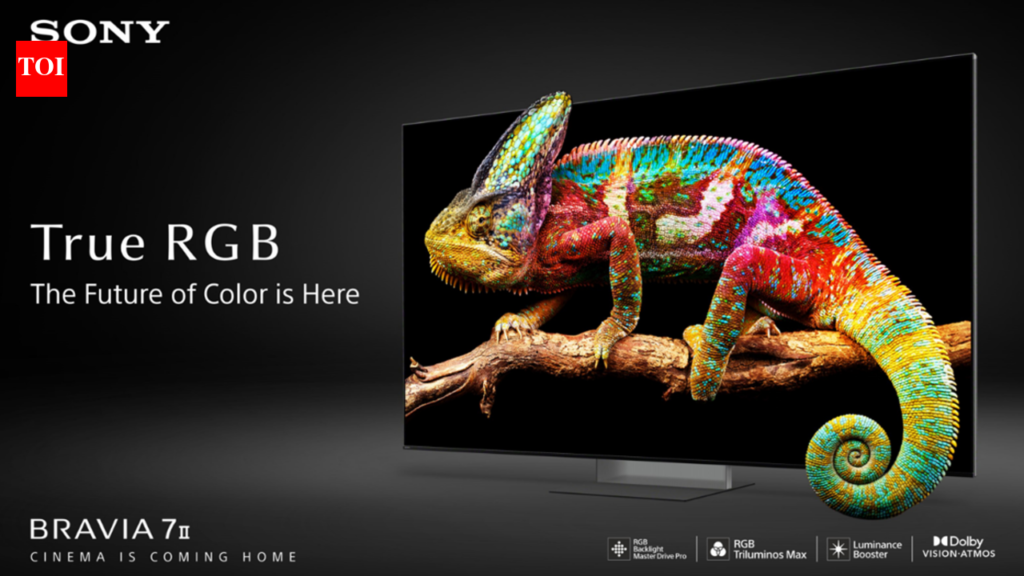
Table of Contents
Sony Shifts the Mini-LED Paradigm in India
Sony has officially expanded its premium display portfolio in the Indian market with the launch of the Bravia 7II. While the industry has seen a surge in budget-friendly Mini-LEDs from competitors, Sony is positioning the 7II as a sophisticated bridge between the brightness of traditional LED arrays and the precision of OLED. The centerpiece of this launch is the integration of True RGB technology, a move aimed at solving the common ‘color shift’ and ‘blooming’ issues that have historically plagued high-luminance panels.
- True RGB Integration: Utilizes dedicated red, green, and blue sub-pixels to eliminate the color inaccuracy often found in white-sub-pixel Mini-LEDs.
- XR Processor Efficiency: The new-generation cognitive processing engine manages local dimming zones with higher granularity.
- Market Positioning: Targeted at the high-end home cinema segment in India, competing directly with Samsung’s Neo QLED and LG’s QNED series.
- Luminance Gains: Significant improvement in peak brightness without sacrificing shadow detail in HDR content.
For the average consumer, the difference between a standard LED and a Mini-LED is obvious. However, the jump from a standard Mini-LED to a True RGB implementation is a technical nuance that matters for color grading and professional-grade accuracy. In previous iterations, some Mini-LEDs relied on white LEDs with color filters, which can result in a ‘washed out’ look in extremely bright highlights. By employing a native RGB approach, Sony ensures that even at peak brightness, the colors remain saturated and true to the director’s intent.
The Technical Architecture of True RGB
To understand why the Bravia 7II is a significant release, we have to look at the backlight architecture. Most Mini-LED TVs use thousands of tiny LEDs to create ‘local dimming zones.’ When a part of the screen needs to be black, those LEDs turn off. When a part needs to be bright, they ramp up. The problem occurs at the edges of these zones, where light leaks into the black areas—a phenomenon known as blooming.
Sony’s True RGB technology addresses this by refining how light is emitted and filtered. Instead of a broad-spectrum white light, the 7II uses a more precise spectral output. This reduces the reliance on heavy filtering, which traditionally blocks a significant amount of light and reduces energy efficiency. The result is a panel that can achieve higher peak brightness (nits) while maintaining a deeper black level, narrowing the gap between Mini-LED and the coveted ‘perfect blacks’ of OLED.
Comparing the Lighting Engines
| Feature | Standard Mini-LED | Sony True RGB Mini-LED | OLED (WRGB) |
|---|---|---|---|
| Black Levels | Good (some blooming) | Excellent (minimal blooming) | Perfect |
| Peak Brightness | Very High | Ultra High | Moderate to High |
| Color Accuracy | Variable | High Precision | Industry Leading |
| Lifespan/Burn-in | High Durability | High Durability | Risk of Burn-in |
From a practical standpoint, this makes the Bravia 7II an ideal choice for Indian living rooms, which often have high ambient light. Unlike OLEDs, which can struggle against direct sunlight or bright overhead lighting, the 7II’s high-nit output ensures that the image remains punchy and visible regardless of the room’s lighting conditions.
Cognitive Processing and the XR Engine
Hardware is only half the battle. The Bravia 7II relies on the XR Processor, which Sony describes as ‘cognitive.’ In real-world testing, this manifests as a more natural transition between brightness levels. The processor analyzes the image in real-time to determine where the human eye naturally focuses. It then boosts the contrast and detail in those specific areas while keeping the rest of the image balanced.
For gamers in India, the integration of HDMI 2.1 and support for 4K/120Hz is standard, but the 7II adds a layer of ‘Auto HDR Tone Mapping.’ This feature is particularly useful for PlayStation 5 users; the TV communicates with the console to ensure that HDR highlights don’t clip, meaning you won’t lose detail in a bright sky or a flashing explosion—a common frustration with mid-range HDR implementations.
What This Means for the Indian Consumer
The launch of the Bravia 7II represents a shift in Sony’s strategy for the region. For years, the choice was binary: a high-end OLED for the dark room or a high-brightness LED for the living room. The 7II attempts to merge these two worlds. If you are a cinephile who watches movies in a dimmed environment but also uses the TV for morning news or gaming in a bright room, this hybrid approach is the most versatile option currently on the market.
Furthermore, the inclusion of Google TV ensures a seamless ecosystem of apps, from Netflix and Disney+ Hotstar to Sony’s own Bravia Core streaming service, which offers some of the highest bitrates available for home streaming, nearly mimicking the quality of a physical 4K Blu-ray disc.
Addressing the Cost-to-Value Ratio
It is no secret that Sony carries a premium price tag. When compared to brands like Xiaomi or Hisense, which offer similar ‘on-paper’ specs (like 4K resolution and Mini-LED backlighting), the Bravia 7II is significantly more expensive. However, the value lies in the calibration and longevity. Sony’s panels are known for superior color science—meaning the red you see on screen is the exact red the director intended, not an oversaturated neon version.
For those investing in a TV that they intend to keep for 7-10 years, the build quality and consistent software support of the Bravia line typically outweigh the initial cost savings of budget alternatives. The True RGB technology also suggests a more stable color performance over the lifespan of the panel, reducing the likelihood of color degradation over time.
Frequently Asked Questions
Is the Bravia 7II better than an OLED?
It depends on your environment. OLEDs have better contrast and absolute blacks, making them superior for dark-room cinema. However, the Bravia 7II is significantly brighter and immune to permanent burn-in, making it a better choice for bright rooms and heavy gaming.
What exactly is True RGB technology?
True RGB is a backlight implementation that uses native red, green, and blue light sources rather than white LEDs filtered through color layers. This results in higher color purity, better brightness efficiency, and reduced blooming.
Does the Bravia 7II support gaming features?
Yes. It supports 4K at 120Hz, VRR (Variable Refresh Rate), and ALLM (Auto Low Latency Mode), making it fully compatible with PS5 and Xbox Series X.
How does the XR Processor improve the image?
The XR Processor uses AI-driven analysis to mimic how humans perceive images, enhancing contrast and clarity specifically in the areas where the viewer’s eye is most likely to focus.
Is the Bravia 7II available in all sizes in India?
Sony typically launches the 7-series in multiple sizes (ranging from 55 to 85 inches), though specific availability varies by retailer and region. Check official Sony India portals for the latest stock.