SITAEL Bets on ‘Industrialization’ of Space with 2031 Growth Surge and ESA Prime Contract
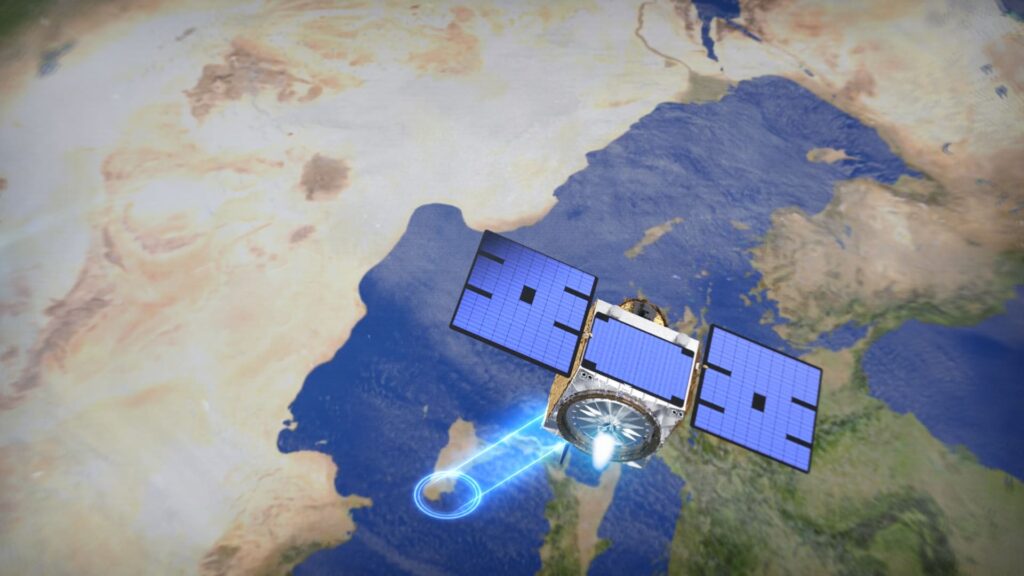
Table of Contents
The Pivot to Industrial Scale
For years, the European small-satellite sector has been characterized by bespoke, artisanal engineering—highly capable but difficult to scale. SITAEL, the Italian space firm under Angel Holding, is attempting to break that mold. Speaking at SmallSat Europe in Amsterdam, the company unveiled a strategic roadmap designed to transition from a specialized contractor to a high-volume industrial player, targeting €200 million in annual revenues by 2031.
The ambition is backed by a current backlog exceeding €150 million and a workforce that has been growing by 10% annually. While many space startups are currently struggling with a venture capital drought, SITAEL is leaning into a vertical integration strategy. By controlling everything from component-level electronics to final mission operations, the company aims to push its EBITDA from 12% toward a target of 25% over the next decade.
Infrastructure as a Competitive Edge
SITAEL’s strategy hinges on two primary industrial hubs in Italy. In Mola di Bari, the company has established a clean-room facility capable of constructing five satellites simultaneously—a critical move for those looking to deploy constellations rather than single-shot missions. Meanwhile, the Pisa facility recently inaugurated a dedicated production line for Hall-effect electric propulsion in July 2025.
This focus on propulsion is not incidental. As the industry shifts toward Very Low Earth Orbit (VLEO) missions—which offer higher resolution imagery but suffer from increased atmospheric drag—efficient propulsion becomes the primary bottleneck. SITAEL is tackling this through its NextGen and EMPYREUM platforms, and a collaborative project with the European Space Agency (ESA) to develop a propellantless RAM-EP thruster, designed specifically for the rigors of ultra-low orbits.
The HiBiDiS Mission: A Proof of Concept
The centerpiece of SITAEL’s current trajectory is its role as prime contractor for the ESA Scout HiBiDiS mission. Scheduled for launch in 2030, HiBiDiS is more than a scientific endeavor; it is a commercial signal that SITAEL can manage the full complexity of a European mission from inception to orbit.
The mission’s scientific objective is ambitious: mapping forest biodiversity. While most Earth observation satellites only see the “top of the canopy,” HiBiDiS will use multi-angular hyperspectral observations to peer into the forest understory. This is made possible through a partnership with AMOS, which is providing the hyperspectral instrument, and data processing support from VITO and the University of Zurich.
“HiBiDiS is the kind of mission AMOS was built for,” said Arnaud Dartevelle, Managing Director of AMOS. “With our hyperspectral instrument at its core, this Scout mission will open a new window on Earth’s biodiversity, capturing what no satellite has ever been able to see.”
Expanding the European Footprint
Beyond the ESA contracts, SITAEL is diversifying its portfolio to avoid over-reliance on a single agency. The company has signed a Memorandum of Understanding (MoU) with Eycore, a Polish provider of Synthetic Aperture Radar (SAR) services. This partnership aims to merge SITAEL’s platform expertise with Eycore’s SAR capabilities, targeting the growing demand for high-resolution Earth observation that can penetrate cloud cover and darkness.
This move coincides with SITAEL’s intention to bid on larger-scale European resilience programs, including the IRIS² constellation and the European Resilience from Space (ERS) architecture. By positioning itself as a flexible, certified partner (meeting both ESA and NASA standards), SITAEL is betting that the next cycle of European space sovereignty will favor companies that can deliver both innovation and industrial reliability.
With nine launches scheduled between 2026 and 2030—including the PLATINO and IRIDE series—SITAEL is moving out of the prototype phase and into a period of aggressive execution. As CEO Chiara Pertosa noted, the company spent years investing ahead of the market; the current shift toward secure communications and sovereign Earth observation is the moment those investments are intended to pay off.