Beyond the Printf: Why Test-Case Reducers Are the Secret Weapon of Elite Debugging
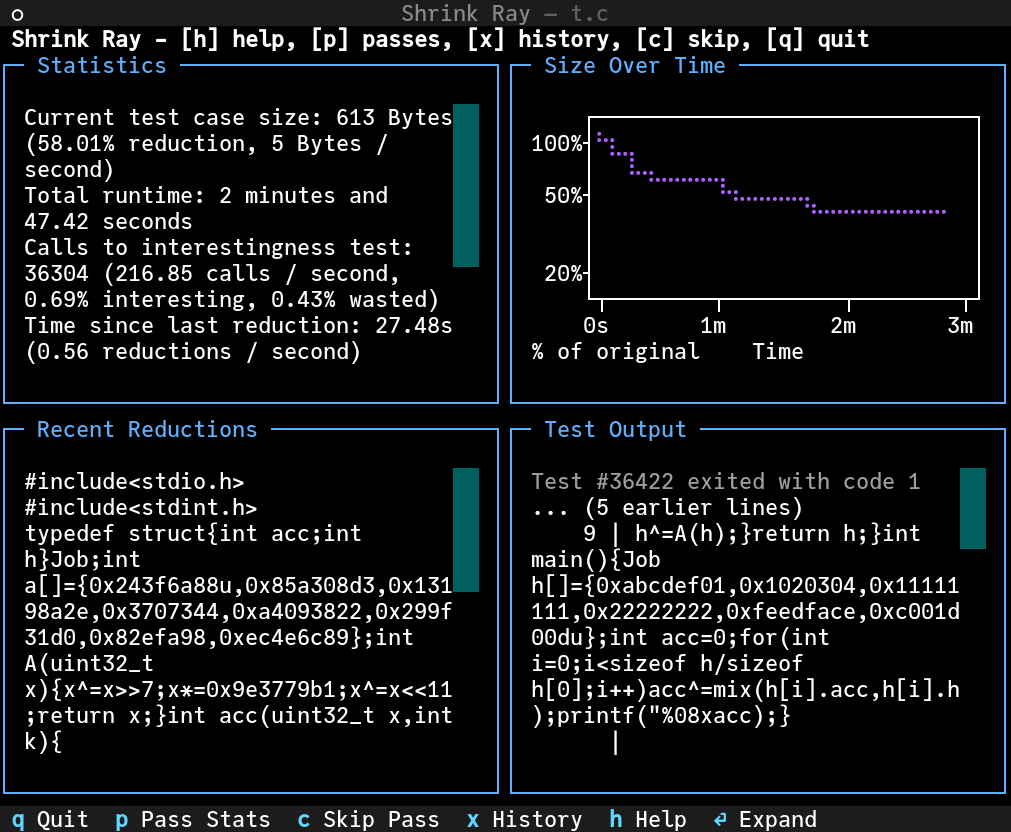
Table of Contents
The Sisyphus Problem in Modern Debugging
Every software engineer has been there: a program crashes on a massive input file—perhaps a 50MB log or a complex 10,000-line configuration file—and the stack trace provides little more than a vague hint of where things went wrong. The traditional instinct is to reach for the familiar. We start with printf debugging, move to a formal debugger like GDB or LLDB, and if desperation sets in, we deploy heavy-duty sanitizers or Valgrind.
But there is a more fundamental problem. Before you can fix a bug, you have to isolate it. Manual reduction—deleting chunks of a file to see if the crash persists—is a tedious, error-prone process. Humans are notoriously bad at this; we miss patterns, we delete too much, or we fail to realize that the crash is caused by the combination of two separate, seemingly unrelated fragments of data. This is where test-case reducers enter the frame.
Automating the ‘Squeeze’
Test-case reducers are a class of tools designed to automate the shrinking of a failing input to its smallest possible size while still triggering the original bug. While they are staples in the world of compiler authors—who deal with the nightmare of multi-thousand-line source files that trigger edge-case crashes—they remain criminally underutilized in general software development.
The mechanism is deceptively simple. A reducer requires three components: the program under test, a failing input, and an interestingness test. The interestingness test is essentially a script that returns a binary result: does this specific version of the input still cause the failure? If yes, the reducer keeps the change; if no, it reverts and tries a different deletion strategy.
By iteratively stripping away irrelevant data, these tools can often achieve 95% to 99% reductions. What began as a massive, incomprehensible file often ends as a single line or a few characters of code, revealing the exact trigger of the crash with surgical precision.
The Logic Behind the Machine
To the uninitiated, the process feels like magic, but it is actually a brute-force search optimized by logic. Consider a scenario where a program crashes when it encounters a word longer than 25 characters. If you feed it a dictionary of 100,000 words, a manual search for that one long word is a waste of time. A basic reducer, however, would simply slice the dictionary in half. If the crash still occurs, it discards the half that didn’t contain the long word. It repeats this process until only the offending word—such as ‘antidisestablishmentarianism’—remains.
However, the true power of professional reducers lies in their ability to go beyond simple length reduction. Advanced tools can be configured to optimize for other metrics, such as the number of instructions executed or the frequency of an error. This allows developers to ‘abuse’ the reducer to find not just the smallest input, but the most efficient way to trigger a specific state in the software.
Bridging the Gap to Production
The barrier to adopting test-case reducers is often psychological. Because these tools are so closely associated with the ‘elite’ circle of compiler engineers, many developers assume they are too complex for standard app or web development. In reality, the logic is accessible enough that a basic reducer can be written in a few dozen lines of Python.
The transition from manual guesswork to automated reduction marks a shift in debugging philosophy. Instead of staring at a crash site and trying to imagine the path the data took, the developer lets the machine prune the noise. When the input is reduced to its bare minimum, the cause of the bug usually becomes self-evident, transforming a day-long investigation into a five-minute fix.


