Shuttle Veterans Tom Akers and Joe Tanner Inducted into Astronaut Hall of Fame
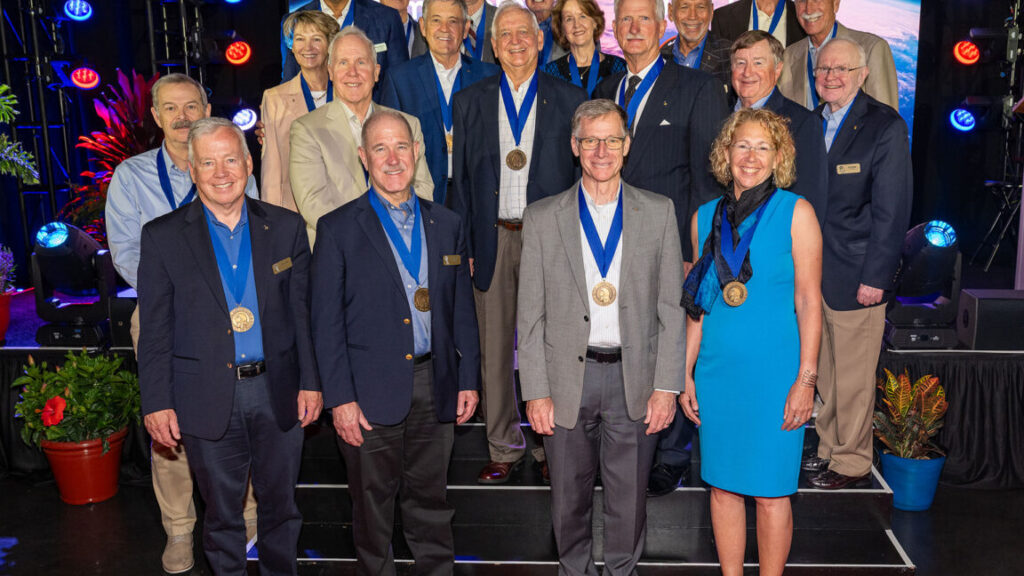
Table of Contents
A Shared Honor for Shuttle Era Veterans
In a ceremony marked by long-standing friendship and professional camaraderie, veteran NASA astronauts Tom Akers and Joe Tanner were inducted into the US Astronaut Hall of Fame on May 16. The event, held at the Kennedy Space Center Visitor Complex, saw the two shuttle-era spacewalkers recognized as part of the class of 2026, standing together beneath the towering presence of the retired space shuttle Atlantis—a vehicle both men flew during their careers.
The induction marks a full-circle moment for the pair, whose relationship predates their time in orbit. While they never launched on the same mission, their paths converged at the Johnson Space Center (JSC) and through a shared social circle that extended beyond the hangar. The irony of their timing was not lost on the inductees; while Akers entered the astronaut program in 1987, Tanner—who had interviewed for the same class—didn’t make the cut until 1992.
“Tom came in with the class of 1987, which, interestingly enough, I interviewed for. He made it, and I didn’t,” Tanner recalled during a joint interview. Akers, quick to joke about the gap, noted that he had spent years wondering why NASA had taken so long to select his friend.
The Precision of the Spacewalk
Both Akers and Tanner are remembered for their critical contributions to Extravehicular Activity (EVA), the grueling process of performing tasks outside a spacecraft. Their careers included four missions each, with a heavy emphasis on the technical maintenance of some of humanity’s most complex orbital machinery.
Akers is perhaps best known for a historic milestone on May 16, 1992—the same date as this year’s induction. During the STS-49 mission aboard the shuttle Endeavour, Akers became one of only three astronauts to ever conduct a three-person spacewalk. The move was a desperate, improvised solution to capture a malfunctioning Intelsat VI communications satellite that had drifted out of reach of the shuttle’s robotic arm.
“All of our spacewalks are designed really for two people,” Akers explained, noting that the safety systems and tethering are not optimized for a trio. However, through a combination of ground-control ingenuity and teamwork, the three-man crew successfully secured the satellite, a feat that remains a unique anomaly in NASA history.
Hubble vs. the ISS: A Study in Dexterity
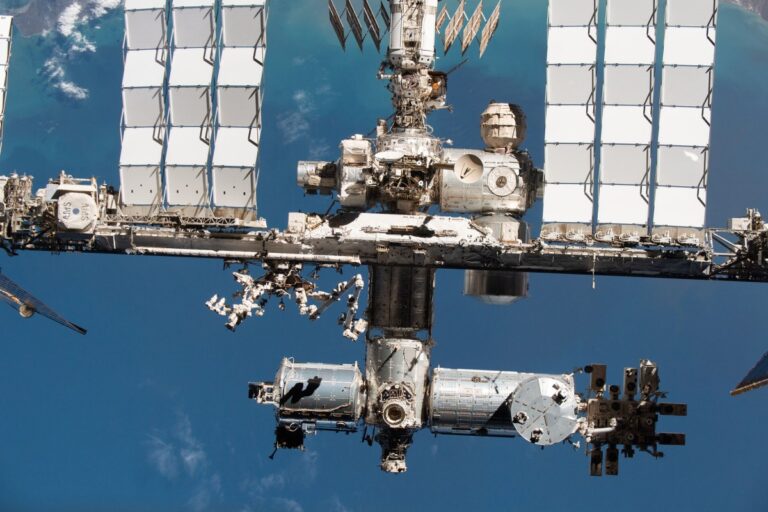
While Akers focused on satellite recovery, Tanner’s expertise was heavily utilized in the assembly of the International Space Station (ISS) and the delicate servicing of the Hubble Space Telescope (HST). The two tasks, while both requiring EVAs, demanded entirely different skill sets.
Tanner described the contrast as a matter of “hands versus hauling.” Servicing the Hubble required extreme manual dexterity to manipulate fragile optical instruments in tight quarters, whereas the ISS construction involved moving massive truss segments and solar array wings. In total, Tanner logged 46.5 hours of EVA time over 43 days in space, while Akers spent nearly 30 hours in the void across 34 days of flight.
A Legacy Etched in Glass
The induction ceremony was led by news correspondent John Zarella and included remarks from Curt Brown, board chairman of the Astronaut Scholarship Foundation. Brown, a fellow astronaut who flew with Tanner on Atlantis, emphasized that the honor reflects not only the technical achievements of the two men but their ongoing roles as mentors for the next generation of explorers.
The event culminated in the unveiling of etched-glass portraits and mission patch displays. These plaques now join 111 others in the Heroes & Legends attraction, serving as a permanent record of the individuals who pushed the boundaries of the shuttle program. The ceremony was attended by approximately 20 veteran astronauts, including Brian Duffy and Chris Ferguson, who formally presented the medals to their former colleagues.