Echo Isle Review: A Masterclass in Minimalist Game Design and Retro Zelda Homage
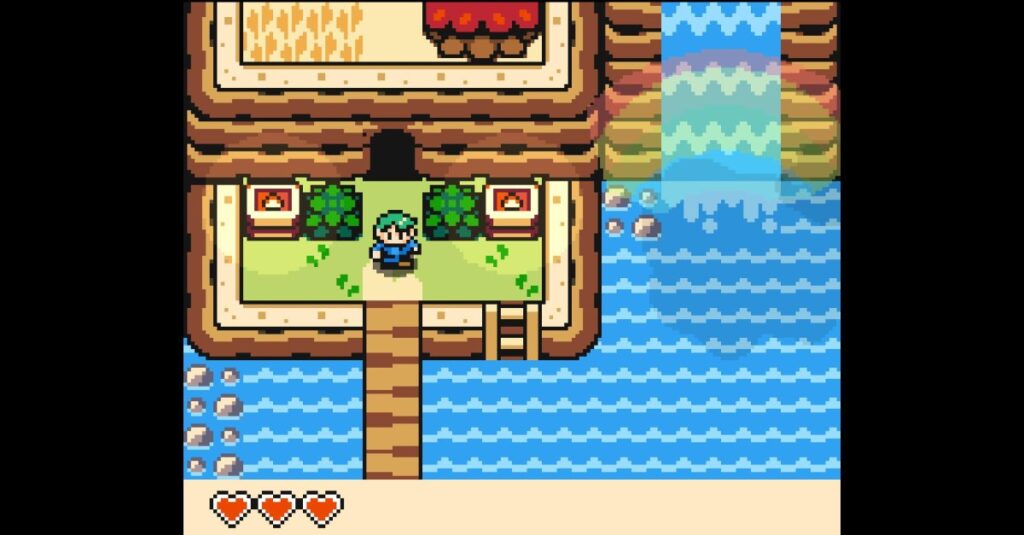
Table of Contents
The Rise of the Micro-Adventure
In an era where AAA titles often brag about ‘hundreds of hours of content’ and maps so sprawling they require GPS-like navigation, Echo Isle arrives as a defiant counter-statement. It is not just a short game; it is a disciplined exercise in subtraction. Developed with a clear reverence for the 8-bit and 16-bit eras, specifically the Game Boy iterations of The Legend of Zelda, Echo Isle manages to deliver a complete, satisfying heroic arc in roughly 60 to 90 minutes.
- Concentrated Experience: The game distills the Zelda loop into a single hour of gameplay without feeling rushed.
- Mechanical Purity: By removing complex resource management and fast travel, the focus remains entirely on exploration and puzzle-solving.
- Aesthetic Nostalgia: The use of square-screen transitions and a limited color palette directly mirrors the constraints of early handheld gaming.
- Design Philosophy: It serves as a critique of ‘bloatware’ in modern gaming, proving that tight pacing beats expansive emptiness.
The premise is intentionally lean. You begin by falling from the sky onto an island where a magical lighthouse—the primary protector of the land—has gone dark. Within five minutes, you are armed with a sword and thrust into the foundational loop of the action-adventure genre: explore the overworld, uncover a dungeon, acquire a utility item, and use that item to unlock the next area. It is a cycle we have known since 1986, yet in Echo Isle, it feels refreshed precisely because it doesn’t try to reinvent the wheel; it simply polishes it to a mirror finish.
The Architecture of Smallness
The most striking technical decision in Echo Isle is its commitment to the ‘square screen.’ In modern gaming, seamless open worlds are the gold standard, but Echo Isle utilizes a screen-by-screen transition system. This isn’t merely a visual filter to evoke nostalgia; it is a core gameplay mechanic. By limiting the player’s field of vision to a single square tile, the developers create a natural sense of mystery and tension. You don’t know what is behind the next screen until you cross the threshold, turning a simple walk across the island into a series of micro-discoveries.
Mapping the 25-Tile World
The overworld map consists of exactly 25 tiles. To some, this might seem restrictive, but in practice, it eliminates the friction of travel. There is no fast-travel system because the map is small enough to traverse on foot in a matter of minutes. This design choice forces the player to actually experience the geography of the island rather than skipping over it via a menu. The single village serves as a social hub, providing just enough narrative flavor to establish stakes without bogging the player down in endless dialogue trees.
Dungeon Design and the ‘Boss Rush’
The game features four primary dungeons, each designed around a specific mechanical hurdle. The progression is tight—there is no filler. The final act culminates in a tower that functions as a ‘boss rush,’ testing the player’s mastery of the tools they’ve collected. This structure ensures that the difficulty curve is steep but fair, mirroring the tight design of early Nintendo titles where every room served a purpose and every enemy placement was deliberate.
Mechanical Distillation: What Stays and What Goes
Echo Isle takes a surgical approach to the Zelda formula. It keeps the elements that provide visceral satisfaction and discards those that create administrative overhead. For instance, the game features an equivalent to Roc’s Feather—a jump mechanic that transforms how you interact with the environment. This addition allows for verticality and clever shortcuts, adding a layer of depth to the 25-tile map.
“By streamlining resource management—removing ammo counts and monetary systems—Echo Isle shifts the player’s cognitive load from bookkeeping to observation.”
The absence of a currency system is a bold move. In most adventure games, gold serves as a motivator for exploration. Here, the only currency is curiosity. The only critical metric the player must track is the health bar, which is replenished by the classic act of smashing pots. This simplification doesn’t make the game ‘easy’; rather, it makes it focused. When you encounter a puzzle, your mind isn’t occupied by whether you have enough bombs in your inventory; it is occupied by the logic of the puzzle itself.
What This Means for the Indie Landscape
The success of a project like Echo Isle signals a growing appetite for ‘snackable’ high-quality experiences. As the gaming industry leans further into ‘Live Service’ models—games designed to be played for years via seasonal updates—there is a vacuum for the ‘complete’ experience. Echo Isle provides a definitive beginning, middle, and end in a time frame that fits into a morning coffee break.
From a development perspective, this demonstrates the power of scope control. Many indie developers fall into the trap of attempting to build ‘The Next Skyrim,’ resulting in unfinished projects or shallow worlds. Echo Isle does the opposite: it defines a very small boundary and fills it with high-density quality. This approach ensures that the game is polished, bug-free, and structurally sound, providing a higher ROI (Return on Investment) for the player’s time.
Technical Breakdown: Retro Aesthetics vs. Modern Utility
| Feature | Classic Zelda (GB) | Echo Isle Implementation | Impact on Gameplay |
|---|---|---|---|
| Screen Transition | Hard Cut / Square | Smooth Square Transition | Maintains mystery; focuses attention |
| Inventory | Complex/Item-Based | Simplified Utility | Reduces menu fatigue; increases flow |
| World Scale | Expansive (for its time) | Ultra-Compact (25 tiles) | Removes need for fast travel; enhances intimacy |
| Progression | Linear/Gated | Tight Linear Gating | Provides clear goals and immediate gratification |
Comparison with Modern Open-World Design
To understand why Echo Isle feels significant, one must compare it to the current trend of ‘Map Bloat.’ In many modern titles, markers on a map often act as a checklist of chores rather than invitations to explore. Echo Isle treats the map as a puzzle. Because the world is small, every single tile is handcrafted. There is no procedurally generated filler. This creates a feeling of intentionality; you feel the developer’s hand in every screen transition and every enemy placement.
The Psychology of the ‘Quick Win’
There is a psychological satisfaction in completing a game in one sitting. The ‘completionist’ urge is satisfied without the burnout associated with 100-hour RPGs. By offering a polished, complete experience in under two hours, Echo Isle taps into a desire for closure that is increasingly rare in the digital entertainment space.
Accessibility and Entry Barriers
The game is remarkably accessible. By omitting complex stats or deep skill trees, it lowers the barrier to entry for non-gamers while remaining a nostalgic treat for veterans. The snappy dialogue, forced by the small text boxes of the retro aesthetic, ensures the narrative moves at a pace that matches the gameplay.
Frequently Asked Questions
How long does it take to beat Echo Isle?
Most players can complete the entire adventure in a little over an hour, depending on how thoroughly they explore the 25-tile overworld and how quickly they solve the four main dungeons.
Is Echo Isle a direct clone of The Legend of Zelda?
While it is heavily inspired by Link’s Awakening and early Zelda titles—including the blue tunic, sword-and-shield combat, and dungeon-key progression—it is a standalone indie tribute that streamlines the mechanics for a modern, shorter experience.
What platforms is Echo Isle available on?
Echo Isle is primarily targeted at PC and indie-friendly consoles, focusing on a low-spec requirement that allows it to run on almost any modern hardware, echoing its handheld origins.
Does the game have a save system?
Given its short length, the game encourages a ‘single-sitting’ experience, though it employs minimal save states to ensure players don’t lose significant progress in the final boss rush.
Are there any microtransactions in Echo Isle?
No. The game is a traditional premium indie title, avoiding the live-service elements and in-game purchases common in modern gaming.
Final Analysis: The Value of the Miniature
Echo Isle succeeds because it understands that ‘more’ is not always ‘better.’ By treating the adventure as a distilled essence rather than a sprawling epic, it recaptures the feeling of discovering a hidden gem on a Game Boy in the 90s. It is a reminder that a well-crafted hour of gameplay is infinitely more valuable than a hundred hours of mediocre content. For those exhausted by the demands of modern gaming, Echo Isle is not just a game—it is a palate cleanser.