Samsung Floods Indian Market with 72 New AI-Driven TVs, Betting Big on Micro RGB
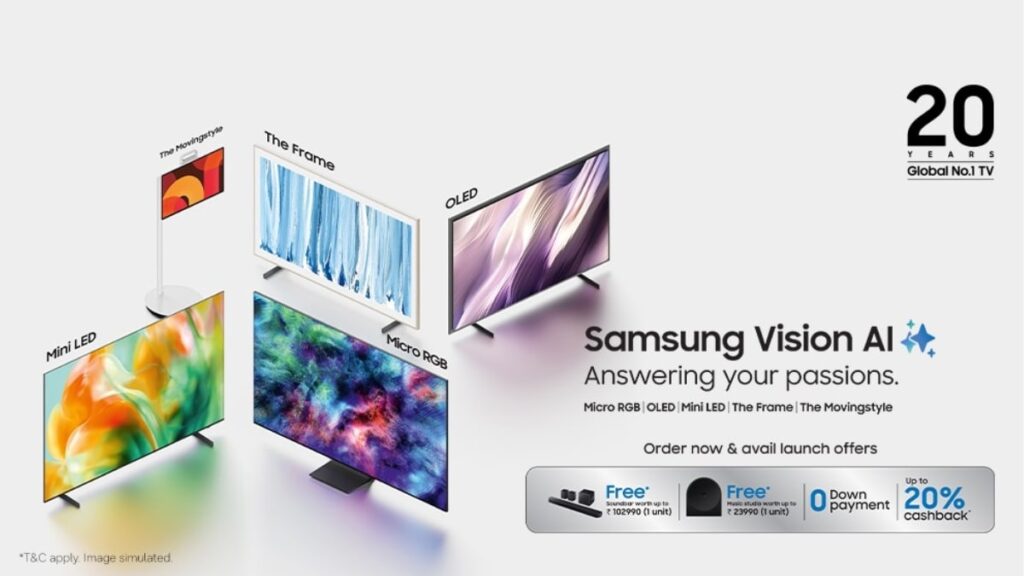
Table of Contents
A massive push for the living room
Samsung is not playing it safe with its latest hardware push in India. On Wednesday, the South Korean giant unveiled a staggering 72 new television models, marking one of the most aggressive lineup expansions the company has attempted in the region. The 2026 Vision AI collection isn’t just about bigger screens or higher refresh rates; it is a concerted effort to bake generative AI into the very fabric of the viewing experience through what Samsung calls the Vision AI Companion (VAC).
The sheer volume of the rollout—spanning Micro RGB, OLED, Neo QLED, and the lifestyle-oriented ‘The Frame’ series—suggests Samsung is attempting to hedge its bets across every conceivable price point, from entry-level UHD sets to ultra-luxury Micro RGB panels. By deploying the VAC features across more segments, Samsung is moving away from treating AI as a premium ‘flagship-only’ perk and instead positioning it as the baseline standard for the modern home cinema.
The Micro RGB gamble
The most significant technical addition to the Indian portfolio is the introduction of Micro RGB technology. While Mini LED has been the dominant bridge between traditional LED and OLED, Micro RGB represents a leap toward a more durable, brighter, and more precise emissive display. By controlling individual pixels at a microscopic scale without the organic degradation associated with traditional OLEDs, Samsung is targeting the high-end enthusiast market that demands perfect blacks without the lingering fear of burn-in.
However, the price of innovation remains steep. The Micro RGB lineup enters the market at Rs. 1,24,990, positioning it as the crown jewel of the collection. It is a direct challenge to Sony’s high-end offerings and LG’s OLED dominance in the Indian premium sector.
AI beyond the buzzwords
The centerpiece of this launch is the Vision AI Companion. While many manufacturers have used ‘AI’ as a marketing shorthand for basic upscaling, Samsung’s 2026 integration focuses on three specific pillars: dynamic picture optimization, adaptive sound mapping, and content personalization. The VAC is designed to analyze the scene in real-time—distinguishing between a sports match, a cinematic drama, or a gaming session—and adjusting the contrast and audio profile without requiring manual intervention from the user.
For those who prefer a more curated aesthetic, The Frame series continues to receive updates, blending into home decor while benefiting from the same AI processing power found in the more traditional panels. The strategic goal here is clear: Samsung wants the TV to be the central hub of the smart home, utilizing AI to reduce the friction between the user and their content.
Breaking down the pricing tiers
To capture the diverse Indian demographic, Samsung has tiered its pricing to ensure there is a ‘Vision AI’ option for nearly every budget. The entry-level UHD models start at Rs. 36,990, providing a gateway for first-time smart TV buyers. Moving up the ladder, the Mini LED models start at Rs. 42,990, while the Neo QLED series—known for its superior brightness and color volume—begins at Rs. 52,990.
| Series | Starting Price (INR) |
|---|---|
| UHD TVs | 36,990 |
| Mini LED | 42,990 |
| Neo QLED | 52,990 |
| The Frame | 56,990 |
| OLED | 1,14,990 |
| Micro RGB | 1,24,990 |
The OLED lineup, starting at Rs. 1,14,990, remains the primary competitor for the high-fidelity market, though the overlap with the Micro RGB series creates an interesting internal choice for consumers: the proven contrast of OLED or the emerging brightness and longevity of Micro RGB.
With this rollout, Samsung is essentially treating the Indian market as a primary testing ground for its AI integration strategy, betting that a massive variety of hardware options combined with a unified AI software layer will be enough to stave off competition from aggressive Chinese OEMs and established premium rivals.


