Samsung Aggressively Lowers Mini LED Entry Point with New AI-Driven Lineup in India
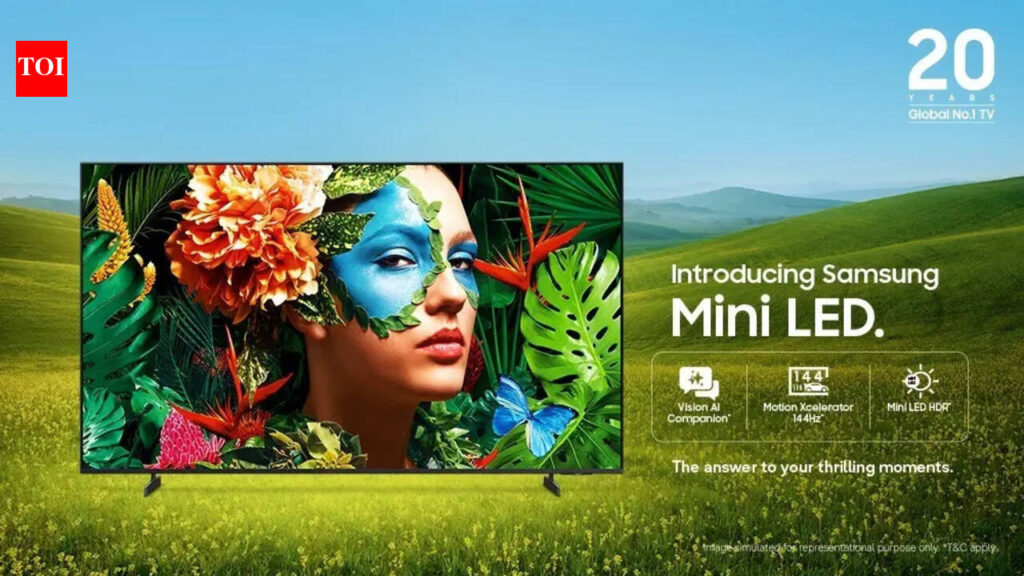
Table of Contents
A Strategic Pivot in Pricing
Samsung is making a calculated move to democratize premium display technology in India. By launching a new series of AI-powered Mini LED televisions starting at a surprisingly aggressive price point of Rs 42,990, the company is effectively blurring the line between mid-range LED sets and high-end cinema displays.
Historically, Mini LED technology—which uses thousands of tiny LEDs to provide superior contrast and brightness compared to traditional LEDs—was reserved for the flagship Neo QLED series, often costing well over a lakh. This new rollout suggests Samsung is feeling the heat from regional competitors like Xiaomi and TCL, who have been undercuting prices in the 55-to-65-inch segment.
The Role of AI in Budget Premium Hardware
The headline feature for this rollout isn’t just the hardware, but the integrated AI processing. Samsung has implemented a specialized AI upscaling engine designed to tackle the reality of Indian broadcasting: a mix of high-definition streaming and lower-resolution cable TV signals. The processor uses neural networks to analyze content in real-time, sharpening edges and reducing noise in legacy 1080p content to approximate a 4K experience.
Beyond image quality, the AI integration extends to energy management. The TVs utilize a dynamic brightness system that adjusts the Mini LED zones based on ambient light levels in the room, attempting to solve the ‘blooming’ effect common in cheaper Mini LED implementations where light leaks from bright objects into dark backgrounds.
Technical Breakdown of the New Series
While the entry-level model starts at Rs 42,990, the lineup scales up in size and feature sets. The core appeal here is the Local Dimming technology. By utilizing a higher density of backlight zones, these sets can achieve deeper blacks that rival OLED, without the risk of burn-in or the higher cost of organic light-emitting diodes.
- Mini LED Backlighting: Thousands of microscopic LEDs for precise luminance control.
- AI Processor: Real-time content analysis for motion smoothing and color correction.
- Gaming Hub: Integration of cloud gaming services, reducing the need for a local console for casual players.
- Tizen OS: The latest iteration of Samsung’s smart platform, optimized for faster app switching and IoT integration via SmartThings.
Market Implications for the Indian Consumer
This pricing strategy represents a shift in how Samsung views the Indian consumer. For years, the company maintained a strict hierarchy: budget LEDs for the masses and Neo QLEDs for the wealthy. By introducing Mini LEDs at the 43,000 INR mark, Samsung is attempting to capture the “aspirational middle”—users who want flagship specs but cannot justify the cost of a top-tier QLED.
Industry analysts suggest this move could trigger a price war in the Mini LED space. If Samsung can maintain margins while offering AI-driven hardware at this price, competitors will be forced to either innovate their panel technology or drop prices further to remain relevant in one of the world’s fastest-growing TV markets.
The availability of these models begins immediately across Samsung’s online store and major retail partners like Reliance Digital and Croma. Whether the lower price point comes with compromises in peak brightness or the number of dimming zones remains to be seen in independent benchmarks, but on paper, the value proposition is disruptive.


