Samsung Floods Indian Market With 72 New ‘Vision AI’ TVs, Including High-Stakes Micro RGB Debut
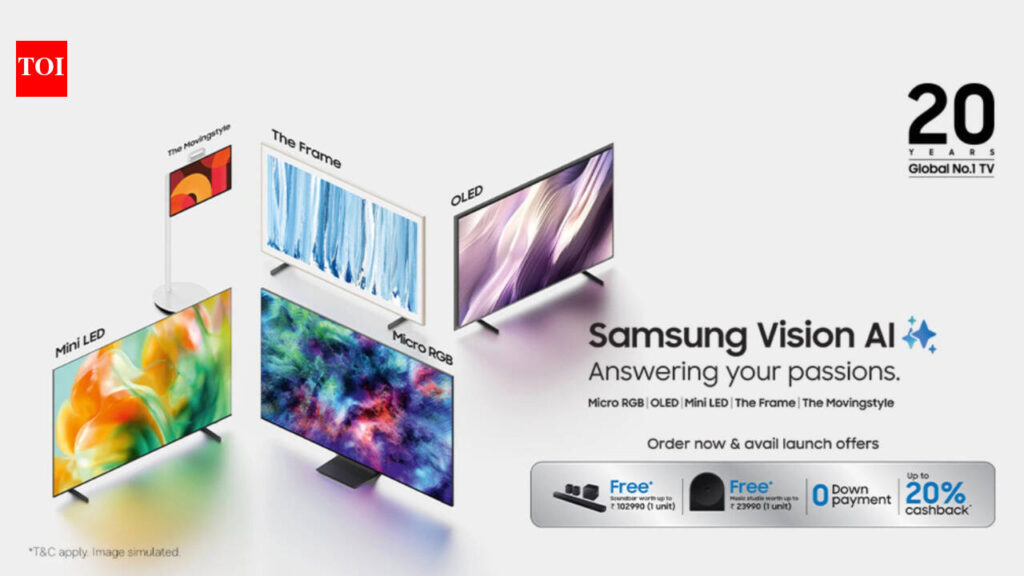
Table of Contents
A Volume Play for the Premium Segment
Samsung isn’t just refreshing its catalog for 2026; it’s attempting to saturate every single price bracket in the Indian home entertainment market. The company has officially unveiled its Vision AI TV lineup in India, a massive rollout comprising 72 different models. While the sheer volume of SKUs suggests a strategy to capture everything from budget bedroom sets to luxury home cinemas, the real story is the introduction of Micro RGB.
Micro RGB represents Samsung’s latest attempt to bridge the gap between the infinite contrast of OLED and the blinding brightness of LED. By utilizing microscopic, self-emissive LEDs, the Micro RGB panels aim to eliminate the risk of burn-in—a long-standing criticism of OLED—while maintaining deep blacks and a color gamut that pushes the boundaries of current consumer display tech. For the Indian market, this is a direct shot at the high-end installations typically dominated by Sony’s Bravia line and LG’s Signature OLEDs.
The ‘Vision AI’ Engine: Beyond Simple Upscaling
The 2026 range is branded under the ‘Vision AI’ moniker, moving away from the more generic ‘Smart TV’ labels of previous years. According to Samsung, the integration of AI isn’t just about cleaning up grainy 1080p content to fit a 4K or 8K panel. The new processing suite focuses on contextual awareness—the TV is designed to identify the type of content being streamed (sports, cinema, or gaming) and adjust the HDR mapping and motion interpolation in real-time without the ‘soap opera effect’ that has plagued previous iterations.
Sound is also receiving an AI overhaul. Samsung is leaning heavily into Object Tracking Sound (OTS), which uses AI to synchronize the audio output with the movement of objects on screen. When paired with the company’s accompanying soundbar ecosystem, the goal is to create a spatial audio environment that doesn’t require a dedicated 7.1 channel setup in the living room.
Market Segmentation and Pricing
The pricing strategy reflects the diverse nature of the 72-model lineup. Entry-level sets start at Rs 36,990, targeting the value-conscious consumer and replacing older Crystal UHD models. However, the ceiling is significantly higher. The flagship Micro RGB units are positioned as luxury assets, with pricing starting at Rs 1,24,990 and climbing steeply depending on screen size and integrated smart home features.
The Competitive Landscape
This aggressive rollout comes at a time when the Indian TV market is seeing a surge in competitive pricing from Chinese brands like Xiaomi and TCL, who have aggressively pushed Mini-LED technology into the mid-range. By diversifying into six distinct categories—including OLED, Neo QLED, and the new Micro RGB—Samsung is effectively building a wall around its market share, ensuring that no matter the budget, there is a ‘Vision AI’ option available.
To drive early adoption, Samsung is bundling the launch with aggressive incentives, including complimentary soundbars and cashback offers. This is likely a move to lock users into the Tizen OS ecosystem, as the integration between the TV and the soundbar is critical for the ‘Vision AI’ audio features to function at peak performance.


