Pope Leo XIV Issues ‘Magnifica Humanitas’ Manifesto, Warning Against the ‘Babel Syndrome’ of AI
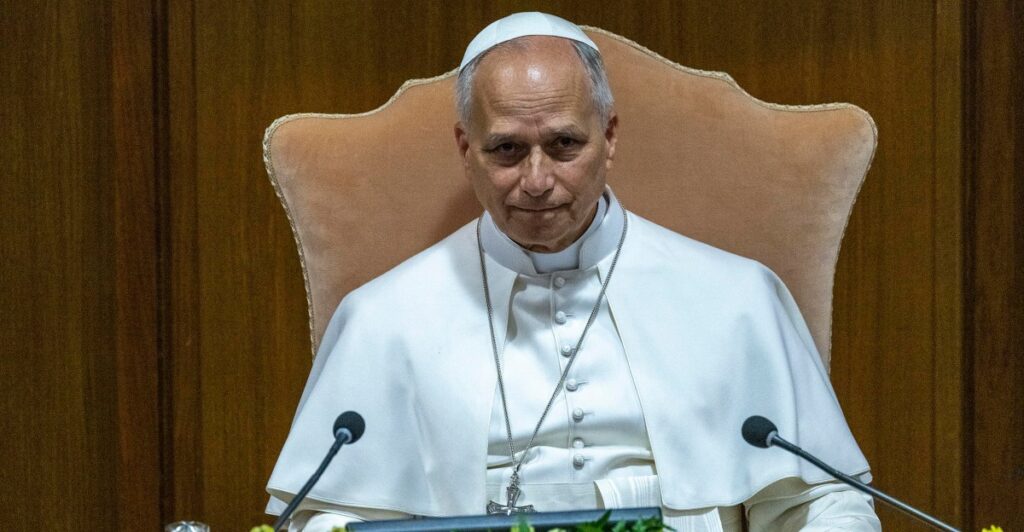
Table of Contents
A Papal Warning Against Digital Idolatry
In a sweeping document that reads as much like a social critique as a religious directive, Pope Leo XIV has released his first major encyclical, Magnifica Humanitas. The 42,000-word manifesto serves as a formal plea for a global legal and ethical framework to govern artificial intelligence, arguing that the current trajectory of tech adoption risks stripping away the very essence of what it means to be human.
The Pope’s primary concern is what he terms the “Babel syndrome.” Drawing a parallel to the biblical narrative of confusion and pride, Leo XIV warns against an “idolatry of profit” where the weak are sacrificed for the sake of efficiency. He cautions against the dangerous assumption that a digital language can translate the entire mystery of human existence into a set of data points and performance metrics.
The Cost of Acceleration
The encyclical does not suggest a total rejection of AI, but it does advocate for a deliberate slowing of the pace. Pope Leo frames this as an act of “responsible care for the human family,” suggesting that the rush to integrate AI into every facet of labor and governance is outpacing our moral ability to manage it.
Central to the document is the impact of AI on the global workforce. The Pope stresses that the economic upheaval caused by rapid automation is creating a vacuum of protection for the individual, which he argues is a direct threat to human dignity. By prioritizing algorithmic output over human agency, the Pope suggests we are moving toward a society where technical power is mistaken for the right to govern.
From Autonomous Weapons to the Classroom
The scope of Magnifica Humanitas is broad, touching on the most contentious frontiers of emerging tech. The Pope specifically highlights the existential risks of AI-powered warfare, calling for a “disarming” of the technology. In this context, disarming isn’t just about removing weapons; it is about stripping away the belief that technical superiority grants a moral mandate to control others.
The document also expresses concern over the cognitive and social development of children. With AI tools becoming embedded in education and entertainment, the Pope argues that the primacy of human conscience and freedom must be protected from the influence of generative systems that can simulate truth without possessing an understanding of it.
The Silicon Valley Influence
The release of the encyclical follows a period of quiet but intense diplomacy between the Vatican and the tech industry. Christopher Olah, co-founder of Anthropic, was among the attendees at the document’s presentation on Monday. Reports from Politico indicate that executives from Google, Meta, and Amazon have held several meetings with Vatican officials in the lead-up to the publication, as these firms seek to shape the Church’s stance on a global scale.
Interestingly, the Pope’s choice of name—Leo XIV—is a deliberate nod to his predecessor, Pope Leo XIII, who issued a landmark encyclical during the Industrial Revolution to protect workers from the excesses of early capitalism. This historical anchoring suggests that Leo XIV views the AI revolution not as a new phenomenon, but as the latest iteration of a recurring struggle between human labor and machine power.
While some industry insiders have attempted to steer the papacy toward a more optimistic view of Artificial General Intelligence (AGI), Magnifica Humanitas remains pointedly focused on the current risks. For the Vatican, the priority is not the potential for a super-intelligence, but the immediate need to ensure that human intelligence, guided by conscience, remains the final arbiter of how technology is used.