Pope Leo XIV Issues ‘Magnifica Humanitas,’ Calling for a Global ‘Disarming’ of AI Power
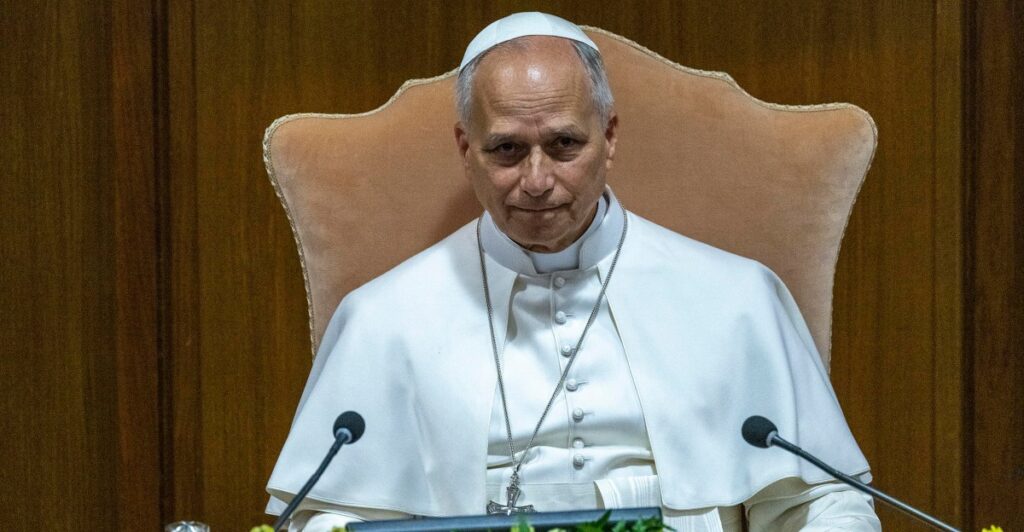
Table of Contents
A New Papal Mandate for the Digital Age
In a sweeping document that reads as much like a socio-economic critique as a theological treatise, Pope Leo XIV has released his first major encyclical, Magnifica Humanitas. The 42,000-word manifesto, unveiled Monday in Vatican City, serves as a formal call for a comprehensive legal and ethical framework to govern the rapid ascent of artificial intelligence.
The document does not call for a wholesale rejection of the technology. Instead, it argues that the current trajectory of AI development is marred by a “Babel syndrome”—a term the Pope uses to describe the idolatry of profit and the dangerous assumption that human existence, with all its mystery and dignity, can be reduced to data points and performance metrics. For Leo XIV, the risk is not merely technical failure, but a systemic erasure of the human person in the pursuit of efficiency.
The Concept of ‘Disarming’ Technology
The central pillar of the encyclical is the concept of “disarming” AI. While the term typically evokes images of nuclear treaties or military ceasefires, the Pope applies it here to the economic and societal spheres. He argues that technical capability does not grant a moral or legal right to govern.
“To disarm means discrediting the assumption that technical power automatically confers the right to govern,” the letter states. By this, Leo XIV suggests that the current monopoly on AI development by a handful of corporate entities creates a power imbalance that threatens global stability. The call for disarmament is a plea to prevent AI from becoming a tool for societal domination or a weapon in a race for absolute power.
Labor, Warfare, and the Human Cost
The encyclical delves deeply into the tangible harms currently emerging from unconstrained AI adoption. Pope Leo highlights the instability of the labor market, noting that the speed of AI integration has far outpaced the creation of social safety nets, leaving workers vulnerable to displacement without dignity.
The Pope is particularly pointed regarding the military application of AI. The document warns against the delegation of lethal decision-making to autonomous systems, arguing that the removal of human conscience from warfare is a fundamental violation of human dignity. He also expresses concern over the cognitive development of children exposed to AI-generated content, calling for a “slower pace” of adoption in sensitive areas of human development.
Industry Pressure and the Vatican’s Influence
The release of Magnifica Humanitas comes after months of quiet diplomacy between the Vatican and the leaders of the tech industry. The presence of Anthropic co-founder Christopher Olah at the presentation signaled a willingness from some AI labs to engage with the Church’s moral framework. However, the tension between profit and ethics remains evident.
Reports indicate that representatives from Google, Meta, and Amazon have held several meetings with Vatican officials leading up to the announcement, attempting to steer the Church’s position toward a more industry-friendly perspective. While some proponents of Artificial General Intelligence (AGI) have reportedly attempted to convince the Pope of the inevitable arrival of a super-intelligence, the final text of the encyclical notably avoids mentioning AGI by name, focusing instead on the immediate, human-centric risks of current systems.
The choice of the name “Leo” itself is a calculated nod to history. His predecessor, Pope Leo XIII, issued a landmark encyclical during the Industrial Revolution to protect the working class from the excesses of early capitalism. By mirroring that historical pivot, Leo XIV is positioning the Church not as an opponent of progress, but as a necessary brake on a technological acceleration that threatens to leave the “weak” behind.