Pashinyan Secures Mandate for Western Pivot in Armenia Election, but Falls Short of Supermajority
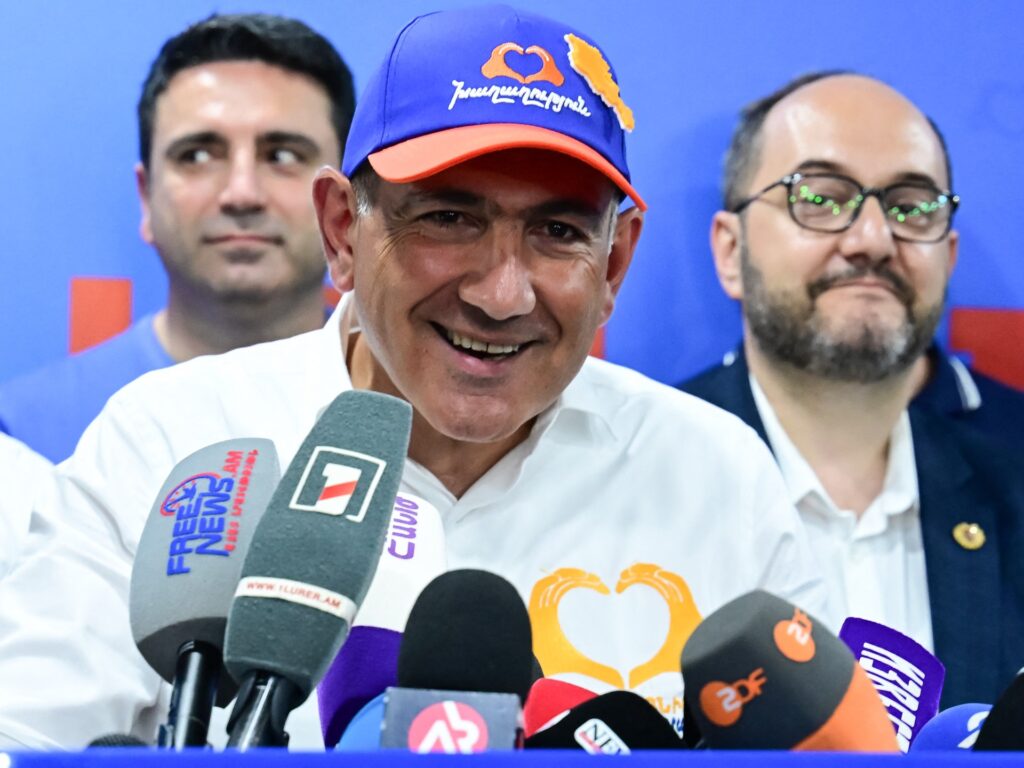
Table of Contents
A Mandate for Geopolitical Reorientation
Preliminary results from Armenia’s Central Election Commission (CEC) indicate a decisive victory for Prime Minister Nikol Pashinyan and his Civil Contract party, which secured 49.81 percent of the vote. The outcome serves as a high-stakes referendum on Pashinyan’s strategy to pivot Armenia away from its historical reliance on Moscow and toward deeper integration with the European Union and the United States.
With a voter turnout exceeding 58 percent, the election arrives at a critical juncture for the landlocked nation. For Pashinyan, the win is an endorsement of a risky diplomatic gamble: distancing the country from the Russia-led Collective Security Treaty Organization (CSTO) while attempting to stabilize a volatile border with Azerbaijan.
In a victory speech, Pashinyan described the result as a “historic victory that will ensure Armenia’s eternity and development,” reaffirming his intent to maintain the course of rapprochement with the West. However, he tempered his rhetoric by noting that Armenia would continue to develop pragmatic relations with Russia, acknowledging the precarious nature of completely severing ties with a neighbor that has long viewed the Caucasus as its exclusive sphere of influence.
The Opposition and Allegations of Repression
The victory was not uncontested. The Strong Armenia alliance, led by Russian-Armenian billionaire Samvel Karapetyan, finished a distant second with 23.29 percent of the vote. The campaign was marred by legal battles and accusations of state-sponsored intimidation. Karapetyan, who remains under house arrest on charges of advocating for the government’s overthrow—charges he maintains are politically motivated—branded the electoral process as “shameful.”
According to Karapetyan, dozens of his campaign staff were targeted by security forces during the cycle. The CEC and Armenia’s Investigative Committee provided a different account, stating that 59 criminal cases were opened regarding electoral violations, resulting in nine detentions. Other opposition entities, including former President Robert Kocharyan’s Armenia alliance and the Prosperous Armenia party, also managed to cross the electoral threshold, securing 9.9 percent and 4 percent of the vote respectively.
The Supermajority Hurdle and the Azerbaijan Peace Deal
While the win secures Pashinyan’s leadership, the numbers reveal a significant strategic limitation. The Civil Contract party fell short of the two-thirds majority required to unilaterally trigger a constitutional referendum. This specific legislative threshold is critical for the formalization of a peace deal with Azerbaijan and the normalization of relations with Turkiye, a staunch ally of Baku.
The inability to secure this supermajority means Pashinyan must now enter a phase of complex parliamentary negotiation or find a way to build a coalition with fragmented opposition parties to move forward with the peace process. This legislative deadlock could potentially slow the momentum of the peace deal, which has been a cornerstone of his foreign policy since the intermittent conflicts with Azerbaijan that have plagued the region since the late 1980s.
The Kremlin’s Growing Friction
The geopolitical stakes of this election extend far beyond Yerevan. Moscow has viewed Pashinyan’s Western tilt with increasing hostility. The Kremlin sees the potential loss of Armenia as a repetition of the Ukrainian crisis. Last May, President Vladimir Putin explicitly linked the current instability in Ukraine to Kyiv’s aspirations to join the EU, a warning that clearly resonated within the Russian diplomatic corps regarding Armenia.
The international response to the results was swift. EU Commission President Ursula von der Leyen congratulated Pashinyan, characterizing the result as a sign of a “democratic Armenia drawing ever closer to Europe.” Similarly, French President Emmanuel Macron noted that the momentum of the country is now shifting decisively toward European ties.
As the final distribution of parliamentary seats is tallied, the central question remains whether Pashinyan can balance his European ambitions with the reality of his geography, ensuring that the pivot to the West does not trigger a catastrophic rupture with the East.