Drone Warfare and Missile Intercepts: The Tech Friction in Iran’s Retaliatory Strikes on US Bases
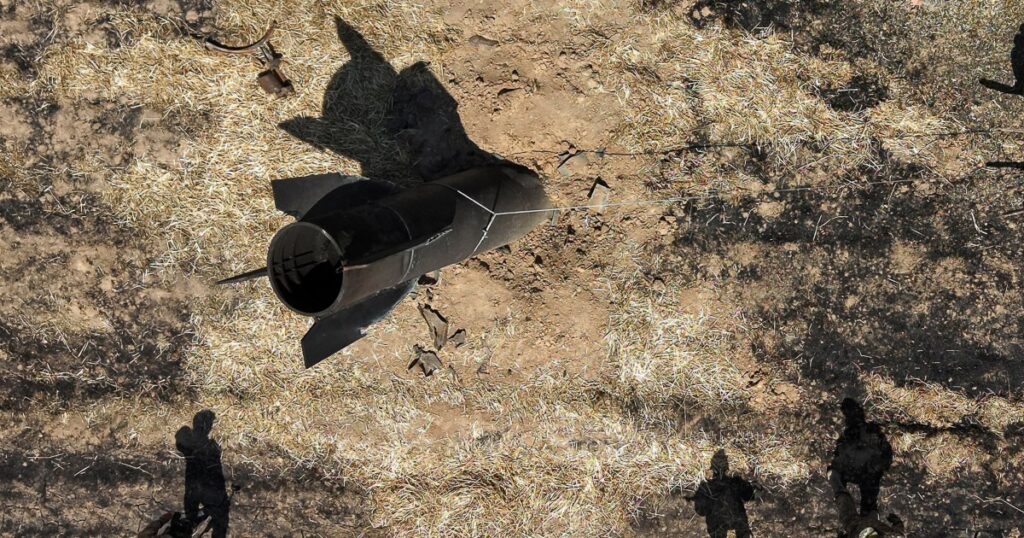
Table of Contents
The Precision Calculus of Retaliation
The Islamic Revolutionary Guard Corps (IRGC) has shifted its tactical approach in the Middle East, moving from asymmetric proxy warfare to direct, high-velocity strikes against US military infrastructure. In a series of coordinated operations on Wednesday, Iran targeted US assets across Bahrain, Kuwait, and Jordan, claiming to have neutralized 21 targets. While the political motivations are rooted in retaliation for US strikes on Iranian ports and Qeshm Island, the technical execution reveals a calculated attempt to test US air defense layers and high-value asset vulnerability.
The most significant claim involves the targeting of an F-35 fighter jet hangar at the Azraq airbase in Jordan. The F-35 Lightning II is the cornerstone of US stealth superiority; targeting its maintenance and storage infrastructure is a strategic signal that stealth capabilities do not equate to ground-level invulnerability. By focusing on the ‘tail’ of the aircraft—the hangars and support systems—the IRGC is attempting to degrade the operational readiness of the US’s most advanced air platform without needing to engage it in mid-air combat.
Aerial Interception and the MQ-9 Attrition War
The conflict continues to be a laboratory for unmanned aerial vehicle (UAV) warfare. The IRGC claims to have downed a US MQ-9 Reaper drone over the city of Jam. The Reaper has long been the primary intelligence, surveillance, and reconnaissance (ISR) tool for the US in the region, but its vulnerability to increasingly sophisticated Iranian surface-to-air missiles and electronic jamming has become a recurring theme in recent years.
Conversely, the Jordanian military reported a successful defense of the Azraq base, claiming to have intercepted and shot down five Iranian missiles. This discrepancy in reporting—between the IRGC’s claim of destroying four targets and Jordan’s claim of zero material damage—underscores the ‘fog of war’ common in modern missile exchanges, where the success of a strike is often measured by the attacker’s perceived impact rather than verified ground wreckage.
The Infrastructure of Escalation
The US strikes that triggered this response were not random; they targeted critical communication and logistics nodes. Reports from the town of Sirik indicate that a telecommunications tower and two water tanks were destroyed. In the modern era of electronic warfare, the destruction of a comms tower is rarely about the hardware itself and more about disrupting the command-and-control (C2) loops that allow the IRGC to coordinate drone swarms and missile batteries.
The use of drone attacks against the US Fifth Fleet in Bahrain and the Ali Al Salem airbase in Kuwait further suggests a strategy of ‘saturation.’ By launching multiple vectors of attack across three different countries simultaneously, Iran forces US air defense systems—such as the Patriot and NASAMS batteries—to operate at maximum capacity, looking for gaps in the radar coverage.
The Doctrine of Proportionate Response
Trita Parsi of the Quincy Institute for Responsible Statecraft suggests that this rapid response is less about starting a full-scale war and more about establishing a new technical doctrine. The goal is to prevent a ‘new normal’ where the US can conduct precision strikes against Iranian soil with impunity. By demonstrating the ability to hit high-value targets like F-35 hangars, Tehran is attempting to create a digital and physical deterrent.
As the US military evaluates the damage and the IRGC maintains its posture of being ‘fully prepared’ for further action, the region remains in a state of high-tension equilibrium. The technical ability to strike precisely, coupled with the political desire to avoid total war, creates a volatile cycle of ‘tit-for-tat’ technology demonstrations that continue to shake global markets and fuel costs.