The AI Chip Euphoria: How Memory Giants are Rewriting South Korea’s Investment DNA
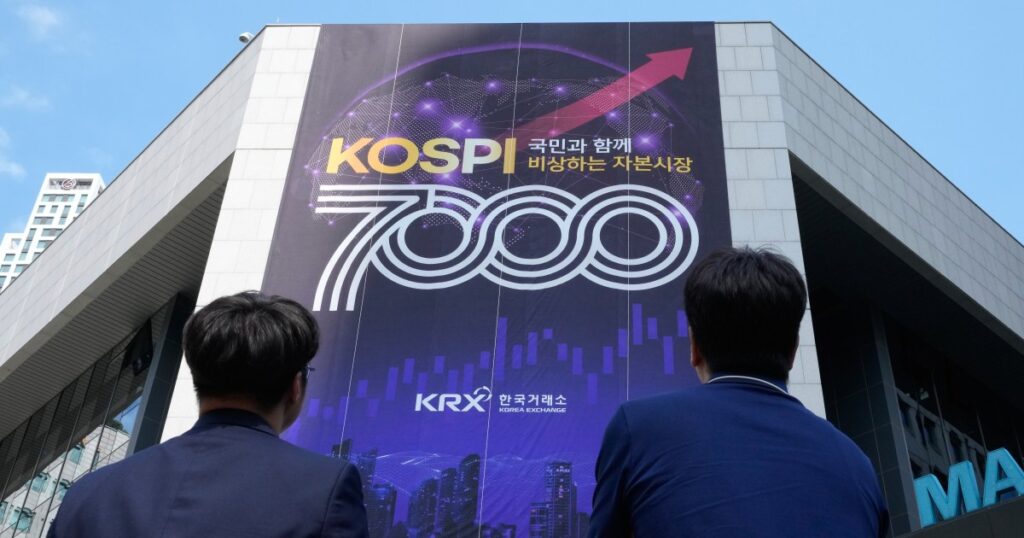
Table of Contents
A New Class of Retail Traders
For Kim Ha-young, a Seoul-based professional in her 30s, the entry into the stock market wasn’t a calculated strategic move—it was a whim. After securing a rental deposit last year, she found herself with unexpected liquidity. With no formal training in technical analysis or market fundamentals, she placed her bets on the two most obvious names in her skyline: Samsung Electronics and SK Hynix.
Kim’s experience is becoming a blueprint for a new generation of South Koreans. After an initial period of tentative trading, her holdings in the two memory chip giants more than doubled in value. She is part of a massive demographic shift in the country’s financial behavior. According to data from the Korea Securities Depository, the number of South Korean stock owners surged from roughly 6 million in 2019 to over 14.5 million by the end of 2025.
This surge is mirrored in account activity. The Korea Financial Investment Association reports that active trading accounts hit 105.22 million as of May, an increase of nearly 7 million since the start of the year. The catalyst is the Kospi, South Korea’s benchmark index, which has nearly doubled in value, outperforming almost every other major global index.
Dismantling the ‘Korea Discount’
For decades, South Korea suffered from what analysts call the “Korea Discount.” Despite producing global powerhouses like Hyundai and Samsung, Korean firms were consistently valued lower than their international peers. This phenomenon was largely attributed to the rigid, family-run chaebol system, which often prioritized dynasty control over shareholder returns.
Jung Jiggwang, head of corporate finance at Woori Bank, notes that this lack of transparency bred a culture of short-term speculation and high volatility, as small investors felt disregarded by corporate boards. However, a concerted political effort is now attempting to pivot the national economy. President Lee Jae-myung entered office with a specific mandate to eliminate this discount, promising to push the Kospi to 5,000 points—a milestone the index has since surpassed.
The Lee administration has introduced reforms to empower minority shareholders, including allowing them to concentrate votes when electing board members. Beyond corporate governance, there is a broader sociological goal: decoupling the Korean middle class from its obsession with real estate. In Seoul, where an average 84-square-meter apartment can command 2.14 billion won ($1.4 million), the government is signaling that capital should flow into high-productivity technology firms rather than stagnant property assets.
The HBM Engine and Market Fragility
While policy reforms provide the framework, the actual fuel for this rally is hardware. The global explosion of Generative AI has created a chronic shortage of High Bandwidth Memory (HBM), the specialized RAM required for AI accelerators. This has catapulted Samsung Electronics and SK Hynix into the trillion-dollar market capitalization club, as they essentially hold the keys to the AI infrastructure gold rush.
For workers like Kim Do-hyun, an employee at a Seoul AI startup, the rally is too significant to ignore. “I just thought having money in the form of cash during this boom is a waste,” he says, reflecting a sentiment of ‘fear of missing out’ (FOMO) that is driving a wave of novice capital into the market.
However, this rapid ascent has come with extreme volatility. The Kospi recently plummeted nearly 9 percent in a single session, triggering circuit breakers for the second time this year. This volatility highlights a dangerous concentration: the rally is heavily skewed toward a few tech giants. While the memory sector is thriving, hundreds of profitable companies in other sectors remain overlooked, leaving the market vulnerable to any correction in US tech spending or a dip in AI chip demand.