Optimizing the Low-Light King: The Best Glass for Sony A7S III and A7S II in 2026
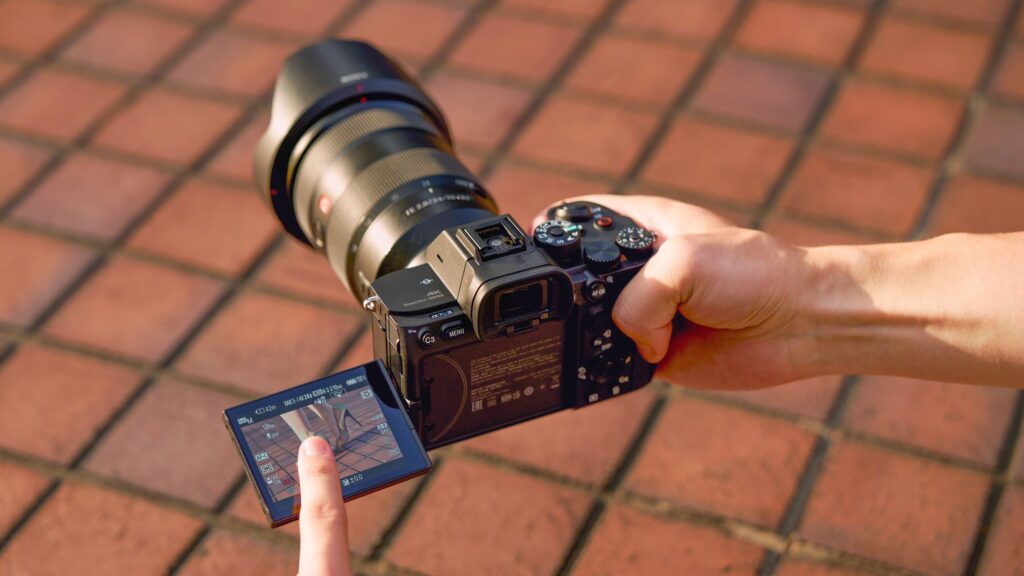
Table of Contents
The Low-Light Specialist’s Dilemma
The Sony A7S III occupies a strange, specialized niche in the current mirrorless market. With a 12.1MP sensor, it is effectively useless for high-resolution commercial stills, yet it remains a gold standard for digital filmmakers and low-light specialists. Even in 2026, its ability to push 4K at 120p with minimal noise makes it a preferred tool for those who prioritize motion over megapixels. However, pairing this body with the wrong glass can neutralize its greatest strength: portability and agility.
While the professional instinct is to reach for the Sony FE 24-70mm f/2.8 GM II, that approach often ignores the practicalities of modern production. For those using gimbals or shooting handheld in tight environments, the bulk of a G Master lens can be a liability. The goal for A7S III and A7S II users isn’t just optical perfection, but a balance of weight, aperture control, and autofocus speed.
The Case for the Compact Standard: FE 24-50mm f/2.8 G
For most operators, the Sony FE 24-50mm f/2.8 G is the logical center of a video-first kit. It manages to maintain a constant f/2.8 aperture—critical for maintaining exposure consistency during a zoom—while shedding the massive footprint of the 24-70mm.
The real value here is in the tactile interface. The lens features a physical aperture ring that can be ‘de-clicked,’ allowing for smooth iris transitions during a recording—a feature that elevates a production from ‘home movie’ to ‘cinematic.’ While the 50mm reach may feel truncated for some, it covers the essential wide and standard focal lengths used in 90% of B-roll and interview setups. When mounted on an A7S III, the center of gravity remains manageable, significantly reducing the strain on gimbal motors.
Versatility vs. Light: The FE 20-70mm f/4 G
There is a different school of thought for those who frequently shoot architecture, vlogs, or expansive landscapes. The Sony FE 20-70mm f/4 G pushes the wide end of the spectrum, offering a 20mm minimum focal length that often eliminates the need for a separate ultra-wide lens.
The trade-off is the f/4 maximum aperture. In a brightly lit studio, this is irrelevant. In the low-light environments where the A7S III usually shines, you’ll be relying on the sensor’s high ISO capabilities to compensate. However, the trade-off is justified by the sheer utility of the range. By reducing lens swaps, you reduce the risk of sensor dust and speed up your production workflow. It is a ‘workhorse’ lens that prioritizes framing flexibility over depth-of-field control.
The Ultra-Lightweight Option: FE 28-60mm f/4-5.6 G
For a subset of users—particularly those using the A7S series for travel or discreet street videography—the FE 28-60mm f/4-5.6 G offers a compelling, if compromised, solution. Originally bundled with the A7C, this lens is an exercise in miniaturization. Weighing only 167g, it transforms the A7S III into a package that barely exceeds the size of a high-end point-and-shoot.
The drawbacks are evident: a variable aperture and a lack of a dedicated aperture ring. This lens is not for the cinematic purist. However, its silent autofocus and surprisingly sharp center-frame performance make it a viable option for those who prioritize a low profile over professional manual controls.
Building a Cohesive Kit
For users of the older A7S II, these modern lenses provide a significant boost in autofocus reliability, though the body’s slower processing will remain the primary bottleneck. The ideal strategy for 2026 is to move away from the ‘one lens for everything’ mentality and instead build a lightweight ecosystem. Pairing the 24-50mm f/2.8 G for primary work with the FE 16-25mm f/2.8 G for ultra-wide shots creates a high-performance, constant-aperture duo that respects the compact nature of the A7S chassis without sacrificing the light-gathering capabilities the sensor was designed for.