The Wide-Angle Dilemma: Navigating Sony E-Mount’s Ultra-Wide Landscape in 2026
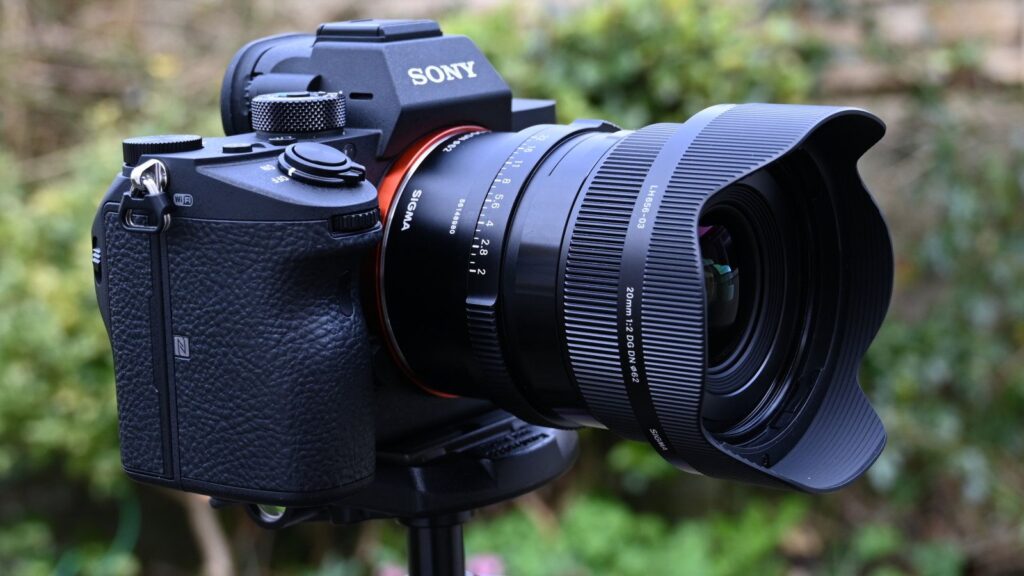
Table of Contents
The Battle for the Horizon
For photographers working within the Sony E-mount ecosystem, the quest for the perfect wide-angle lens is often a trade-off between raw optical perfection and practical portability. Whether you are capturing the brutalist lines of urban architecture or the sweeping scale of a mountain range, the choice of glass dictates not just the field of view, but the very character of the image. As we move through 2026, the market has matured, leaving us with three distinct philosophies: the uncompromising luxury of Sony’s G Master line, the precision value of Sigma, and the utilitarian efficiency of Tamron.
The Gold Standard: Sony FE 12-24mm F2.8 G Master
When budget is secondary to performance, the Sony FE 12-24mm F2.8 G Master remains the benchmark. While most “trinity” wide-angle zooms hover around the 14-24mm range, Sony’s decision to push the wide end to 12mm provides a tangible advantage in tight interiors and expansive vistas. That extra 2mm of focal length is more than a marginal gain; it is the difference between fitting a cathedral’s ceiling into a frame or having to step through a wall.
The engineering here is centered on three XA (eXtreme Aspherical) elements, manufactured to a tolerance of one-hundredth of a micron. In real-world use, this translates to corner-to-corner sharpness that defies the typical softness found in ultra-wide glass. The inclusion of four XD Linear Motors ensures that autofocus remains snappy, even when moving heavy glass elements. However, the integrated hood means there is no traditional filter thread, forcing professionals to rely on the rear gel filter slot—a compromise common in this class of lens but one that requires planning during a shoot.
The Precision Alternative: Sigma 14-24mm F2.8 DG DN Art
For those who find the G Master’s price point prohibitive, the Sigma 14-24mm F2.8 DG DN Art offers a compelling counter-argument. Redesigned specifically for mirrorless systems, this lens avoids the bulk of its DSLR predecessors while maintaining the “Art” series’ reputation for clinical sharpness. Using a combination of FLD (Fluorite Low Dispersion) and SLD (Special Low Dispersion) elements, Sigma has managed to virtually eliminate color fringing and ghosting.
In side-by-side comparisons, the Sigma holds its own in terms of resolution, though it lacks the extreme 12mm reach of the Sony. One standout feature is the AF-L (Autofocus Lock) button, which adds a layer of tactile control that Sony sometimes overlooks in its pursuit of streamlined design. For the working professional, the Sigma represents perhaps the best price-to-performance ratio in the E-mount lineup, delivering pro-grade results for roughly half the investment of the top-tier G Master.
The Pragmatic Choice: Tamron’s Wide-Angle Approach
Then there is the Tamron philosophy. While Sony and Sigma fight for optical dominance, Tamron focuses on the “travel-ready” experience. Their ultra-wide offerings typically trade a small amount of maximum field of view for a significantly more compact chassis. For vloggers using the ZV-E series or landscape photographers who hike miles into the backcountry, the weight savings are a primary consideration.
Tamron’s lenses often lack the complex aperture rings found on G Master glass, but they compensate with intuitive handling and a price point that makes professional wide-angle photography accessible to enthusiasts. While they may not resolve as cleanly at the extreme edges as the 12-24mm GM, the center-frame clarity is more than sufficient for the majority of digital workflows, including high-resolution social media delivery and commercial print.
Choosing the Right Glass
Selecting between these options depends entirely on the environment. If your work involves high-end architectural photography where every millimeter of space counts, the Sony FE 12-24mm is an essential tool. For the studio professional who needs flawless rendering and a sturdy build without spending five figures, the Sigma Art is the logical choice. For the hybrid shooter moving between video and stills who values a light kit, Tamron provides the most balanced utility.