Theker Secures $85M Series A to Challenge Humanoid Norms with Modular Industrial Robotics
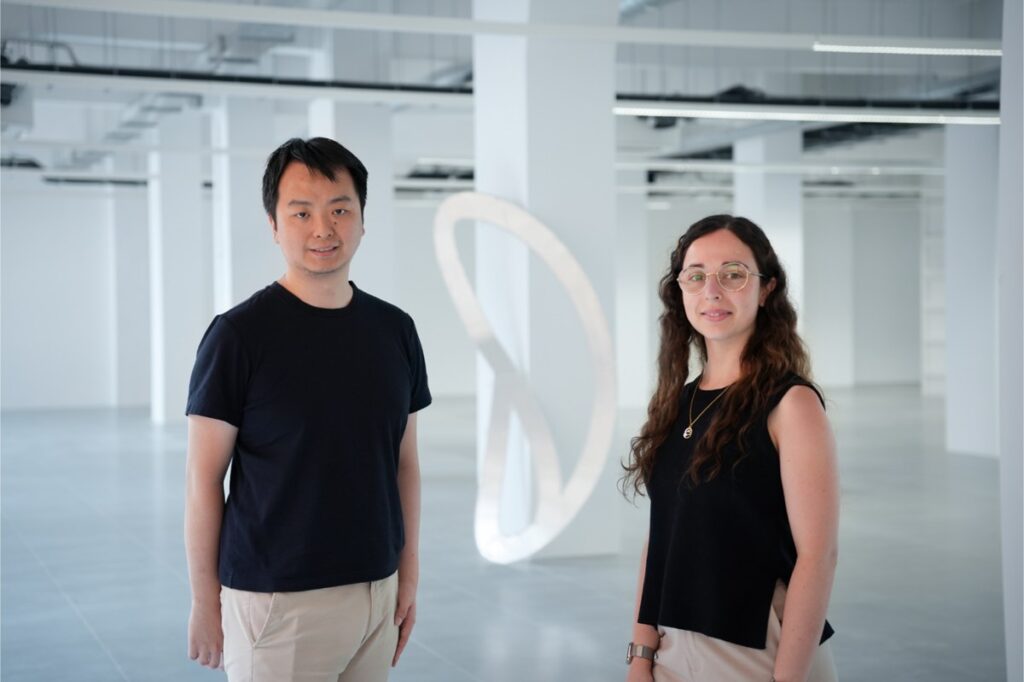
Table of Contents
The Shift from Static Automation to Dynamic Robotics
The industrial world has long been trapped in a paradox of automation. On one hand, we have the high-precision robotic arms of automotive assembly lines—machines that can weld a door with sub-millimeter accuracy but are utterly useless if the part is shifted by two inches. On the other, we have the emerging wave of humanoid robots, designed by the likes of Tesla and Boston Dynamics, which promise human-like versatility but often struggle with the brutal, repetitive reality of a 24/7 warehouse environment.
Enter Theker, a Barcelona-based AI robotics outfit that recently closed an $85 million Series A—reportedly the largest of its kind in Europe. While the industry has been obsessed with mimicking the human form, Theker is pursuing a different, perhaps more pragmatic, philosophy: modular generalism.
- Funding Milestone: Theker raised $85M in a Series A led by CRV, with participation from Samsung and Aglaé Ventures.
- Hardware Philosophy: Instead of a fixed humanoid shape, Theker uses a reconfigurable system where arms and grippers are swapped based on the specific task.
- Strategic Backing: Early adoption and backing from Inditex (Zara) signal a move toward high-volume retail and logistics.
- Operational Focus: The company bypasses traditional ‘innovation labs’ to deploy directly into operations and logistics hubs.
The goal is not to build a robot that looks like a person, but a robot that can perform any task a person does, without the mechanical inefficiency of a human skeleton. This approach addresses the critical labor shortages currently plaguing the global supply chain, where manufacturers are desperate for automation that doesn’t require a six-month reconfiguration period every time a product line changes.
Modular Architecture: The End of the ‘One-Task’ Robot
Most industrial robots are specialized. A picking robot picks; a palletizing robot palletizes. When a company changes its product—say, moving from shipping bottles to shipping oversized clothing items—the hardware often needs a total overhaul. Co-founder Carla Gómez Cano argues that this rigidity is the primary bottleneck in scaling AI in the physical world.
Theker’s solution is a modular hardware ecosystem. Rather than a fixed chassis, their machines are designed to be resized and reconfigured. If a task requires a long reach for deep shelving, the arm is extended. If it requires a delicate grip for apparel, the end-effector is swapped for a specialized soft-gripper. This is combined with an AI layer that allows the robot to adapt to “messy” environments where items aren’t perfectly aligned on a conveyor belt.
In technical terms, this is a move toward General Purpose Robotics (GPR). While companies like Figure AI are betting on the humanoid form factor to navigate human-centric spaces, Theker is optimizing for the task rather than the environment. By decoupling the AI’s intelligence from a rigid physical form, Theker allows the hardware to evolve as quickly as the software.
Decoding the $85 Million Investment: Who is Betting on Theker?
The scale of this Series A—doubling the company’s own target of $30-40 million—suggests a massive appetite for pragmatic AI hardware. The investor lineup provides a blueprint of Theker’s intended trajectory:
- CRV: The American VC lead brings the scaling expertise necessary to move the company from a European darling to a global player.
- Samsung: While not yet a client, Samsung’s involvement is a strategic masterstroke. Samsung possesses both the hardware manufacturing capability and a massive internal need for logistics automation.
- Aglaé Ventures (LVMH): The connection to Bernard Arnault’s ecosystem links Theker directly to the world of high-end luxury goods, where delicate handling and precise inventory management are paramount.
- Inditex (Zara): As an early backer, the parent company of Zara provides the ultimate testing ground: a fast-fashion empire where inventory turns over rapidly and the “messiness” of clothing logistics is a constant challenge.
This mix of venture capital and strategic corporate backing suggests that Theker isn’t just building a prototype; they are building a supply chain for the robots themselves.
What This Means for the Industrial Workforce
The conversation around robotics usually splits into two camps: those who fear mass unemployment and those who see a solution to the “labor gap.” The reality is more nuanced. In sectors like logistics and garment handling, the “labor gap” is a documented crisis. According to recent industry reports on warehouse labor, turnover rates in some logistics hubs exceed 100% annually, making it impossible for companies to maintain a stable human workforce.
Theker’s modular approach means that automation can be introduced incrementally. Instead of replacing an entire wing of a factory with humanoids, a company can deploy a modular unit that handles one specific, high-turnover task, then reconfigure it as the business grows. This lowers the barrier to entry for mid-sized manufacturers who cannot afford a complete digital transformation but need to automate a few key bottlenecks.
The Barcelona Hub: Why Location Matters
The decision to keep headquarters in Barcelona is not merely sentimental. The city has quietly evolved into a European robotics cluster, benefiting from a strong intersection of academic research and an industrial base in Catalonia. By scaling their team from dozens to an expected 120 by the end of 2025, Theker is tapping into a localized talent pool that specializes in mechatronics and AI.
Gómez Cano’s insistence on avoiding “innovation departments” is a critical distinction. Many AI startups fail because they get stuck in “pilot purgatory”—a cycle of endless trials in a controlled lab that never translate to the factory floor. Theker’s strategy of going straight to operations suggests a focus on Minimum Viable Product (MVP) deployment, where the robot must prove its value in a live environment to justify its cost.
Technical Comparison: Humanoids vs. Modular Systems
| Feature | Humanoid Robots (e.g., Tesla Optimus) | Theker Modular Systems |
|---|---|---|
| Form Factor | Fixed Human Shape | Reconfigurable / Swappable |
| Primary Strength | Navigating Human Spaces | Task-Specific Efficiency |
| Deployment Speed | Long (Hardware Iteration) | Fast (Module Swapping) |
| Energy Efficiency | Lower (Balancing Act) | Higher (Optimized Base) |
| Use Case | General Assistance | High-Volume Industrial/Logistics |
Frequently Asked Questions
Will Theker robots replace human workers?
Theker targets tasks that are repetitive, physically taxing, or plagued by high turnover. While they automate specific roles, the goal is typically to augment the workforce or fill gaps where human labor is unavailable, rather than a wholesale replacement of the human element.
How does a modular robot differ from a standard robotic arm?
A standard arm is fixed to a base and performs a set range of motions. Theker’s system is designed for reconfiguration; components like the arm length and the end-effector (the ‘hand’) can be swapped out, allowing one robot to perform multiple different roles across a warehouse.
Who are Theker’s main competitors?
They compete with both traditional automation companies (like Fanuc or ABB) and the new wave of AI humanoid startups (like Figure or 1X). Their unique value proposition is the middle ground: the flexibility of a humanoid with the reliability of industrial hardware.
Is Samsung already using Theker robots?
According to co-founder Carla Gómez Cano, Samsung is currently an investor and is in advanced discussions to potentially become a customer and supplier, but they are not yet officially deployed in Samsung facilities.
What industries can use this technology?
While they are starting with retail and logistics (via Inditex), the modular nature of the robots makes them applicable to any industry with varied manual tasks, including electronics assembly, pharmaceutical packaging, and automotive parts handling.
The Path to Scalability
The $85 million injection provides Theker with the runway to move from the showroom in Barcelona to global deployment. The immediate challenge will be interoperability. For a modular system to work, the software must be able to recognize and control different hardware attachments instantly. This requires a sophisticated “hardware abstraction layer”—essentially a universal driver for robot parts.
If Theker can successfully standardize these modules, they won’t just be selling robots; they will be selling a platform. In such a scenario, the “robot” becomes the operating system, and the modular arms and grippers become the “apps” that companies buy to solve specific problems. This is the true disruption: shifting the robotics industry from a hardware-sales model to a platform-ecosystem model.