Lenovo Bets Big on Modular Hardware and Foldable Handhelds at MWC 2026
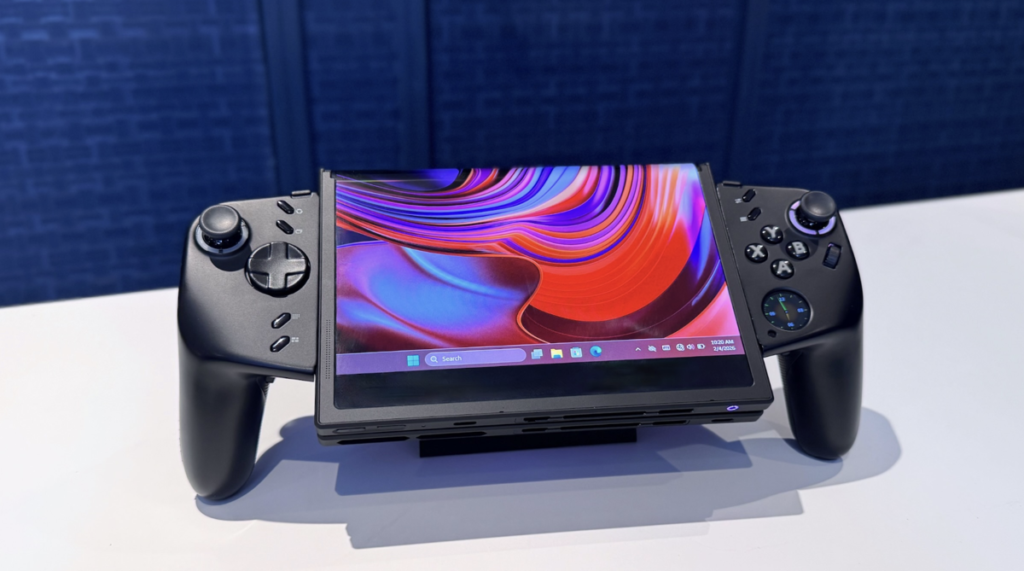
Table of Contents
A Pivot Toward Experimental Form Factors
Lenovo has arrived at Mobile World Congress (MWC) 2026 with a clear objective: to move beyond the traditional laptop chassis. While the company continues to churn out iterative updates to its massive PC portfolio, the real story in Barcelona is a series of highly ambitious concepts that signal a shift toward modularity, foldable gaming, and spatial computing.
The most immediate crowd-pleaser is the Legion Go Fold Concept. After weeks of leaks, Lenovo confirmed the existence of a gaming handheld that attempts to bridge the gap between a portable console and a full-fledged productivity machine. The device features a 7.7-inch POLED display that unfolds into a sprawling 11.6-inch canvas. Unlike previous foldable attempts, the Legion Go Fold integrates a detachable wireless keyboard, effectively transforming it into a clamshell Windows laptop. Internally, Lenovo is utilizing Intel Lunar Lake silicon paired with 32GB of RAM, suggesting that while this is a prototype, the engineering is grounded in current-gen performance targets.
The Return of the Modular PC
Perhaps more significant from a sustainability and utility perspective is the ThinkBook Modular AI PC Concept. For years, the industry has seen a trend toward soldering components to save space, but Lenovo is pivoting back toward a Framework-style philosophy. The modular concept allows users to hot-swap ports and peripherals, moving away from the static I/O layouts that often make laptops obsolete as standards evolve.
The device features detachable secondary displays and keyboards that connect via integrated pogo-pin connectors. According to Lenovo, these connectors ensure stable power and data transfer while allowing the system to remain flexible. By decoupling the screen from the input method, Lenovo is essentially treating the laptop as a set of interchangeable modules rather than a single, disposable unit.
3D Visualization and the ‘AI Desk’
For creators, Lenovo unveiled the Yoga Book Pro 3D Concept. This dual-display machine utilizes eye-tracking technology to render objects in 3D without the need for specialized glasses. Powered by an Nvidia GeForce RTX 5070 and an Intel Core Ultra 7, the device is clearly positioned for high-end rendering and spatial design. A unique addition is the set of snap-on pads for the lower touchscreen, which activate context-specific menus based on the creator’s workflow.
Beyond the laptops, Lenovo is attempting to colonize the desktop with two distinct AI companions. The AI Work Companion is a discreet, clock-like device designed for consumer time management, using a ‘Thought Bubble’ interface to sync schedules across devices. Conversely, the AI Workmate is a more anthropomorphic, business-centric tool. Resembling a robotic lamp, the Workmate uses on-device AI to scan physical documents, summarize text, and project content onto surrounding surfaces, moving the AI interaction from a chat box to a physical entity in the room.
Mainstream Hardware and the Aura Edition
While the concepts capture the headlines, Lenovo’s commercial strategy remains rooted in its flagship lines. The new Yoga 9i 2-in-1 Aura Edition leads the consumer charge, debuting with an Intel Core Ultra Series 3 chip and a refined, lighter chassis. In a move that will please audiophiles and legacy users, Lenovo has brought back the headphone jack, a casualty of the ‘minimalist’ trend of the last few years. The device will launch in May with a price tag of $1,949.
On the enterprise side, the T-Series ThinkPads are seeing a shift toward better repairability, mirroring the ‘Space Frame’ design philosophy seen in the X1 Carbon Gen 14. This suggests that Lenovo is finally aligning its corporate hardware with the growing regulatory and consumer demand for right-to-repair standards.


