Nikon’s Z 28-400mm Superzoom Hits a New Price Low as the ‘One-Lens’ Travel Philosophy Gains Ground
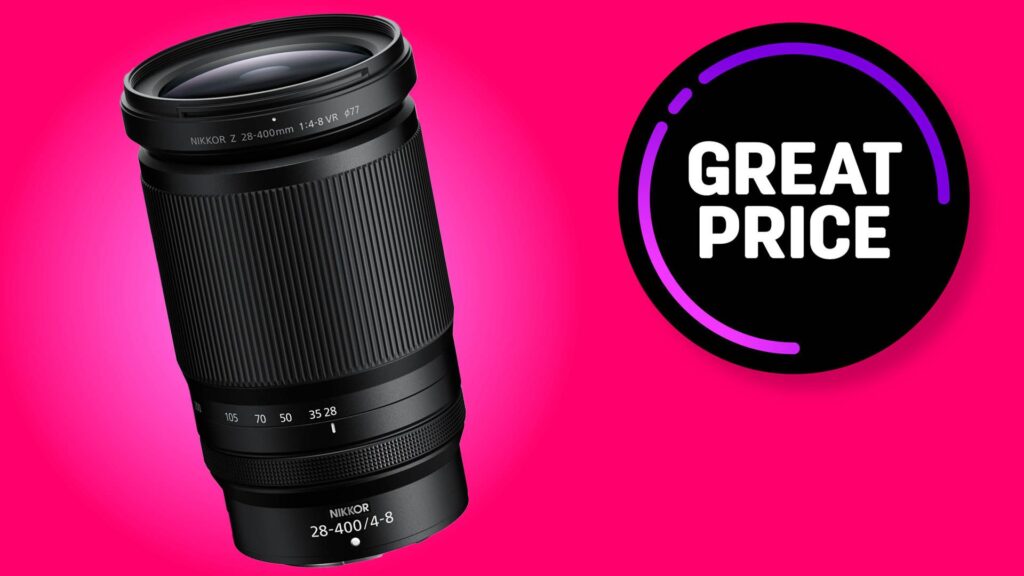
Table of Contents
The convenience of the ‘everything’ lens
For years, the mantra of the professional photographer was specificity: a wide-angle for landscapes, a 50mm prime for street, and a heavy telephoto for wildlife. But as mirrorless systems mature and travel photography trends toward minimalism, Nikon is leaning harder into the ‘one-lens’ solution. The Nikon Z 28-400mm f/4-8 VR has just become significantly more accessible, with B&H slashing the price by $300, bringing the current cost down to $1,146.95 from its original $1,446.95.
This isn’t just a seasonal discount; it’s a strategic positioning of a lens that attempts to do the impossible: bridge the gap between a wide-angle snapshot and a long-distance reach without forcing the user to touch their lens cap. A 14.2x zoom range is an ambitious engineering feat for a full-frame sensor, providing a flexibility that was previously the domain of smaller APS-C or micro four-thirds systems.
Managing the trade-offs of a variable aperture
The primary point of contention for purists is the f/4-8 variable aperture. In the world of optics, there is no such thing as a free lunch. To keep the lens portable and the zoom range this vast, Nikon had to sacrifice light intake at the long end. At 400mm, an f/8 aperture means this lens will struggle in dim environments or during the ‘blue hour’ without a tripod or a very high ISO setting.
However, for the target demographic—travelers, event shooters, and casual wildlife enthusiasts—this is a calculated compromise. When shooting in midday sun or bright outdoor environments, f/8 is often sufficient, especially when paired with the advanced noise-handling capabilities of the Nikon Z6 III or the high-resolution sensor of the Z8. The value here isn’t in bokeh-heavy portraits or low-light stealth; it’s in the ability to pivot from a wide architectural shot to a tight candid of a subject across the street in a fraction of a second.
Stabilization as a necessity, not a feature
At the 400mm mark, the smallest handshake is magnified into a blurry mess. This is where Nikon’s Vibration Reduction (VR) becomes the lens’s most critical component. The integration of VR allows photographers to push the handheld limits of the lens, making the 400mm reach actually usable for those who aren’t carrying a monopod. When paired with the in-body image stabilization (IBIS) found in the Z7 II or Zf, the synergy creates a stable platform that allows for sharper images at slower shutter speeds.
Fitting into the Z-mount ecosystem
The 28-400mm fills a specific void in the Z-mount lineup. While Nikon has world-class S-Line glass for professionals, there has been a growing demand for ‘utility glass’—lenses that don’t necessarily strive for clinical perfection in every scenario but maximize the usability of the camera body. For a user with a Zf, the lens adds a modern, versatile capability to a camera designed with a vintage aesthetic, while Z8 users can use it as a lightweight secondary option when they don’t want to lug around a 100-400mm or a 600mm prime.
At the new price point of $1,146.95, the value proposition shifts. The lens moves from being a ‘luxury convenience’ to a ‘practical essential’ for those who prioritize the experience of shooting over the ritual of gear swapping. It effectively replaces three different lenses in a single bag, reducing the risk of sensor dust and increasing the speed of capture.