ICE Expands Biometric Surveillance with $25 Million Deal for Iris and Facial Recognition Scanners
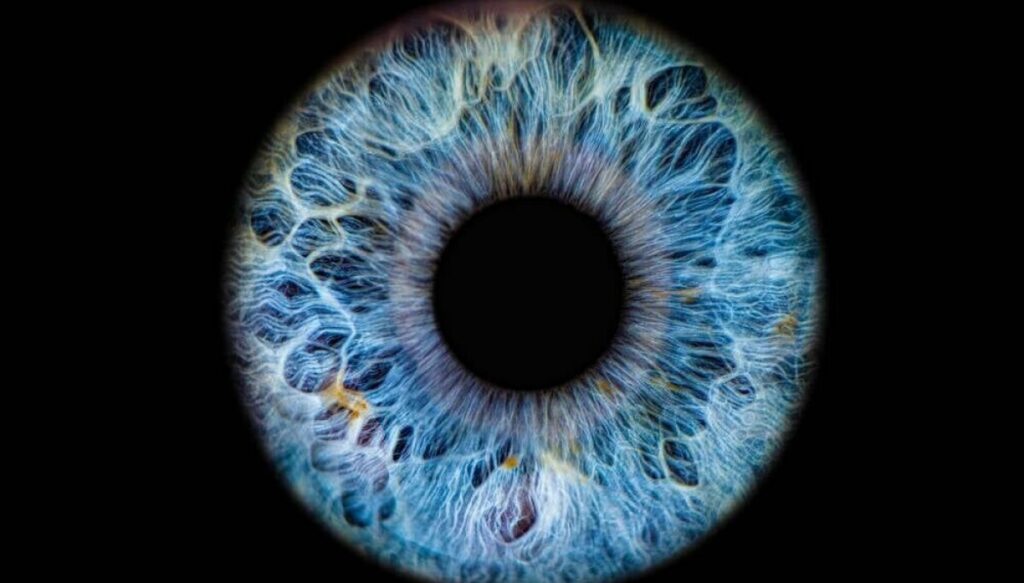
Table of Contents
A Massive Leap in Field Identification
U.S. Immigration and Customs Enforcement (ICE) is significantly scaling its biometric capabilities through a new $25.1 million contract that brings high-precision iris and facial recognition technology directly into the field. The agreement, detailed in procurement summaries released by the Department of Homeland Security (DHS), involves the acquisition of 1,570 biometric recognition devices from Bi2 Technologies.
These devices are not mere handheld scanners; they are designed for both mobile and stationary configurations, allowing agents to identify individuals on the fly using a combination of fingerprints, iris scans, and facial recognition. The hardware serves as a gateway to Bi2’s Inmate Recognition and Identification System (IRIS), a massive aggregation of over five million booking, arrest, and incarceration records spanning 47 states. Beyond criminal records, the system integrates data from driver’s licenses and vehicle license plates, creating a comprehensive digital dragnet for field agents.
The Sole-Source Controversy
The procurement of these devices has raised eyebrows among government spending watchdogs because the deal was awarded as a sole-source acquisition. Typically, government contracts of this magnitude require a competitive bidding process to ensure fiscal responsibility and technical neutrality. However, ICE bypassed this process, justifying the move by claiming Bi2’s capabilities are “unmatched by any competitor.”
Evidence suggests this massive rollout follows a smaller, targeted pilot program. Last year, ICE paid Bi2 Technologies $4.6 million for a trial run that deployed approximately 200 devices across the country. The success of that initial phase appears to have paved the way for this expanded deployment. Under the FY 2025 contract, which runs through September, the agency is aggressively increasing its hardware footprint. If the rollout proceeds as planned, nearly 1,800 devices could be active on American streets by May 2027.
Privacy Concerns and Political Friction
While the Bi2 contract hasn’t yet triggered the same level of public outcry as some of the agency’s previous software acquisitions, it arrives amidst a broader climate of suspicion regarding biometric surveillance. Civil liberties advocates have long warned that the proliferation of such tools—especially those capable of iris scanning—transforms public spaces into zones of constant identification.
The tension is already evident in the U.S. Senate. Democratic lawmakers have previously targeted ICE’s use of biometric identification technology, specifically citing a tool known as Mobile Fortify. That application, reportedly used during previous immigration enforcement surges, was scrutinized for its potential to identify protesters and individuals exercising their First Amendment rights.
In a formal letter sent last September, senators urged ICE to cease using Mobile Fortify, arguing that the technology was prone to inaccuracy and bias. The concern is that a “false positive” in a biometric match—where the system incorrectly identifies a person as a fugitive or an undocumented immigrant—could lead to wrongful detentions and a chilling effect on legal public assembly.
The Technicality of the Eye
The shift toward iris scanning represents a technical escalation over standard facial recognition. While facial recognition can be hampered by lighting, masks, or aging, the patterns in the iris are virtually unique and remain stable throughout a person’s life. By integrating this into mobile devices, ICE is essentially moving a forensic-grade laboratory into the hands of every field agent, removing the need to transport suspects to a centralized processing center for identification.
Despite the scale of the investment and the potential for civil rights implications, both ICE and the DHS have remained silent, declining to answer specific questions regarding the oversight mechanisms governing the use of these 1,570 new devices.