IBM Bets $1 Billion on ‘Anderon’ to Create America’s First Pure-Play Quantum Foundry
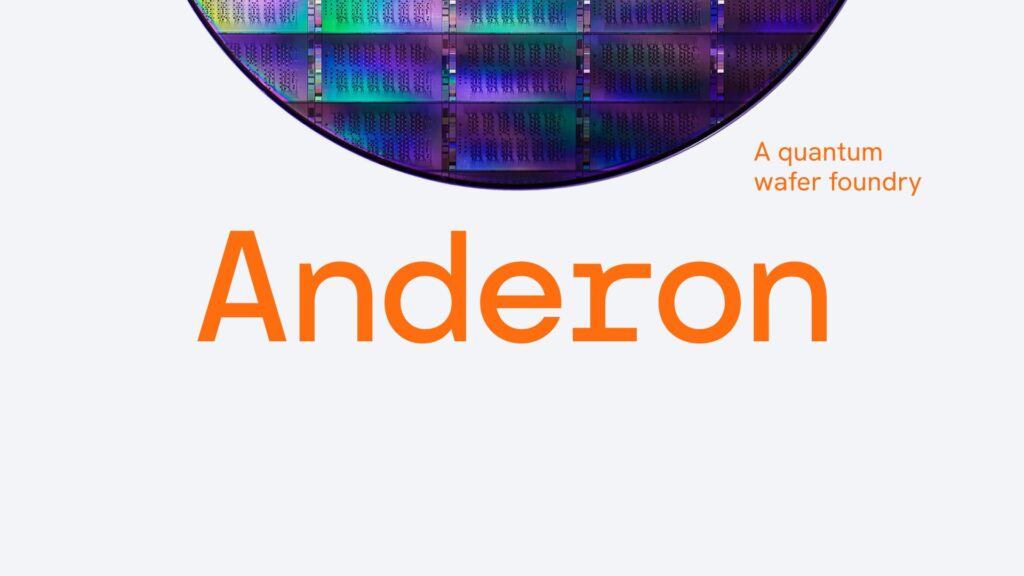
Table of Contents
A Strategic Gamble on the ‘TSMC of Quantum’
IBM is attempting to fundamentally reshape the quantum hardware landscape with the launch of Anderon, a standalone quantum chip foundry designed to do for qubits what TSMC did for the semiconductor industry. Headquartered in Albany, New York, Anderon represents a massive bet on the industrialization of quantum computing, backed by a $2 billion funding package split evenly between IBM and the U.S. Department of Commerce via the CHIPS Act.
Until now, the quantum sector has been characterized by extreme vertical integration. Every major player—from Google to Rigetti—has been forced to design, fabricate, and operate their own hardware in-house. By spinning off Anderon, IBM is introducing a neutral third-party manufacturing model that will fabricate superconducting qubit wafers for both its own processors and those of its competitors.
The scale of the operation is significant. Anderon will operate a 300mm quantum wafer fab. The move to 300mm silicon is not merely a size upgrade; according to Jay Gambetta, IBM’s Director of Research, this transition allows for device output to move roughly 30 times faster by multiplying device complexity tenfold and tripling the number of devices per line. This industrial capacity is critical for IBM’s aggressive roadmap, which includes the Starling processor in 2029 (targeting 200 logical qubits) and the Blue Jay in 2033 (targeting 2,000 logical qubits).
The Federal Quantum Portfolio
Anderon is the crown jewel of a broader $2.013 billion federal quantum R&D portfolio, the largest single commitment of its kind in U.S. history. While Anderon takes the lion’s share, the Department of Commerce has distributed funds across nine companies to ensure a diversified domestic ecosystem.
GlobalFoundries received $375 million to launch a “Quantum Technology Solutions” foundry, which differs from Anderon by covering a wider array of qubit architectures, including trapped-ion, photonic, and silicon-spin designs. Meanwhile, a group of seven specialized companies—including D-Wave, Rigetti, Atom Computing, Infleqtion, PsiQuantum, and Quantinuum—each received $100 million, with the Australian startup Diraq receiving $38 million.
The funding comes with strings attached. Most of the non-foundry recipients are required to grant the federal government a minority, non-controlling equity stake. Rigetti has already disclosed a memorandum of understanding stating the government will receive common stock at a 15% discount. Interestingly, IBM has remained silent on any equivalent equity-stake disclosure for Anderon, a detail that stands out given recent precedents where the Trump administration converted portions of Intel’s CHIPS Act awards into government equity.
The Trust Deficit and Market Realities
Despite the technical appeal of 300mm production, Anderon faces a steep climb in gaining customer trust. The TSMC model succeeded because its founder, Morris Chang, famously promised not to compete with the clients whose chips he manufactured. IBM cannot make that promise. As a dominant player with over 90 operational quantum computers and a massive footprint across the Fortune 500, IBM is simultaneously the foundry’s biggest customer and its rivals’ fiercest competitor.
This creates a strategic dilemma for superconducting quantum startups like Rigetti, IQM, and SEEQC. Outsourcing to Anderon would allow them to bypass the astronomical costs of building their own cleanrooms and accessing established process design kits (PDKs), but it risks leaking process knowledge to IBM.
Furthermore, Anderon’s immediate addressable market is relatively narrow. Tech giants like Google, which recently demonstrated quantum advantage with its 105-qubit Willow processor, maintain their own fabrication facilities in Santa Barbara and are unlikely to hand over their blueprints. Similarly, companies utilizing trapped-ion or topological qubit architectures, such as IonQ and Microsoft, operate on entirely different fabrication paths that Anderon’s initial superconducting focus does not cover.
Coming Full Circle in Albany
The decision to base Anderon in Albany carries a layer of historical irony. In 2014, IBM effectively exited the regional chip manufacturing business, paying GlobalFoundries $1.5 billion to take over its East Fishkill and Essex Junction fabs to stop losses of roughly $700 million per year. Now, IBM is returning to the area to lead a new era of fabrication.
The Albany NanoTech Complex, located on the SUNY Polytechnic campus, has become a global epicenter for semiconductor R&D with over $25 billion in cumulative investment. By embedding Anderon within this ecosystem—alongside ASML, Tokyo Electron, and Samsung—IBM is positioning the foundry not just as a business unit, but as the cornerstone of a national quantum infrastructure.


