OPPO Pad 6 Debuts With Ultra-Slim Chassis and Dimensity 9500s Power
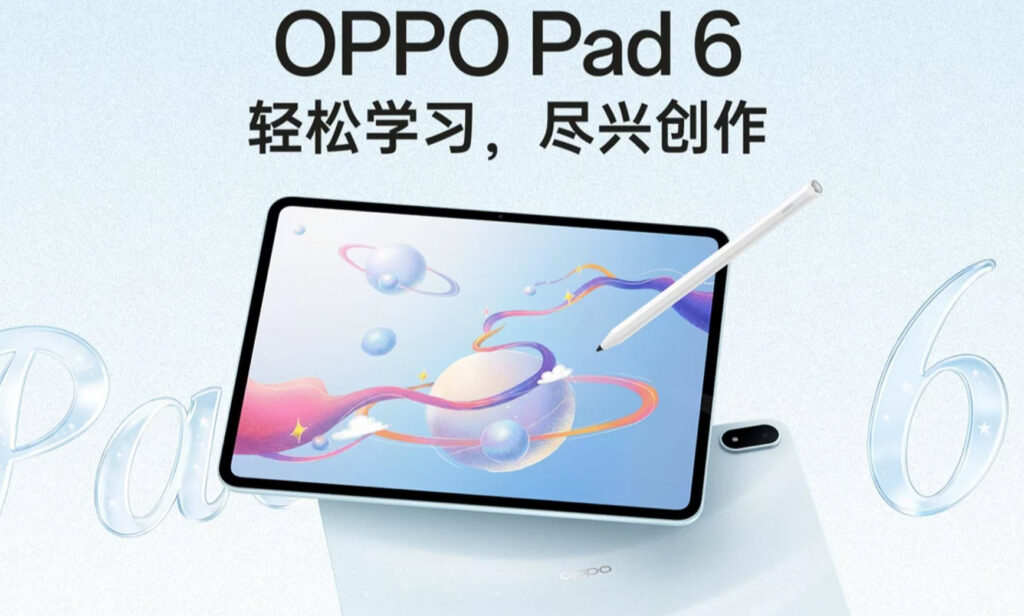
Table of Contents
A Race to the Bottom: The Quest for Thickness
OPPO is continuing its aggressive push into the high-end tablet market with the official unveiling of the Pad 6 in China. While the hardware specs are competitive, the real story here is the industrial design. At just 5.99mm, the Pad 6 is positioning itself as one of the thinnest productivity slabs on the market, weighing in at 577 grams. It arrives in a trio of professional finishes: Starlight Blue, Galaxy Silver, and Deep Space Gray.
This obsession with a slim profile isn’t just about aesthetics; it’s an attempt to bridge the gap between the portability of a notebook and the utility of a tablet. However, the challenge for any device this thin is thermal management and battery capacity—two areas where OPPO claims to have found a balance.
Visuals and the “Soft Light” Approach
The display is a 12.1-inch 3K LCD panel, pushing a 144Hz refresh rate. While OLED remains the gold standard for contrast, OPPO is doubling down on a refined LCD experience. The standout feature is the proprietary “Soft Light” screen technology. This isn’t just a marketing buzzword; it’s a matte-like coating designed to diffuse ambient light and reduce the harsh glare common in office environments or under direct sunlight.
For users who primarily use tablets for reading long-form documents or sketching, this reduction in reflectivity is a significant ergonomic win over the glossy, mirror-like screens found on the iPad Pro or Samsung Galaxy Tab S series. It suggests that OPPO is targeting the “prosumer” who spends more time in productivity apps than in media consumption.
Under the Hood: The Dimensity Shift
Powering the Pad 6 is the MediaTek Dimensity 9500s. This chipset has already seen some deployment in high-end handsets—most notably the POCO X8 Pro Max—and it brings a level of raw performance that pushes the Pad 6 into the enthusiast category. Initial benchmarks indicate the device can soar past 3 million points on AnTuTu, placing it in direct competition with the latest Snapdragon 8-series iterations.
To keep that processor fed, OPPO has packed a substantial 10,420 mAh battery. In a device under 6mm, fitting a battery of this size is a technical feat. To mitigate the inevitable drain from a 144Hz 3K screen, the Pad 6 supports 67W fast charging, ensuring that the downtime for a full recharge remains manageable.
Software and the Productivity Ecosystem
Hardware aside, the Pad 6 is a vehicle for OPPO’s evolving vision of Android multitasking. The software layer emphasizes a “PC-like” experience, moving away from the traditional mobile app grid. Key features include advanced floating windows and a revamped file management system that mirrors a desktop directory structure.
The device also integrates deeply with the OPPO ecosystem. A notable quality-of-life addition is the ability to share a nearby OPPO phone’s 5G connection directly with the tablet, reducing the friction of tethering. With full stylus support and keyboard compatibility, the Pad 6 is clearly designed to be more than a media player; it’s an attempt to capture the “laptop replacement” segment of the market.
While the leap from the Pad 5 is incremental in terms of raw utility, the combination of the 9500s chipset and the ultra-slim chassis makes the Pad 6 a formidable contender for those who prioritize portability without sacrificing computational power.


