Gigabyte Bets on Local AI and RTX 50-Series Cooling at Computex 2026
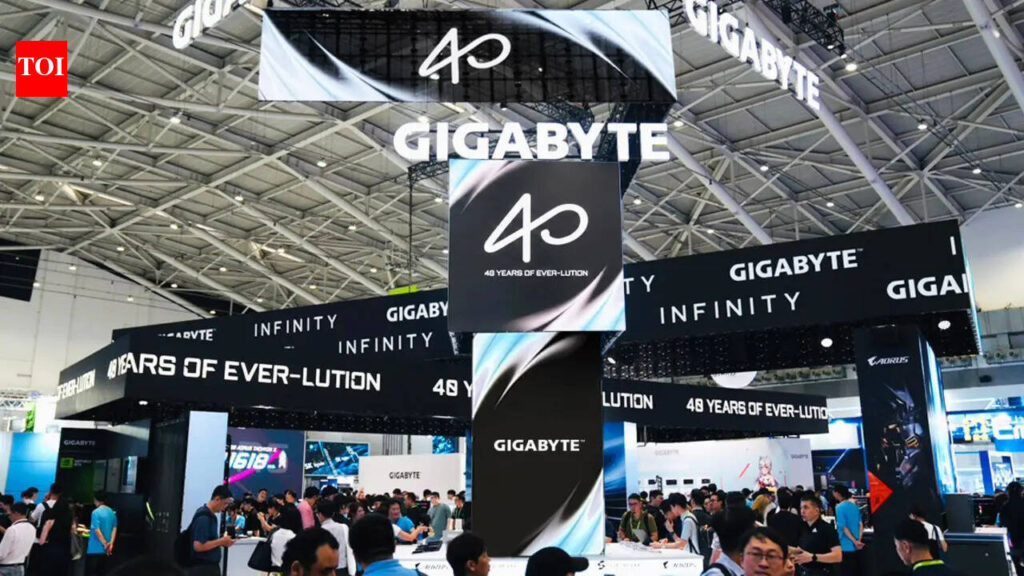
Table of Contents
Moving the Intelligence Local
At Computex 2026, Gigabyte is attempting to pivot away from the cloud-dependency that has defined the first wave of the AI boom. The center piece of their showcase is the “AI TOP” ecosystem, a hardware-centric approach designed to facilitate the training and deployment of Large Language Models (LLMs) directly on local workstations rather than relying on expensive, latency-prone API calls to remote servers.
The AI TOP initiative isn’t just a single product but a modular framework. By integrating high-density compute clusters and optimized thermal management, Gigabyte is targeting developers and enterprises who require strict data privacy and deterministic performance. This move positions Gigabyte as a direct competitor to specialized AI workstation providers, offering a bridge between consumer-grade gaming hardware and enterprise-level AI accelerators.
Thermals and the RTX 50 Series
While AI takes the spotlight, the gaming community is focused on the practicalities of the next GPU cycle. With the GeForce RTX 50 series introducing higher power draws and denser heat profiles, Gigabyte has debuted a suite of innovative cooling solutions designed to keep these cards from thermal throttling. The new designs emphasize expanded vapor chamber technology and a redesigned fin array that increases surface area without bloating the physical footprint of the cards.
The engineering focus here is clear: as NVIDIA pushes for higher clock speeds, the bottleneck is no longer the silicon, but the ability to move heat away from it. Gigabyte’s new AORUS cooling solutions are designed to handle the transient power spikes characteristic of the 50-series architecture, ensuring that performance remains stable during sustained 4K and 8K rendering tasks.
Pushing the Pixel Ceiling
On the display front, the AORUS brand is moving beyond the traditional 4K standard. Gigabyte showcased next-gen AORUS monitors boasting 5K resolution, targeting a niche of “prosumer” gamers and creators who find 4K slightly limiting for multitasking but aren’t yet ready for the extreme hardware demands of 8K. These panels utilize high-refresh-rate Mini-LED technology to maintain deep blacks while pushing peak brightness levels that make HDR content pop.
The AORUS MASTER 16 and AI Integration
The hardware showcase was anchored by the AORUS MASTER 16, a laptop that has already begun collecting industry awards for its integration of AI-driven power management. Unlike generic “AI PCs” that simply include an NPU for basic background tasks, the MASTER 16 uses on-device AI to dynamically shift TDP (Thermal Design Power) between the CPU and GPU in real-time based on the specific workload of the game or application being used.
This granular control allows the machine to maintain higher boost clocks for longer periods without triggering the aggressive thermal throttling common in 16-inch chassis. It represents a shift in how laptop manufacturers view AI—not as a chatbot interface, but as a system-level optimizer.
Throughout the Computex floor, Gigabyte’s custom PC builds served as a proof-of-concept for this converged future. By blending the AI TOP compute capabilities with AORUS gaming aesthetics, the company is betting that the line between a high-end gaming rig and a professional AI workstation will continue to blur over the next twenty-four months.