From Memes to the Streets: How the ‘Cockroach Janta Party’ is Weaponizing Satire Against India’s Exam Crisis
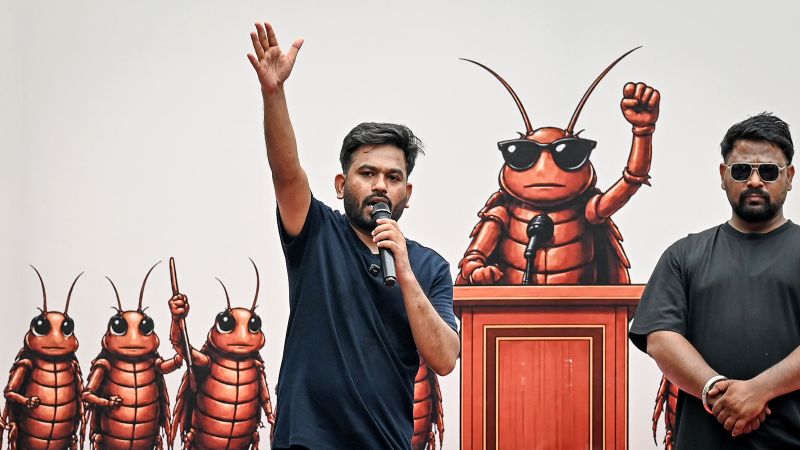
Table of Contents
The Satire of Survival
In the heart of New Delhi, at the Jantar Mantar monument, a new kind of political theater is unfolding. It began as a digital joke, a riff on the ruling Bharatiya Janata Party (BJP), but it has evolved into a physical occupation. The Cockroach Janta Party, led by 30-year-old Boston University graduate Abhijeet Dipke, has moved its operations from the ephemeral world of social media memes to a permanent camp in India’s capital.
The movement’s name and insect mascot are a direct response to perceived indignities. The ‘cockroach’ label stems from comments attributed to India’s chief justice, which frustrated youth interpreted as a dismissal of the unemployed population. For the Gen Z demonstrators currently occupying New Delhi, the mascot serves as a symbol of resilience and persistence in a system that they feel views them as pests rather than citizens.
The core of the grievance is a systemic failure of India’s high-stakes examination infrastructure. In a country where a fraction of a percentage point can dictate a student’s entire professional trajectory, the recurring phenomenon of paper leaks has turned a stressful process into a lottery of corruption. The protests specifically target Education Minister Dharmendra Pradhan, demanding his immediate resignation.
Diapers and Thalis: The Visual Language of Dissent
Unlike traditional political rallies, the Cockroach Janta Party employs a strategy of ‘performative protest.’ The goal is to create high-visibility, shareable moments that translate well to the smartphones of a global audience. This week, the protest site became a surreal display of symbolic irony.
On Tuesday, demonstrators arrived carrying diapers, with their demands for Minister Pradhan’s resignation written across them. The gesture was a biting critique of the government’s inability to stop the ‘leakage’ of sensitive exam papers. Previously, protesters used ‘thalis’—traditional steel platters—and spoons to create a cacophony of noise, a direct parody of Prime Minister Narendra Modi’s call to rattle utensils during the COVID-19 pandemic.
These tactics aim to bridge the gap between online satire and real-world political pressure. By using humor and absurdity, the movement attracts a demographic of youth who are disillusioned with formal political structures but are highly adept at digital communication.
The Human Cost of Systemic Failure
While the tactics are satirical, the stakes are grim. The movement gained significant momentum after more than two million students were informed that their results for India’s largest medical entrance exam would be scrapped following allegations of leaks. For many families, these exams represent a total financial and emotional investment; when the system fails, the fallout is often catastrophic.
The protest camp has shifted from irony to mourning in recent days. Demonstrators have held candle-light vigils to commemorate students who have died by suicide, citing the crushing pressure of the exams and the heartbreak of seeing their hard work invalidated by administrative corruption. Dipke maintains that the movement is not merely about political turnover, but about a fundamental reform of an exam system that prioritizes rigidity over reliability.
A Polarized Response
The government’s reaction has been swift and dismissive. Speaking to NDTV, Minister Pradhan characterized the Cockroach Janta Party as the “B-team of terror groups.” A label that Dipke has dismissed as “ridiculous,” arguing that the government is using extreme rhetoric to avoid taking moral responsibility for the failures of the education ministry.
The scale of the crisis is evidenced by the extraordinary measures taken for the medical exam re-sits on Sunday. Authorities deployed heavy security and utilized military aircraft to transport test papers—a level of logistical intensity that highlights the total lack of trust in the standard distribution chain.
As of this week, the New Delhi camp remains active, with a rotating cast of volunteers providing food and water. While the daily crowd fluctuates between 200 and 500 people, Dipke views this as the ‘early phase’ of a larger strategy to build a formal structural body across multiple Indian states, turning a viral moment into a sustainable political force.