Ferrari’s First EV Gamble: The Luce Breaks Every Rule in the Book
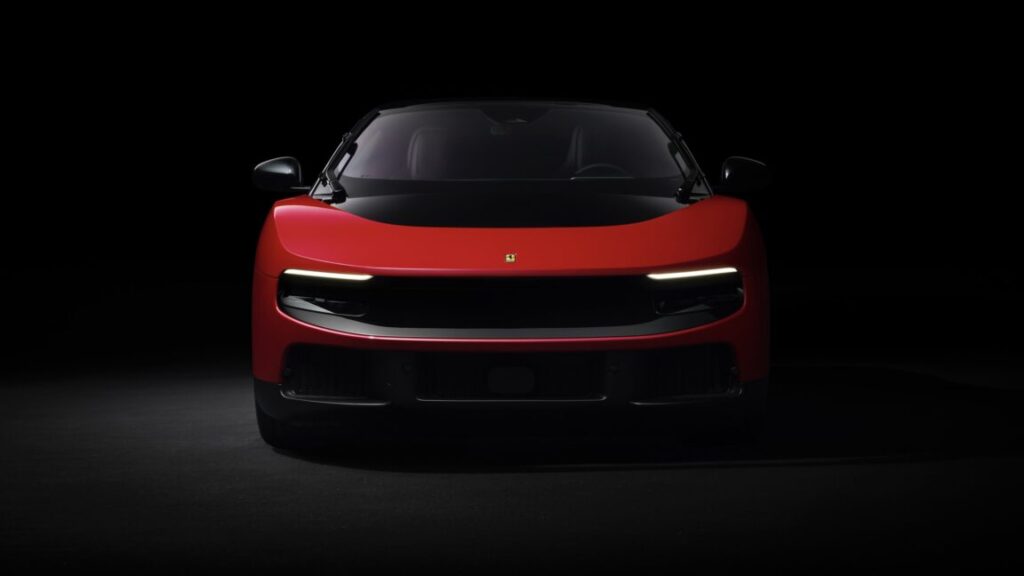
Table of Contents
A Departure from the Prancing Horse Tradition
Ferrari has long built its brand on the sanctity of the V12 and the exclusivity of the two-seater. The Luce, however, is an intentional assault on that legacy. As Ferrari’s first battery-electric vehicle (BEV), first four-door sedan, and first five-seater, the Luce represents a calculated pivot toward the demands of 2026’s luxury markets—specifically the tech-heavy hubs of Silicon Valley and the stringent emissions landscapes of China.
The vehicle is a collision of contradictory identities. To execute this shift, Ferrari stepped outside its own walls, collaborating with LoveFrom, the design firm led by former Apple chief design officer Jony Ive and Marc Newson. The result is an aesthetic that feels more ‘Cupertino’ than ‘Maranello.’ To the casual observer, the Luce possesses a minimalism that could easily slide under an Apple logo, yet a closer look reveals deep-cut nods to Ferrari’s lineage. The cab-forward glasshouse echoes the Lotus Etna concept, while the four round taillights are a direct homage to the 360 and 550 models of the 1990s.
Engineering the Invisible: The Aero Obsession
While the exterior has proven divisive among purists, the form is dictated by a rigorous seven-year aerodynamic study. Ferrari began analyzing wind resistance two years before the BEV program was even officially greenlit, aiming to create the lowest-drag vehicle in the company’s history without sacrificing the downforce necessary for high-speed stability.
The technical investment is staggering: 6,000 computational fluid dynamics (CFD) simulations and over 300 hours of wind tunnel testing. The architecture features a plunging hood that funnels air over the roof and toward a rear deck wing. This is supported by an array of active air vents that modulate based on the driver’s priority—switching between maximum range efficiency and peak performance cooling.
Range remains the critical metric for any luxury EV. Ferrari is targeting 330 miles (530 km) under Europe’s WLTP testing cycle. Achieving this requires the use of specialized aerodisc wheels—machined from single aluminum blocks—which act as turbines to minimize the wake and eddies that typically bleed battery life at highway speeds.
The Interior: A New Benchmark for Luxury Tech
If the exterior is a point of contention, the cabin is an undisputed victory. The Luce avoids the current industry trend of ‘screen-maximalism,’ opting instead for a tactile, driver-centric environment that may set the standard for all future Ferrari interiors.
The dashboard is a masterclass in material science, carved from a single piece of brushed aluminum. By eschewing a dedicated passenger screen, Ferrari has maintained a clean, uncluttered aesthetic. The steering wheel and door handles follow suit, utilizing the same aluminum finish, while the air vents are designed with a mechanical, valve-like feel that mimics a high-performance exhaust system.
The instrument cluster is perhaps the most innovative element. Fixed to the steering column, the binnacle consists of two sandwiched OLED displays. In a rare marriage of digital and analog, the central speedometer utilizes a physical needle rather than a pixelated representation. To the left, a power and regeneration meter monitors the BEV’s efficiency, while a multifunction display handles the rest of the vehicle’s telemetry.
Physicality in a Digital Age
The center stack is dominated by a pivoting infotainment screen, controlled by brushed aluminum rocker switches for climate settings—a welcome relief for those tired of burying basic functions in deep menus. The screen integrates Apple CarPlay, spanning the full width of the display.
Adding a layer of mechanical charm is the clock in the upper-right corner. At the touch of a button, the dial transforms into a 60-second stopwatch and then a compass, utilizing physical needles that provide a level of precision and craftsmanship often missing from the modern EV era. In a market saturated with tablets glued to dashboards, the Luce treats technology as a component of luxury, rather than a replacement for it.


