Carrier Cartels or Critical Defense? Telecom Giants Shift Toward Unified Cybersecurity Frameworks
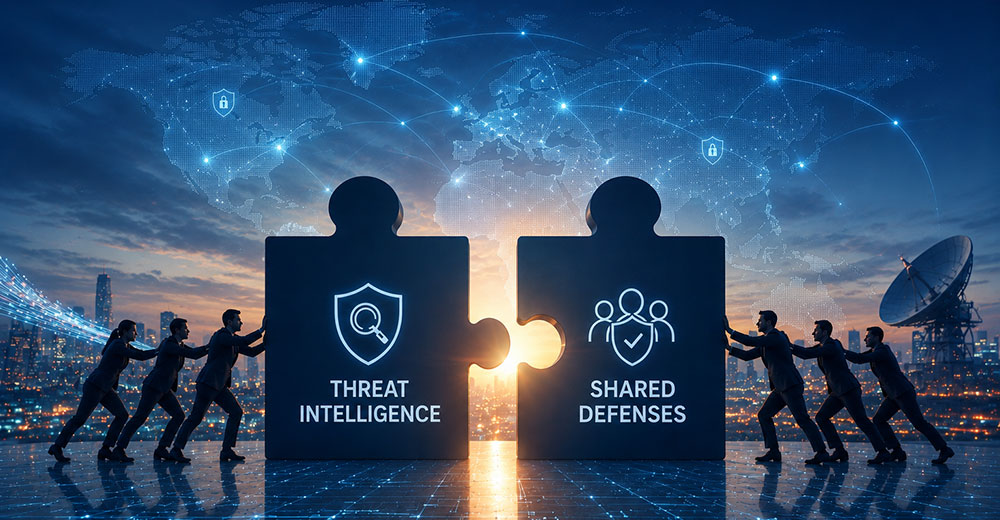
Table of Contents
The End of the Siloed Defense
For decades, the world’s largest telecommunications providers operated under a philosophy of fierce competition and proprietary security. If a carrier discovered a vulnerability or thwarted a sophisticated breach, that intelligence was often guarded as a corporate secret. However, a series of high-profile incursions into core network infrastructure has forced a pivot. The industry is now moving toward a collaborative security posture—essentially circling the wagons to defend the plumbing of the modern internet.
This shift is driven by a stark reality: the interconnectivity of global networks means that a vulnerability in one provider’s edge router can be leveraged to pivot into another’s core system. When state-sponsored actors target the signaling protocols that allow phones to talk to each other across borders, the distinction between AT&T, Verizon, or T-Mobile becomes irrelevant. The target is the network itself.
Combating the ‘Living off the Land’ Threat
The urgency for this unification stems from the rise of ‘living off the land’ (LotL) attacks. Unlike traditional malware that leaves a footprint, LotL techniques use legitimate system tools to blend in with normal network traffic. To detect these, carriers need massive datasets of ‘normal’ behavior across different network architectures—something that can only be achieved through shared intelligence hubs.
Industry insiders suggest that this collaboration is manifesting in more streamlined information-sharing centers, similar to the Financial Services Information Sharing and Analysis Center (FS-ISAC). By pooling data on IP addresses used in reconnaissance and the specific patterns of unauthorized access, telecom giants can move from a reactive posture to a preemptive one.
The Tension Between Competition and Cooperation
Despite the strategic necessity, this ‘unified front’ creates an odd paradox. Telecoms are in the midst of a brutal battle for 5G dominance and enterprise cloud services. There is an inherent tension in sharing the very technical details that might reveal weaknesses in one company’s infrastructure relative to another’s.
The solution has been the adoption of standardized security frameworks. Rather than sharing raw logs, carriers are aligning on common benchmarks for zero-trust architecture. This means implementing strict identity verification for every device and user attempting to access the core network, regardless of where they are connecting from. It removes the ‘trust by default’ model that plagued legacy telecom systems for years.
Navigating the Regulatory Push
This industry-led consolidation is also a response to increasing pressure from government bodies. In the U.S., the Cybersecurity and Infrastructure Security Agency (CISA) has been vocal about the vulnerability of the telecom sector, particularly regarding the removal of high-risk vendor equipment from core networks.
By coordinating their security responses, carriers can more effectively lobby for regulatory clarity. Instead of fighting individual mandates, they are presenting a unified industry standard for what ‘secure’ looks like in a 5G world. This not only simplifies compliance but also creates a predictable roadmap for capital expenditure on security hardware and software.
As the boundary between telecom and big tech continues to blur—with providers increasingly acting as cloud hosts—the stakes for this collective defense have never been higher. A systemic failure in the telecom layer wouldn’t just drop calls; it would potentially blind the digital economy.