Blue Origin’s New Glenn Rocket Destroyed in Launchpad Explosion, Jeopardizing NASA Moon Timelines
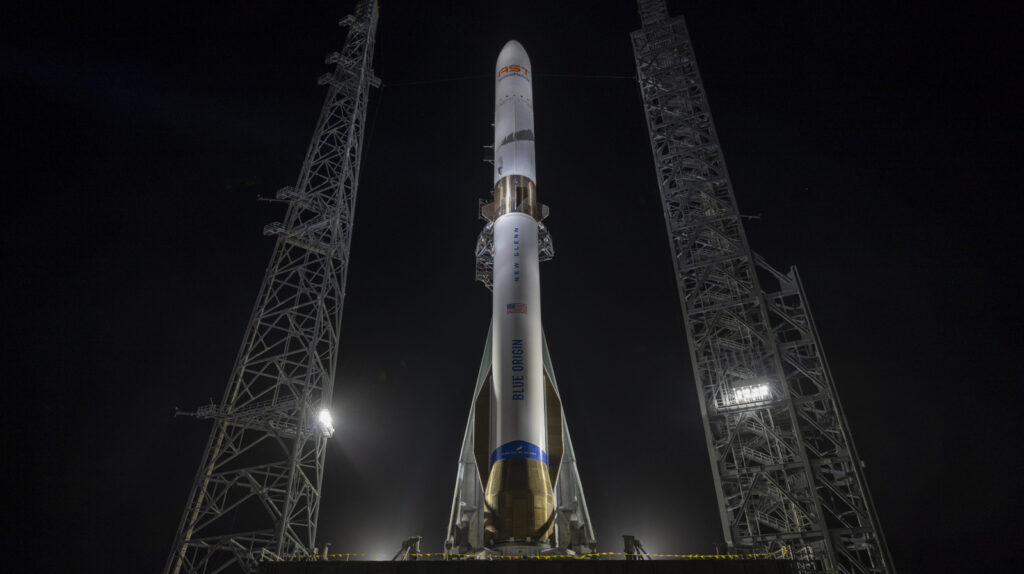
Table of Contents
A Costly Anomaly at Launch Complex 36
Blue Origin’s ambitions for heavy-lift spaceflight suffered a severe setback this week after a New Glenn rocket exploded during a ground-based hotfire test at the Cape Canaveral Space Force Station. The blast, which Blue Origin described as an “anomaly,” did not just destroy the vehicle; it effectively neutralized the company’s primary infrastructure for the New Glenn program.
The incident occurred during a critical preparation phase for the rocket’s next mission. While the company has kept technical details sparse, footage of the explosion reveals a catastrophic failure that obliterated the rocket and caused extensive damage to the surrounding equipment and support structures. Jeff Bezos, the founder of Blue Origin, confirmed via X that all personnel are safe and accounted for, describing the event as a “very rough day.” He maintained a defiant tone, stating that the company would “rebuild whatever needs rebuilding,” emphasizing the necessity of the risk in the pursuit of orbital capability.
Infrastructure Paralysis and the SpaceX Shadow
The most immediate crisis for Blue Origin is not the loss of a single rocket, but the state of the launchpad. According to reports from The New York Times, the explosion occurred at Blue Origin’s only designated launchpad for the New Glenn. Unlike SpaceX, which operates multiple pads and a rapid-iteration philosophy, Blue Origin’s lack of redundant launch infrastructure at this site means repairs could take several months, if not longer.
This infrastructure gap creates a significant bottleneck. The New Glenn is designed to be the company’s answer to SpaceX’s Starship and Falcon Heavy, offering the massive payload capacity required for deep-space logistics. With the pad out of commission, Blue Origin is essentially grounded until the concrete and electronics at Launch Complex 36 can be recertified for flight.
The Artemis Domino Effect
The fallout extends far beyond Blue Origin’s internal balance sheet. The company is a critical partner in NASA’s Artemis program, having been selected to provide commercial lunar landers for both cargo and crewed missions. Most pressingly, Blue Origin was chosen over SpaceX for the Moon Base I mission, which NASA had tentatively hoped to launch as early as this fall.
Because the Blue Moon lander requires the sheer lift capacity of the New Glenn to reach lunar orbit, the destruction of the rocket and its pad puts NASA’s timeline in jeopardy. NASA Administrator Jared Isaacman acknowledged the severity of the situation on X, noting that “spaceflight is unforgiving” and that developing heavy-lift capabilities is “extraordinarily difficult.” Isaacman stated that the agency will work with Blue Origin to assess the near-term impacts on the Artemis and Moon Base programs, though a schedule slip appears inevitable.
A Fragile Recovery
The timing of the explosion is particularly cruel. Blue Origin had only recently regained flight clearance from the Federal Aviation Administration (FAA) following a previous failure. The FAA had grounded the New Glenn after its third mission failed to achieve the correct orbit, an issue later traced to a cryogenic leak that froze a hydraulic line and caused a thrust anomaly during the second-stage burn.
Having just cleared the regulatory hurdle to resume operations, the company’s immediate pivot back to testing has resulted in a total loss of hardware. For a company that has historically moved slower and more cautiously than its competitors, this sequence of failures—followed by a catastrophic ground explosion—places immense pressure on Bezos’s venture to prove it can scale its operations to meet the demands of the 2020s space race.