Blue Origin’s New Glenn Suffers Catastrophic Explosion During Florida Static Fire
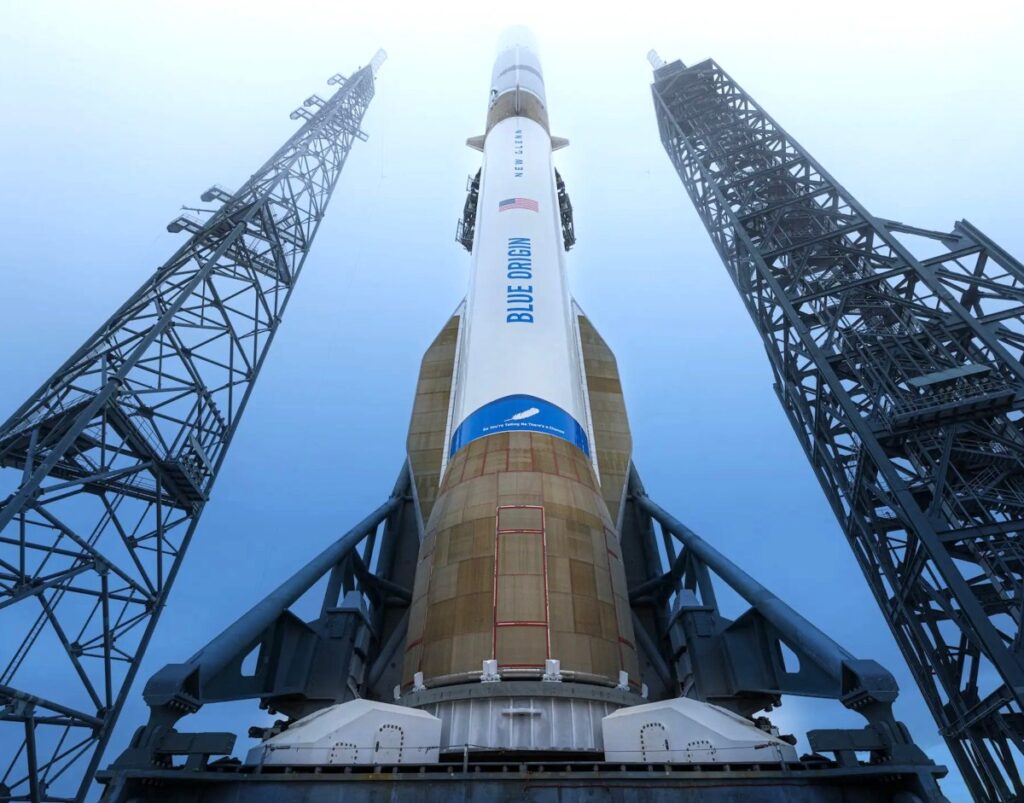
Table of Contents
A Massive Setback at Cape Canaveral
Blue Origin’s ambitions for orbital dominance suffered a violent reversal Thursday evening. A static fire test of the New Glenn mega-rocket ended in a catastrophic explosion at the company’s launch site in Cape Canaveral, Florida, sending a massive plume of smoke into the air and marking one of the most significant failures in the company’s history.
The incident was first captured via live streams from NASASpaceFlight.com and SpaceFlight Now before being confirmed by Blue Origin. The rocket was undergoing critical pre-flight testing ahead of its anticipated fourth mission, which was scheduled to carry a payload of Amazon’s Leo internet satellites. Because static fire tests involve fueling the vehicle to simulate launch conditions, the resulting blast was immense, though the company confirmed that all personnel were accounted for and safe.
In a post on X, founder Jeff Bezos acknowledged the “very rough day,” stating that the company is already working to identify the root cause of the anomaly. “We’ll rebuild whatever needs rebuilding and get back to flying,” Bezos wrote. “It’s worth it.”
Collateral Damage to the Amazon Leo Timeline
While Amazon confirmed that no Leo satellites were physically on the pad during the test, the timing could not be worse. Amazon has contracted Blue Origin for 24 launches to build out its Leo satellite internet constellation—a direct competitor to SpaceX’s Starlink. Until now, Amazon had touted New Glenn as the reliable, reusable heavy-lift backbone of this network.
This explosion follows a pattern of instability for the New Glenn program. The rocket’s third mission in April 2026 ended in a partial failure; while the booster successfully landed, a cryogenic failure in the upper stage resulted in the total loss of an AST SpaceMobile satellite. The FAA had only recently cleared the rocket to fly again after an investigation into that failure, only for this ground-test disaster to occur.
Implications for NASA and the Artemis Program
The fallout extends beyond Amazon’s commercial interests. Blue Origin is a critical partner in NASA’s Artemis program, tasked with helping return humans to the lunar surface. NASA Administrator Jared Isaacman stated late Thursday that the agency will work with Blue Origin to support a thorough investigation and assess how this anomaly impacts near-term mission schedules.
The FAA confirmed it is monitoring the situation, though it noted there was no immediate impact on local air traffic. For Blue Origin, the disaster creates a precarious gap in its roadmap. The company had aimed for as many as 12 New Glenn launches this year to prove it could match the cadence and reliability of Elon Musk’s SpaceX. Musk himself reacted to the news on X, noting that “rockets are hard” and wishing the team a quick recovery.
The Struggle for Orbital Maturity
For years, Blue Origin operated in a different lane than SpaceX, utilizing the New Shepard sub-orbital vehicle to ferry tourists and small science payloads to the edge of space. The transition to orbital capability with New Glenn has been fraught with delays. After its first flight in January 2025, New Glenn showed promise by reaching orbit, though its first booster landing attempt failed.
The company seemed to have found its footing by November 2025, when the second flight successfully delivered NASA spacecraft to Mars and achieved its first booster landing. The third flight further proved the viability of the company’s refurbishment process, as a previously flown booster was successfully re-used and landed again. However, this latest explosion suggests that while the booster technology is stabilizing, the overall vehicle integration and upper-stage reliability remain volatile.
With the fourth mission now indefinitely delayed, Blue Origin faces a grueling climb to regain the trust of the Pentagon and NASA, as well as its own parent company, Amazon.