Canon EOS R6 Mark V Arrives in India: A Professional Pivot Toward the ‘Prosumer’ Filmmaker
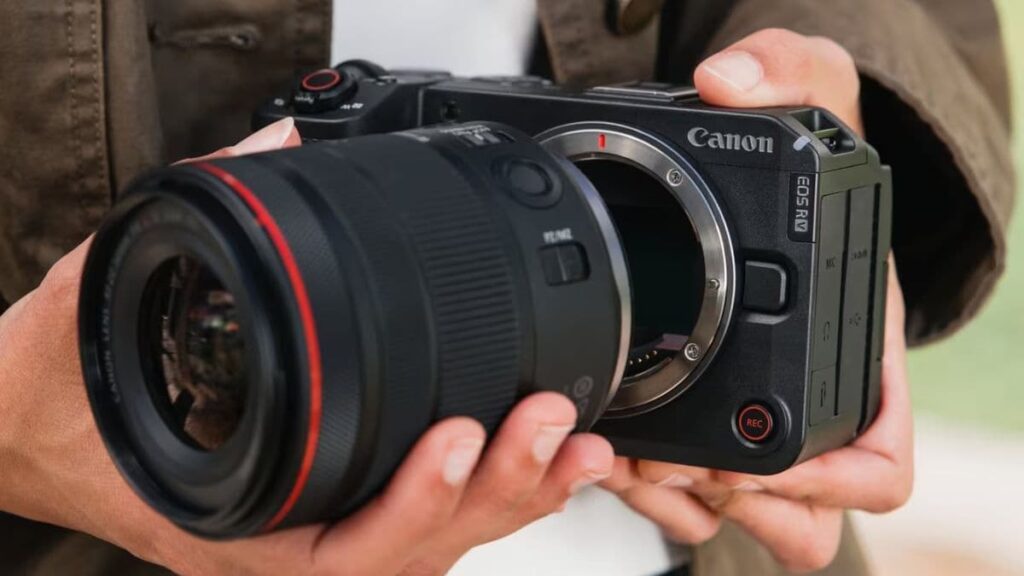
Table of Contents
A Strategic Shift in Canon’s Mirrorless Ecosystem
Canon has officially expanded its mirrorless footprint in the Indian market with the release of the Canon EOS R6 Mark V. While the R6 series has long been the darling of wedding photographers and enthusiasts, the Mark V signals a deliberate pivot. This isn’t just a spec-bump; it’s a camera designed specifically to bridge the gap between high-end enthusiast photography and professional cinema production.
The launch is paired with a piece of glass that is arguably as important as the body itself: the RF 20-50mm f/4L IS USM PZ. For the first time in the RF L-series lineup, Canon has integrated a professional-grade power zoom (PZ) system into a full-frame lens, targeting a demographic that has previously had to choose between the bulk of cinema zooms and the manual limitations of photo zooms.
- Target Audience: Specifically optimized for hybrid shooters and independent filmmakers who need rapid autofocus and smooth zooming.
- Core Tech: Powered by the DIGIC X processor and Dual Pixel CMOS AF II for industry-leading subject tracking.
- Pricing: The body is priced at ₹2,35,995, with the professional PZ lens adding ₹1,42,995.
- The Big Win: The RF 20-50mm lens provides cinema-style zoom control in a compact, L-series build.
Decoding the Hardware: DIGIC X and Dual Pixel AF II
At the heart of the EOS R6 Mark V is the DIGIC X image processor. In the world of mirrorless imaging, the processor is the brain that determines how the camera handles heat, noise, and data throughput. For video creators, this means improved 4K recording stability and a significant reduction in the overheating issues that plagued earlier full-frame mirrorless iterations.
The inclusion of Dual Pixel CMOS AF II is where the R6 Mark V separates itself from the pack. This system doesn’t just track faces; it uses deep-learning algorithms to identify animals, vehicles, and specific human eye-tracking markers in real-time. For an Indian content creator shooting in chaotic environments—from bustling markets to high-energy weddings—this level of stickiness in autofocus is not a luxury; it’s a requirement.
The Power Zoom Advantage: RF 20-50mm f/4L IS USM PZ
The accompanying lens is where the “video-first” philosophy becomes apparent. Traditional zoom lenses require a physical twist of the ring, which often results in a “jerky” movement when recorded on camera. The RF 20-50mm f/4L IS USM PZ utilizes a power zoom mechanism, allowing for electronically controlled, linear zoom transitions.
This allows filmmakers to execute a perfectly smooth zoom-in or zoom-out—similar to what you see in high-budget cinema—without the need for expensive servo-zoom rigs. The f/4 constant aperture ensures that exposure remains consistent as you zoom, which is critical for maintaining a professional look during a take.
Pricing and Market Positioning in India
Canon’s pricing strategy for the R6 Mark V in India reflects its positioning as a professional tool. The standalone body is priced at ₹2,35,995. When you add the RF 20-50mm PZ lens (priced at ₹1,42,995), the total kit price reaches ₹3,55,995.
To put this in perspective, Canon is positioning the R6 Mark V above the entry-level R-series but keeping it accessible compared to the EOS R3 or R5 models. It competes directly with Sony’s Alpha and Panasonic’s Lumix S-series, specifically targeting users who find the R5’s resolution overkill for video and the R8 too limited in build quality.
| Option | Price (INR) | Best Use Case |
|---|---|---|
| Body Only | ₹2,35,995 | Existing RF lens owners |
| RF 20-50mm Lens | ₹1,42,995 | Cinema-style zoom needs |
| Combined Kit | ₹3,55,995 | Full production setup |
What This Means for the Creative Community
The launch of the R6 Mark V represents a democratization of cinema tools. Previously, achieving a smooth power zoom required either a cinema-specific lens (which cost tens of thousands of dollars) or a very steady hand with a manual zoom. By integrating this into the L-series RF line, Canon is enabling smaller production houses and solo creators in India to produce high-production-value content without the overhead of a full cinema rig.
Furthermore, the focus on “content creators” in the official announcement suggests that Canon is acknowledging the rise of high-end YouTube and Instagram production. These creators need a camera that can function as a high-end still camera for thumbnails and a cinema camera for the actual content. The R6 Mark V is designed precisely for this duality.
Technical Nuances: Image Stabilization and Build
One cannot discuss a Canon L-series lens without mentioning Image Stabilization (IS). The RF 20-50mm features an advanced IS system that works in tandem with the R6 Mark V’s In-Body Image Stabilization (IBIS). For those shooting handheld, this “coordinated stabilization” effectively eliminates the micro-jitters common in wide-angle zooms.
The build quality of the R6 Mark V remains rugged, designed to withstand the dust and humidity typical of Indian outdoor shoots. The ergonomic grip and intuitive dial layout allow for rapid switching between photo and video modes, a feature that professionals rely on during fast-paced events.
Frequently Asked Questions
Is the Canon EOS R6 Mark V better than the R5 for video?
The R5 is a powerhouse for high-resolution stills and 8K video, but the R6 Mark V is often more optimized for sustained video performance and heat management, making it a more reliable choice for longer shoots.
What is a Power Zoom (PZ) lens?
A Power Zoom lens uses an electronic motor to move the glass elements, allowing for a smooth, linear change in focal length. This is essential for cinema-style shots where manual twisting would be too abrupt.
Where can I buy the R6 Mark V in India?
It is available through the official Canon e-Shop and authorized retail partners nationwide.
Does the R6 Mark V support 4K recording?
Yes, it leverages the DIGIC X processor to provide high-quality 4K recording with advanced autofocus tracking.
Is the RF 20-50mm f/4L lens suitable for photography?
Absolutely. While it features a power zoom for video, it remains a professional L-series lens with high optical clarity and a constant f/4 aperture, making it excellent for landscapes and street photography.
Ultimately, the Canon EOS R6 Mark V is not just a new camera; it’s a response to the changing nature of digital media. By blending the precision of L-series optics with the intelligence of the DIGIC X processor, Canon is providing a versatile tool for a new generation of Indian filmmakers.