Insta360 Luna Ultra Leaks: 8K Video and Leica Glass Aim for DJI Pocket 3 Dominance
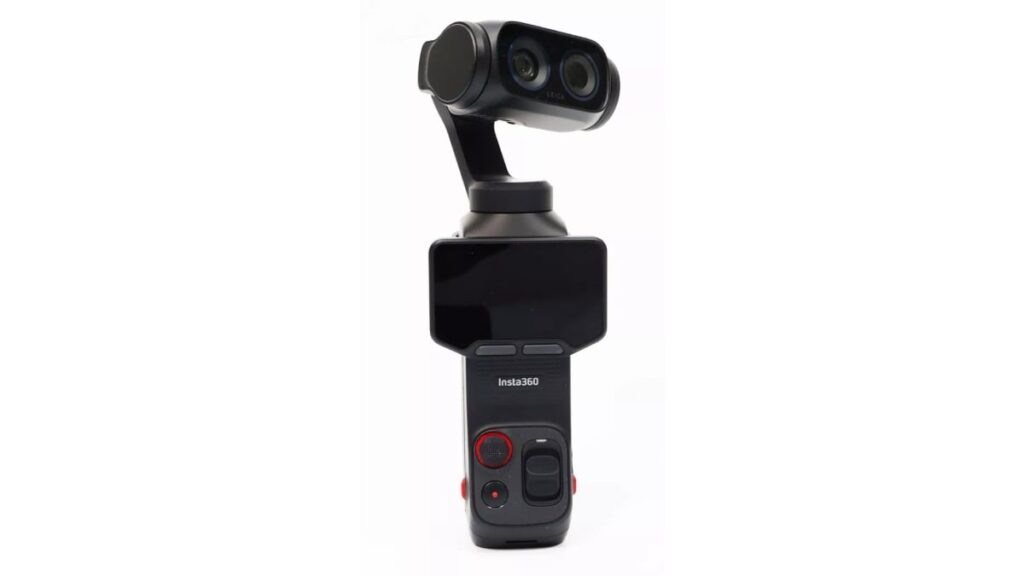
Table of Contents
The compact camera market is about to get significantly more crowded. While Insta360 has officially remained silent, a retailer listing from German photography specialist Foto Erhardt has effectively blown the lid off the Insta360 Luna Ultra. This isn’t just another iterative update; the leaked specifications suggest a direct, aggressive assault on the DJI Pocket 3’s stronghold in the premium gimbal-camera segment.
- Optical Pedigree: The Luna Ultra reportedly features a 1-inch sensor paired with a Leica Summicron lens, prioritizing image quality over mere convenience.
- High-Res Capability: 8K video recording is listed, providing a significant resolution jump over current market leaders.
- Professional Workflow: Support for 10-bit i-Log recording and Leica color profiles indicates a pivot toward prosumer color grading.
- Availability: Pre-order deposits of €50 are already being accepted via Foto Erhardt, suggesting a launch is imminent.
The Leak: How the Luna Ultra Surfaced
In the world of consumer electronics, retailers often receive product data and assets weeks before a global press event. Foto Erhardt, a reputable German vendor, recently listed the Insta360 Luna Ultra, allowing users to place a €50 (approximately $54 or ₹5,500) deposit to reserve the unit. While not a formal pre-order, this deposit system is a common tactic used to gauge demand and establish priority shipping queues.
The listing is particularly damaging to Insta360’s secrecy because it includes high-resolution product imagery and a detailed specification sheet. For creators, the most striking detail is the partnership with Leica. While Insta360 has previously collaborated with the legendary German optics house on the X-series, bringing a Leica Summicron lens to a compact gimbal form factor is a significant engineering claim.
Technical Deep Dive: 8K and the 1-Inch Sensor
To understand why the Luna Ultra matters, we have to look at the current physics of compact cameras. Most gimbal cameras rely on small sensors that struggle in low light and produce a limited dynamic range. The inclusion of a 1-inch sensor—the same size found in the Sony RX100 series and the DJI Pocket 3—is the baseline for professional-grade b-roll.
The 8K Resolution Gamble
The claim of 8K video recording is the most contentious part of the leak. Currently, very few compact cameras handle 8K without severe overheating or aggressive cropping. If Insta360 has managed to implement 8K in a handheld gimbal, it suggests a highly efficient image processing pipeline or a very robust thermal management system.
However, 8K is often more about “future-proofing” and cropping flexibility than actual playback. For most creators, the more impressive spec is the 4K at 120fps. This allows for cinematic slow motion without the typical “jerkiness” seen in lower frame-rate captures, making it a primary tool for action and travel vloggers.
Leica Summicron Optics and Color Science
A lens is only as good as its glass. The Summicron line is renowned for high contrast and sharpness. By integrating Leica color profiles, Insta360 is moving away from the “oversaturated” look typical of action cameras and toward a more natural, cinematic aesthetic. The 10-bit i-Log recording is the crucial piece here; it allows editors to preserve highlights and shadows in post-production, a requirement for any professional production workflow.
Comparing the Landscape: Luna Ultra vs. DJI Pocket 3
For the last year, the DJI Pocket 3 has been the undisputed king of this niche. Its 1-inch sensor and rotating screen solved the two biggest complaints of previous generations. The Luna Ultra appears designed to out-spec the Pocket 3 in three specific areas: resolution, lens quality, and color depth.
| Feature | DJI Pocket 3 (Current) | Insta360 Luna Ultra (Leaked) |
|---|---|---|
| Max Resolution | 4K | 8K |
| Sensor Size | 1-inch | 1-inch |
| Optics | DJI Proprietary | Leica Summicron |
| Slow Motion | 4K 120fps | 4K 120fps |
| Color Grade | D-Log M | 10-bit i-Log / Leica Profiles |
While the hardware specs look superior on paper, the real battle will be in the software. Insta360’s strength has always been its AI-driven editing suite. Integrating the Luna Ultra’s raw power with the automated editing tools found in the Insta360 app could create a workflow that DJI currently cannot match.
What This Means for Creators
The shift from “action cameras” to “creator tools” is nearly complete. The Luna Ultra represents a move toward hybrid photography—devices that are small enough to fit in a pocket but powerful enough to replace a mirrorless setup for specific shots.
For the average vlogger, 8K may be overkill, but the 3-axis gimbal stabilization combined with Leica glass means a drastic reduction in the need for external lighting and heavy stabilizers. We are seeing the democratization of the “cinematic look.” You no longer need a crew and a RED camera to get buttery-smooth, color-graded footage; you just need a device that can handle 10-bit log recording in a handheld form factor.
The Thermal Challenge
There is a caveat to these specs. Shooting 8K and 4K/120fps on a 1-inch sensor generates immense heat. In my experience with similar compacts, thermal throttling often kicks in after 15-20 minutes of high-bitrate recording. It will be critical to see if the Luna Ultra employs any active cooling or if it relies on a heat-sink chassis to maintain performance.
Addressing the Competition and Market Impact
The entry of the Luna Ultra forces a response from DJI and potentially Sony. We are seeing a trend where “specialty” cameras are eating into the market share of entry-level DSLRs. When you can get a 1-inch sensor with Leica optics and a built-in gimbal, the argument for carrying a bulky camera for simple travel vlogs disappears.
Moreover, the pricing strategy is key. While the final MSRP isn’t confirmed, the €50 deposit suggests a premium positioning. If Insta360 prices this competitively against the Pocket 3, they could quickly pivot the market toward their ecosystem, especially for those already using the Insta360 X4 or Ace Pro.
The Role of 10-Bit i-Log
For those unfamiliar with the terminology, 10-bit recording allows for over a billion colors, compared to the 16.7 million in 8-bit. When combined with a “Log” (Logarithmic) profile, it prevents the “clipping” of whites and the “crushing” of blacks. This is the gold standard for professional videographers, and its inclusion in a pocket camera is a clear signal that Insta360 is targeting professionals, not just hobbyists.
Frequently Asked Questions
What is the Insta360 Luna Ultra?
The Insta360 Luna Ultra is an upcoming flagship gimbal camera designed for creators. While not yet officially launched, leaks indicate it features a 1-inch sensor and Leica optics for professional-grade video.
Can the Luna Ultra really record in 8K?
According to the retailer listing from Foto Erhardt, the device supports 8K video. However, official confirmation on the bitrate and thermal limitations is still pending from Insta360.
How does it differ from the DJI Pocket 3?
The Luna Ultra appears to offer higher maximum resolution (8K vs 4K) and uses Leica Summicron lenses, which may provide superior sharpness and color reproduction compared to DJI’s proprietary optics.
What is a 3-axis gimbal and why does it matter?
A 3-axis gimbal uses motors to counteract movement in three directions (tilt, pan, and roll). This ensures that the footage remains perfectly smooth even if the operator is walking or running, eliminating the need for software-based stabilization which can often crop the image.
When will the Insta360 Luna Ultra be released?
An official date has not been announced, but the appearance of pre-order deposits at German retailers typically suggests a product launch within a few weeks.
Ultimately, the Insta360 Luna Ultra is a statement of intent. By combining 8K resolution with the prestige of Leica, Insta360 is attempting to redefine what a “pocket camera” can be. Whether it can overcome the physical hurdles of heat and battery life remains to be seen, but the specifications alone are enough to put the rest of the industry on notice.