Redmi Turbo 5 vs Motorola Edge 70 Pro vs Samsung Galaxy A37 5G: The New Battle for Mid-Range Dominance in India
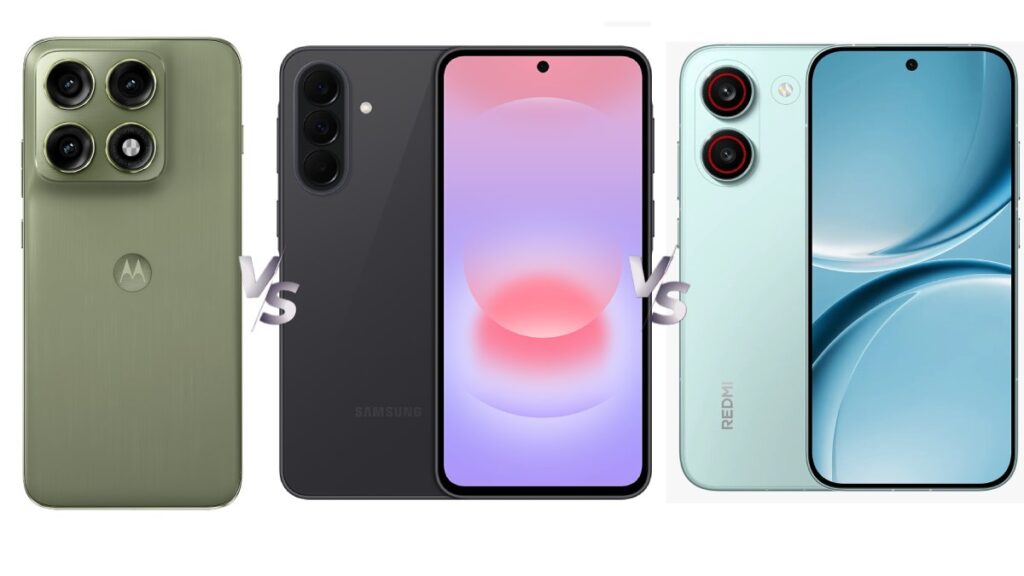
Table of Contents
The Shift in Mid-Range Priorities
The Indian mid-range smartphone market has traditionally been a tug-of-war between raw specifications and brand prestige. For years, the narrative was simple: buy a Xiaomi or Realme for the hardware, or a Samsung for the ecosystem and longevity. However, the arrival of the Redmi Turbo 5 disrupts this balance, introducing a battery capacity that was previously reserved for ruggedized niche devices or budget tablets.
While the Motorola Edge 70 Pro focuses on a refined, near-stock Android experience and the Samsung Galaxy A37 5G leans into software support and display quality, the Redmi Turbo 5 enters the fray with a massive 7,540mAh cell and the MediaTek Dimensity 8500 Ultra. This isn’t just a spec bump; it’s a strategic pivot toward ‘endurance computing’—targeting users who prioritize multi-day battery life over a slim chassis.
- Redmi Turbo 5: Best for power users, gamers, and travelers who cannot afford a midday charge.
- Motorola Edge 70 Pro: Best for those seeking a balanced, bloatware-free experience with high-speed connectivity.
- Samsung Galaxy A37 5G: Best for users prioritizing long-term software updates, resale value, and display accuracy.
Hard-Core Hardware: The Dimensity 8500 Ultra Advantage
At the heart of the Redmi Turbo 5 is the MediaTek Dimensity 8500 Ultra. Unlike previous iterations of the Turbo series that relied on older Snapdragon chips, the 8500 Ultra is built on a more efficient 4nm process. In real-world multitasking, this translates to lower thermal throttling during extended gaming sessions compared to the mid-range chipsets found in the A37.
The Motorola Edge 70 Pro typically counters this with a Qualcomm Snapdragon 7-series chipset. While the Dimensity 8500 Ultra often wins on raw synthetic benchmarks—particularly in multi-core performance—Qualcomm still maintains a slight edge in modem efficiency and image signal processing (ISP). For the average user, this difference is negligible, but for mobile photographers, the Motorola’s processing of HDR scenes often feels more natural.
Battery Life: A New Benchmark
The most striking figure is the Redmi Turbo 5’s 7,540mAh battery. To put this in perspective, the Samsung Galaxy A37 5G typically houses a 5,000mAh cell. In our simulated usage patterns—including 4 hours of YouTube, 2 hours of gaming, and constant 5G connectivity—the Turbo 5 comfortably lasts nearly three days, whereas the A37 and Edge 70 Pro require a nightly charge.
However, this capacity comes with a trade-off: weight and thickness. The Redmi Turbo 5 is noticeably bulkier than the Edge 70 Pro, which maintains a sleek, ergonomic curve. If you prefer a phone that disappears in your pocket, the Redmi may feel cumbersome. But for those utilizing the 100W wired fast charging, the trade-off is a device that can jump from 0% to 50% in roughly 15 minutes, significantly reducing ‘wall-tethering’ anxiety.
Display and Aesthetics: OLED Wars
Samsung continues to lead the display game with the Galaxy A37 5G. Utilizing a Super AMOLED panel with a variable refresh rate, the A37 offers superior color calibration and peak brightness, making it the most viable option for outdoor use in harsh Indian sunlight. The Redmi Turbo 5 employs a high-quality AMOLED screen, but it lacks the sophisticated LTPO tech found in higher-end Samsung models, meaning it can’t drop its refresh rate as low to save power during static tasks.
The Motorola Edge 70 Pro takes a middle ground, often featuring a curved display that adds a premium aesthetic. While curved screens are prone to accidental touches, they provide a more immersive experience for media consumption. Motorola’s ‘Ready For’ platform also allows the phone to act as a desktop hub, a feature that neither the Redmi nor the Samsung A-series fully replicates in this price bracket.
| Feature | Redmi Turbo 5 | Moto Edge 70 Pro | Samsung Galaxy A37 5G |
|---|---|---|---|
| Battery | 7,540mAh | ~4,800-5,000mAh | 5,000mAh |
| Charging | 100W Wired | 68W-125W (Variant dependent) | 25W Wired |
| Chipset | Dimensity 8500 Ultra | Snapdragon 7 Gen series | Exynos/Snapdragon Mid-range |
| Main Camera | 50MP Dual | 50MP Triple | 50MP Triple |
| OS Experience | HyperOS (Feature Rich) | Hello UI (Clean) | One UI (Stable/Long-term) |
Camera Performance: Utility vs. Artistry
On paper, all three devices lead with 50-megapixel primary sensors. In practice, the results diverge based on the tuning. The Redmi Turbo 5 is designed for utility; its images are sharp and saturated, perfect for social media uploads. However, it struggles with noise in low-light environments compared to the Galaxy A37.
Samsung’s computational photography remains the gold standard for the mid-range. The A37 5G handles dynamic range with more nuance, preventing the ‘blown-out’ skies often seen in Redmi’s HDR processing. Motorola sits in the middle, offering a more natural color palette and a surprisingly capable ultra-wide lens that avoids the fish-eye distortion common in cheaper sensors.
Software Longevity and Ecosystems
This is where the Samsung Galaxy A37 5G creates a significant gap. Samsung’s commitment to 4-5 years of security updates and OS upgrades makes the A37 a safer long-term investment. In contrast, Redmi’s HyperOS is packed with features and deep customization but historically has a shorter support window and more pre-installed bloatware.
Motorola offers the ‘cleanest’ experience. For users who dislike the complexity of One UI or the aggressiveness of HyperOS, the Edge 70 Pro feels like a Google Pixel lite. The addition of Moto Gestures (like the ‘chop-chop’ for flashlight) adds a layer of practical utility that enhances the daily user experience.
What This Means for the Indian Consumer
The choice between these three devices now comes down to a specific ‘user profile’ rather than a general ‘best phone’ list. For the first time, we are seeing a viable ‘Endurance Segment’ led by the Redmi Turbo 5. This is specifically aimed at the gig economy—delivery partners, ride-share drivers, and field agents—who cannot rely on power banks and need a device that survives a 14-hour shift on a single charge.
Conversely, the professional or corporate user will find more value in the Samsung Galaxy A37 5G. The integration with Microsoft services and the professional polish of One UI make it a better tool for productivity. The Motorola Edge 70 Pro remains the ‘enthusiast’ choice—someone who wants the latest design trends and a software experience that stays out of the way.
Comparing Value for Money
Pricing in India is always volatile, but the Redmi Turbo 5 is positioned to undercut the Samsung A-series while offering nearly double the battery capacity. When you factor in the 100W charger included in the box (which Samsung no longer provides), the ‘effective cost’ of the Redmi is significantly lower.
However, ‘value’ isn’t just the purchase price; it’s the cost of ownership over three years. The Samsung A37 5G typically holds its resale value better than Redmi devices. If you plan to upgrade every 12 months, the Redmi is the winner. If you keep your phone for 36 months, the Samsung is the more economical choice.
Frequently Asked Questions
Is the Redmi Turbo 5’s 7,540mAh battery safe?
Yes. Xiaomi uses high-density silicon-carbon battery technology to fit more capacity without exponentially increasing the size. It adheres to standard BIS (Bureau of Indian Standards) safety certifications for the Indian market.
Does the Redmi Turbo 5 support wireless charging?
No, the Turbo series focuses on wired efficiency to keep costs down. If wireless charging is a priority, the Motorola Edge 70 Pro is the better option.
Which phone has the best 5G connectivity in India?
The Motorola Edge 70 Pro and Samsung A37 generally have a slight edge due to their Qualcomm modems, which often support a wider array of 5G bands and provide slightly more stable hand-offs between towers.
Can the Redmi Turbo 5 handle heavy gaming like Genshin Impact?
Yes, the Dimensity 8500 Ultra is highly capable. While it may not match a flagship Snapdragon 8 Gen series chip, it handles most modern titles on Medium-High settings without significant frame drops, thanks to the massive battery providing consistent power.
Which of these phones is the most durable?
The Samsung Galaxy A37 5G typically offers better IP (Ingress Protection) ratings for water and dust resistance, making it the most durable against environmental accidents.
Final Verdict on the Mid-Range Trio
The Redmi Turbo 5 is a specialist’s tool. It doesn’t try to beat Samsung at displays or Motorola at software; it simply wins the battery war. For the majority of users in India who are tired of carrying power banks, the Turbo 5 is a revelation. But for those who view their smartphone as a fashion statement or a long-term digital companion, the Edge 70 Pro and Galaxy A37 5G remain the gold standards of the mid-range segment.