Apple’s Siri AI Shift: Deep Integration and the Second Generation of Apple Foundation Models
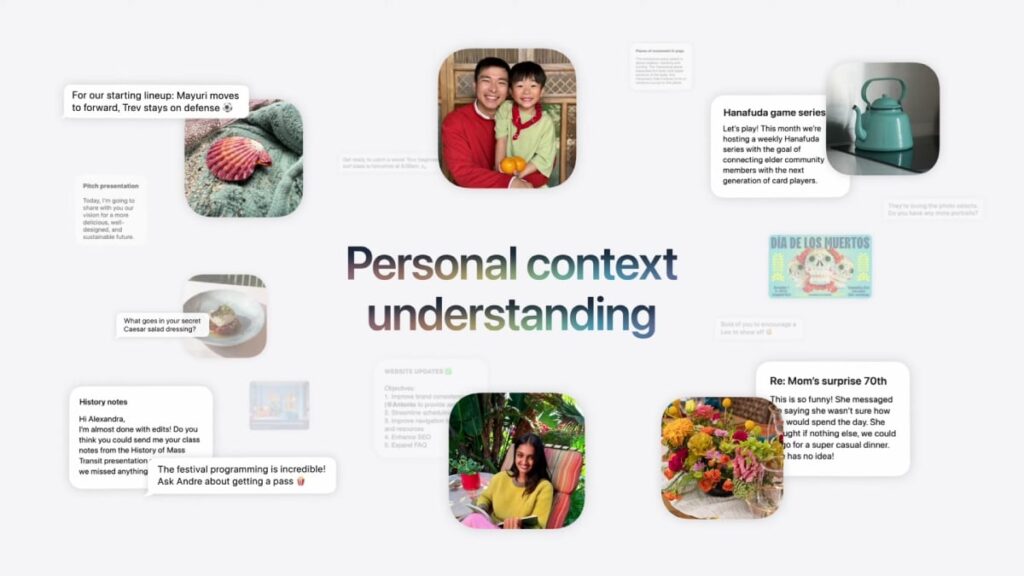
Table of Contents
The Pivot to Agentic Intelligence
Apple has officially moved past the ‘chatbot’ phase of its AI journey. At WWDC 2026, the company unveiled Siri AI, a fundamental restructuring of its digital assistant that shifts Siri from a voice-activated search tool to a proactive agent capable of executing complex workflows across the entire Apple ecosystem. This launch, paired with the rollout of iOS 27, iPadOS 27, macOS 27, watchOS 27, tvOS 27, and visionOS 27, marks the most aggressive software pivot since the introduction of the App Store.
- Siri AI now features ‘on-screen awareness,’ allowing it to interact with and manipulate data currently visible to the user.
- The second generation of Apple Foundation Models (AFM2) enables superior multimodal understanding of text, speech, and imagery.
- Cross-App Actionability allows Siri to bridge gaps between fragmented apps (e.g., taking a flight number from Mail and adding a calendar event with a specific hotel reminder).
- Privacy remains the core differentiator, with a heavy reliance on Private Cloud Compute to handle complex requests without compromising user identity.
Decoding the Second Generation of Apple Foundation Models
The engine driving this transformation is the second generation of Apple Foundation Models (AFM2). Unlike first-generation models that primarily focused on language generation and basic summarization, AFM2 is natively multimodal. This means the model doesn’t just ‘translate’ an image into text to understand it; it processes visual and auditory data in a unified latent space.
From a technical standpoint, Apple has optimized these models for the Neural Engine (ANE) found in the latest A-series and M-series chips. By utilizing 4-bit quantization and sophisticated pruning, Apple has managed to keep a significant portion of the logic on-device. This reduces latency and, more importantly, ensures that sensitive personal data—such as the contents of your Messages or Photos—never leaves the device unless absolutely necessary.
On-Screen Awareness: The New Interface
The most tangible upgrade in Siri AI is on-screen awareness. In previous iterations, Siri was largely blind to what you were doing in an app unless that app explicitly shared a ‘shortcut’ or an API. With Siri AI, the assistant can now ‘see’ the UI elements on your screen.
For example, if you are looking at a PDF of a lease agreement in Files, you can ask Siri AI, “How long is the notice period for this lease?” without needing to copy and paste text. Siri analyzes the visual layout and the text content of the active window to provide a precise answer. This represents a shift toward agentic AI—systems that don’t just provide information but interact with software on behalf of the user.
Practical Implications: What This Means for the User
For the average user, this is less about “AI features” and more about the removal of digital friction. We are moving away from the era of manual data entry between apps. The practical implication is the emergence of the ‘invisible workflow.’
Consider a real-world scenario: You receive a text from a friend about a dinner reservation at 7 PM on Friday at a specific restaurant. Instead of manually opening Calendar, checking the map for traffic, and setting a reminder, you can simply tell Siri AI, “Set this up.” The assistant identifies the entity (restaurant), the time (7 PM), the date (Friday), and the intent (reservation), then populates your calendar and suggests a departure time based on your current location.
Enterprise and Developer Impact
For developers, this opens a new frontier in app design. Apple has introduced updated App Intents frameworks that allow third-party developers to expose more granular functions to Siri AI. If a developer properly tags their app’s actions, Siri AI can trigger those actions deep within the app’s menu hierarchy, potentially changing how users discover and use professional software.
| Feature | Apple Intelligence (Gen 1) | Siri AI (Gen 2 / OS 27) |
|---|---|---|
| Contextual Awareness | Limited to specific app data | Full on-screen and cross-app awareness |
| Model Architecture | Text-heavy foundation | Native Multimodal (Text, Image, Voice) |
| Actionability | Basic App Shortcuts | Complex Agentic Workflows |
| Processing | On-device / Basic Cloud | Advanced Private Cloud Compute (PCC) |
The Privacy Paradox and Private Cloud Compute
The central challenge for Apple has always been the tension between AI capability and user privacy. Large Language Models (LLMs) typically require massive compute power, which usually means sending data to a centralized server—a non-starter for Apple’s brand identity. To solve this, Apple has expanded its Private Cloud Compute (PCC) architecture.
PCC is not a traditional cloud server. It is a specialized server environment running on Apple Silicon, designed specifically for AI requests that exceed on-device capacity. According to Apple’s technical documentation, PCC uses a stateless architecture, meaning user data is never stored on the server and is deleted immediately after the request is processed. Furthermore, Apple has invited independent security researchers to verify the PCC code, a level of transparency rarely seen in the proprietary AI space.
Critical Analysis: Is It Enough to Lead?
While the integration of Siri AI into the OS is a masterclass in ecosystem synergy, Apple faces stiff competition from Google’s Gemini and OpenAI’s GPT-series. Google has the advantage of a more mature search index and an Android ecosystem that is equally open to AI integration. OpenAI has the lead in raw model reasoning capabilities.
However, Apple’s advantage is vertical integration. Because Apple controls the silicon (M-series/A-series), the operating system (iOS/macOS), and the hardware, they can optimize the ‘inference’ (the speed at which the AI thinks) in ways that software-only companies cannot. The success of Siri AI will not be measured by whether it can write a poem, but by how effectively it eliminates the need for the user to touch their screen.
Frequently Asked Questions
Does Siri AI require an internet connection?
Many basic tasks and personalized requests are handled on-device using the Apple Foundation Models. However, complex queries that require more compute power will use Private Cloud Compute, which requires an active internet connection.
Which devices support Siri AI?
Siri AI is designed for iPhone, iPad, Mac, Apple Watch, and Apple Vision Pro. Due to the hardware requirements of the second-gen foundation models, it is expected to be limited to devices with the A17 Pro chip or newer, and M1 chips or newer.
How is Siri AI different from the old Siri?
The old Siri was primarily a command-and-control interface. Siri AI is an agent. It understands the context of what you are looking at on your screen and can perform actions across multiple apps without you needing to specify every step.
Is my data safe with Private Cloud Compute?
Apple claims that PCC is designed so that even Apple cannot access your data. The system is stateless, and the architecture is open to third-party auditing to ensure the privacy promises are kept.
Can I turn off Siri AI’s on-screen awareness?
Yes, Apple has included granular privacy toggles in the Settings menu, allowing users to disable on-screen awareness or limit it to specific applications.
The Integration Path Forward
The rollout of Siri AI is not a single event but a phased deployment. As part of the OS 27 cycle, users will first see improvements in text-based intelligence and basic app actions. The full ‘on-screen awareness’ and complex agentic capabilities are expected to scale as the Apple Foundation Models are further tuned through user feedback and edge-case testing.
By weaving AI into the very fabric of the OS rather than treating it as a standalone app, Apple is betting that context is more valuable than capability. A model that knows exactly what you are looking at is infinitely more useful than a smarter model that requires you to explain everything from scratch.