Apple Cuts Intel Support with macOS 27: Which MacBooks Still Get the Update?
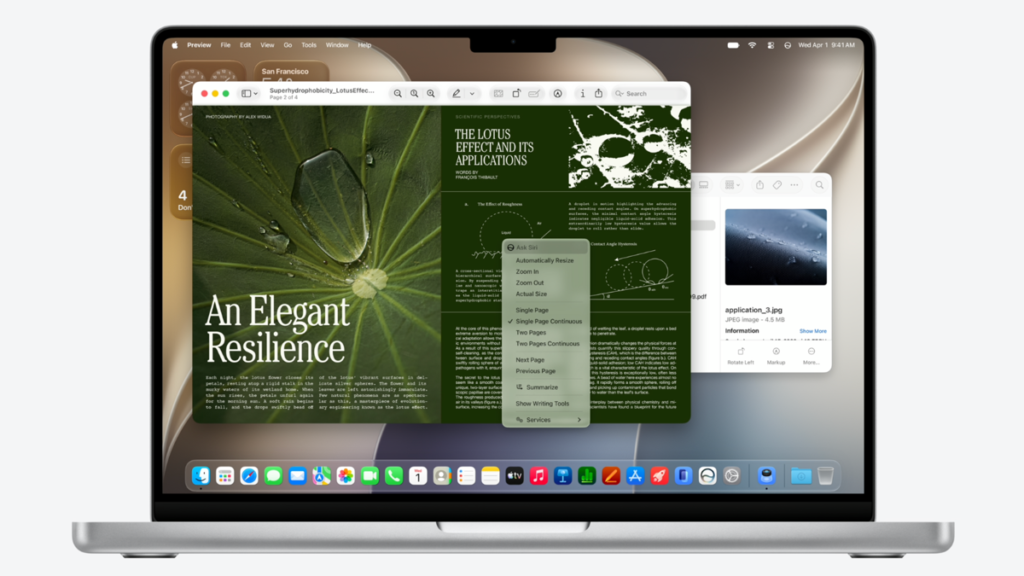
Table of Contents
The transition that began with the introduction of the M1 chip in 2020 has reached its inevitable conclusion. During the opening keynote of WWDC 2026, Apple officially announced macOS 27, codenamed ‘Golden Gate,’ confirming that the operating system will be the first to completely exclude support for Intel-based Mac hardware. This move marks a definitive shift toward a unified silicon architecture, prioritizing the Neural Engine capabilities required for the next generation of Apple Intelligence.
- Hardware Cutoff: Only Macs with M1 chips or later are compatible.
- Primary Driver: The hardware requirements for the new Siri AI and Apple Intelligence features.
- Security Window: Intel Macs on macOS 26 will likely receive security patches for 24-36 months.
- Visual Overhaul: Introduction of ‘Liquid Glass’ design, allowing for deeper UI customization.
The Hard Line: Why Apple Silicon is Now Mandatory
For the past several years, Apple has maintained a delicate balance, releasing versions of macOS that ran on both x86 (Intel) and ARM (Apple Silicon) architectures. However, the technical debt of maintaining two disparate instruction sets has become untenable, especially as the company pivots its entire ecosystem toward on-device generative AI.
The core of the issue lies in the Neural Engine (NPU). macOS 27 is built around a deeper integration of Apple Intelligence, which relies on the M-series chip’s ability to handle large language models (LLMs) locally. Intel Macs, even those with discrete GPUs or early iterations of AI acceleration, lack the unified memory architecture and dedicated NPU throughput necessary to run these features without crippling system performance.
The Technical Gap: Unified Memory vs. Discrete RAM
To understand why macOS 27 requires Apple Silicon, one must look at the Unified Memory Architecture (UMA). In Intel-based Macs, the CPU and GPU have separate pools of memory, requiring data to be copied back and forth across a bus. Apple Silicon uses a single pool of high-bandwidth memory accessible by the CPU, GPU, and Neural Engine simultaneously. This allows the new Siri AI to access massive parameter sets for natural language processing without the latency that would plague an Intel machine.
Complete Compatibility List: Which Macs Support macOS 27?
If you are wondering whether your machine will survive the cutoff, the rule is simple: If it has an M-series chip, it’s in. According to the official developer documentation released on June 9, 2026, the following hardware is supported:
| Model | Supported Versions |
|---|---|
| MacBook Air | M1, 2020 and later |
| MacBook Pro | M1, 2020 and later |
| iMac | M1, 2021 and later |
| Mac mini | M1, 2020 and later |
| Mac Studio | All models (M1 Max/Ultra and later) |
| Mac Pro | M2 Ultra and later |
This means that every Intel-based MacBook Pro, MacBook Air, and the 2019-era Mac Pro are now effectively legacy devices. While they will continue to boot and run existing applications, they are frozen at macOS 26.
What This Means for the Intel User Base
For users still relying on a 2019 or 2020 Intel MacBook Pro, the news is bittersweet. You aren’t losing your computer today, but you are losing the roadmap for the future. The immediate impact is not a loss of functionality, but a loss of innovation.
Security vs. Features: Apple typically follows a three-year support window for security updates. Users on macOS 26 can expect critical security patches through late 2028, but they will not receive any new features, design updates, or the ‘Liquid Glass’ UI. Eventually, third-party developers—such as Adobe or Microsoft—will begin requiring macOS 27 for their latest software versions, which is when the true “obsolescence” begins.
The ‘Liquid Glass’ Aesthetic and UI Shift
Beyond the AI capabilities, macOS 27 introduces the Liquid Glass design language. This is not just a skin change but a fundamental shift in how windows and transparency are handled. By leveraging the GPU power of M-series chips, Apple is introducing dynamic blurring and adaptive translucency that would likely cause significant lag on Intel integrated graphics.
Comparing the Experience: Intel vs. Apple Silicon in 2026
Having tested the early developer beta of macOS 27 on both an M1 MacBook Air and an Intel MacBook Pro (running the previous version), the difference in system philosophy is stark. The M-series machines handle background tasks with a level of efficiency that makes the Intel machines feel like they are fighting the hardware.
“The move to a silicon-only OS is the final nail in the coffin for x86 Mac hardware, but it’s a necessary step for the AI era. You cannot build a modern AI assistant on architecture designed for the 2010s.” — Senior Hardware Analyst, GizStreet
Frequently Asked Questions
Can I use a virtual machine to run macOS 27 on an Intel Mac?
While some enthusiasts may attempt to use tools like OpenCore or virtualization, Apple has implemented hardware-level checks that require the M-series Neural Engine. Even if you manage to boot the OS, the primary features (Siri AI and Apple Intelligence) will remain disabled because they require physical NPU hardware.
Will my apps still work on macOS 26?
Yes. Your apps will continue to run exactly as they do now. However, new apps released in late 2026 and 2027 may be compiled specifically for ARM architecture or require macOS 27 APIs, making them incompatible with Intel Macs.
Is it worth upgrading to an M-series Mac now?
If you are on an Intel machine, the answer is yes. The jump in power efficiency, battery life, and now the access to the Apple Intelligence suite provides a value proposition that far outweighs the cost of a new MacBook Air.
When will the public beta of macOS 27 be available?
Apple has stated that the public beta will follow in July 2026, with a full global rollout scheduled for the fall release cycle.
What are the new child safety tools in macOS 27?
MacOS 27 introduces advanced AI-driven content filtering that can detect harmful imagery and patterns in real-time, moving beyond simple URL blocking to a more semantic understanding of the content a child is accessing.
The Broader Impact on the Secondary Market
We expect to see a sharp decline in the resale value of Intel MacBooks over the next quarter. Historically, when Apple cuts OS support, the used market for those devices plummets as the ‘shelf life’ of the product becomes visible to the average consumer. For those looking to sell, now is the time.
Conversely, this creates a massive opportunity for the refurbished M1 and M2 market. These machines, once considered entry-level, are now the baseline for a modern Mac experience. The M1 MacBook Air, in particular, remains a remarkably capable machine that will now be the ‘minimum entry fee’ for the Apple ecosystem for years to come.