The $4,600 Anomaly: Why a Medium-Format Zoom is Dominating Japan’s Lens Market
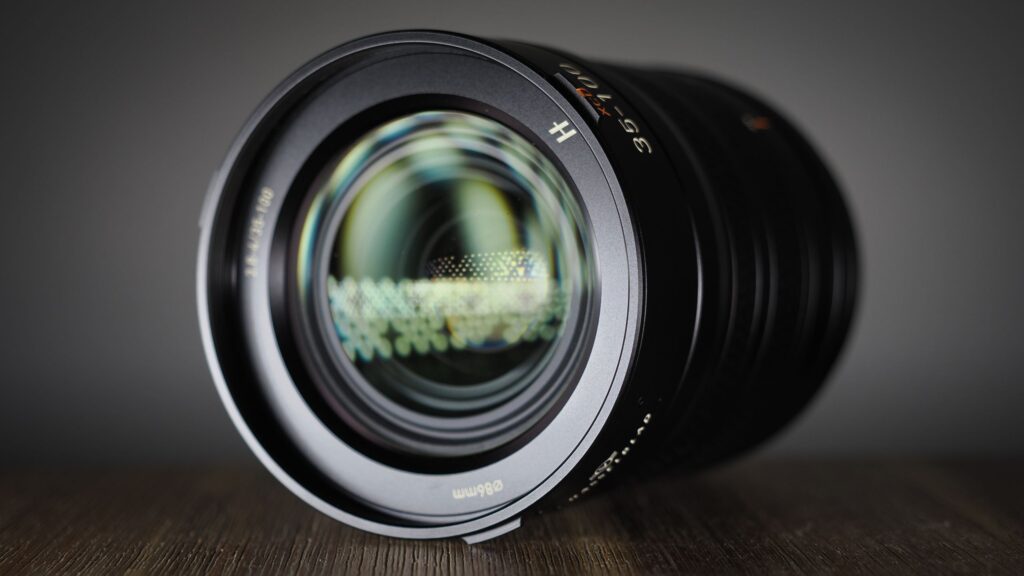
Table of Contents
A Market Shift in High-End Optics
In the highly competitive landscape of professional photography, the Japanese market is often seen as the ultimate bellwether for gear trends. Usually, the top-selling charts are a predictable sea of full-frame workhorses from the ‘Big Three’—Sony, Canon, and Nikon. However, the latest sales data from Yodobashi Camera for the second half of May reveals a jarring anomaly: the top spot is currently held by the Hasselblad XCD 35-100E.
On the surface, this is a statistical curiosity. The XCD 35-100E is a medium-format lens with a price tag of approximately US$4,599. It is not competing for the hobbyist market or the entry-level enthusiast; it is a precision tool designed for the X-System. Yet, it has managed to outpace industry staples like the Sony FE 70-200mm f/2.8 GM OSS II and the Nikon Z 70-200mm f/2.8 VR S II—lenses that are typically the default choice for wedding photographers and photojournalists worldwide.
The Appeal of the ‘Trinity’ Zoom
Hasselblad’s strategy with the XCD 35-100E is rooted in the concept of the ‘trinity’—creating a versatile zoom that can effectively replace a suite of expensive prime lenses. For a professional studio or a high-end commercial shooter, the ability to cover this range without swapping glass is a massive productivity gain. Hasselblad claims the lens can substitute up to seven premium primes, which would collectively cost upwards of US$20,000. When viewed through that lens of value-per-utility, the $4,600 price point begins to look less like a luxury and more like an investment.
Technically, the XCD 35-100E is a significant milestone for medium-format glass. While it doesn’t maintain a constant f/2.8 aperture across the entire zoom range, its f/2.8 capability at the wide end makes it the fastest autofocus medium-format zoom currently on the market. This optical performance, paired with the phase-detection autofocus system found in the Hasselblad X2D 100C, is narrowing the gap between the slow, deliberate nature of medium-format shooting and the snap-focus agility of full-frame systems.
Analyzing the Competition
The current rankings highlight a fascinating tension in the market. The 70-200mm focal range remains the most contested territory in professional photography. Sony and Nikon both have heavy hitters in the top ten, with Nikon’s Z 70-200mm f/2.8 VR S II continuing to be a critical darling for its sharpness and build quality. Even Canon’s presence remains strong, though the RF 70-200mm f/2.8 L IS USM Z notably dipped out of the top ten in the most recent window.
| Rank | Lens Model | Mount/System |
|---|---|---|
| 1 | Hasselblad XCD 35-100E | X-System (Medium Format) |
| 2 | Sony FE 70-200mm f/2.8 GM OSS II | E-mount |
| 3 | Canon RF 100-400mm f/5.6-8 IS USM | RF-mount |
| 4 | Sony FE 24-70mm f/2.8 GM II | E-mount |
| 5 | Tamron 25-200mm f/2.8-5.6 Di III VXD G2 | E-mount |
The rise of the XCD 35-100E suggests that there is a growing appetite in Japan for ‘hybrid’ workflows—where photographers want the unmatched sensor size and color science of medium format without sacrificing the versatility of a zoom lens.
What This Signals for the Industry
Historically, Japanese sales charts are volatile. High-profile launches, such as the Nikon Z 70-200mm, often spike to No. 1 immediately upon release before settling into a steady second or third place. Whether the Hasselblad will maintain this lead or if it is a temporary surge driven by a specific batch of professional upgrades remains to be seen.
Furthermore, the market is bracing for the impact of Sony’s FE 100-400mm f/4.5 GM OSS. Given Sony’s dominant market share in the mirrorless sector, a new high-end telephoto release could easily displace the current leadership. For now, however, the fact that a niche, ultra-premium medium-format lens is the most sought-after piece of glass in Japan signals a shift in how professional photographers are valuing versatility over pure speed.


