Samsung Floods Indian Market With 72 New ‘Vision AI’ TVs, Betting Big on Micro RGB
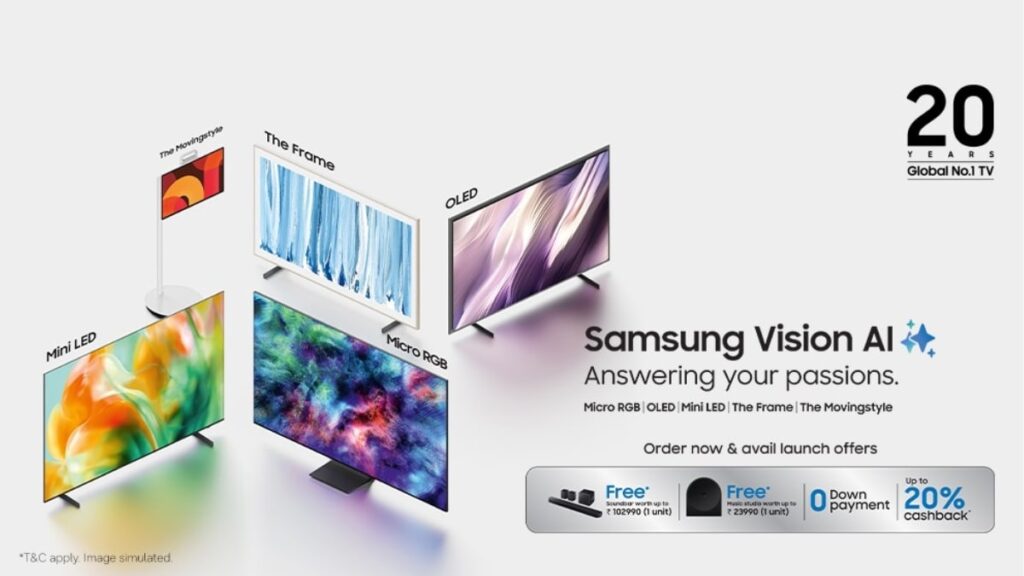
Table of Contents
A Massive Volume Play for the Living Room
Samsung isn’t just refreshing its television catalog in India; it’s attempting to saturate the market. On Wednesday, the South Korean giant unveiled a sprawling 2026 Vision AI lineup consisting of 72 new models. The sheer scale of the launch suggests a strategic push to capture every possible price bracket, from entry-level UHD panels to the hyper-premium Micro RGB displays that target the ultra-wealthy enthusiast segment.
The central nervous system of this new generation is the Vision AI Companion (VAC). While AI-upscaling has been a staple of smart TVs for years, Samsung is pivoting toward a more holistic “companion” approach. Rather than just sharpening a low-res image, the VAC is designed to handle deeper content personalization and dynamic sound profiling, adapting the audio-visual output based on the specific genre of content and the acoustics of the room in real-time.
The Arrival of Micro RGB
The most significant technical milestone in this rollout is the introduction of Micro RGB technology to the Indian market. For those unfamiliar, Micro RGB is the evolution of Micro LED, utilizing non-organic light-emitting diodes that offer the perfect blacks of OLED without the risk of burn-in and with significantly higher peak brightness.
Pricing for the Micro RGB series starts at Rs. 1,24,990, positioning it as the crown jewel of the lineup. This move puts Samsung in direct competition with high-end Sony and LG offerings, though Samsung is leveraging its vertical integration in panel manufacturing to potentially undercut competitors on a price-to-performance basis.
Pricing the Hierarchy
While the Micro RGB grabs the headlines, the bulk of Samsung’s volume will come from its tiered OLED and QLED offerings. The pricing strategy reveals a clear attempt to democratize AI features across different socioeconomic segments in India.
| Series | Starting Price (INR) | Primary Target |
|---|---|---|
| Micro RGB | 1,24,990 | Ultra-Premium / Home Cinema |
| OLED | 1,14,990 | Design-conscious / Gamers |
| The Frame | 56,990 | Lifestyle / Interior Design |
| Neo QLED | 52,990 | Mainstream Mid-range |
| Mini LED | 42,990 | Budget Performance |
| UHD TVs | 36,990 | Entry-level / Mass Market |
Beyond the Panel: The Software Pivot
The hardware is impressive, but the real battle is now happening in the software layer. By integrating the Vision AI Companion across almost all 72 models, Samsung is attempting to build a more cohesive ecosystem. This isn’t just about picture quality; it’s about how the TV interacts with other Samsung SmartThings devices in the home.
The inclusion of AI-powered personalization tools means the TV can now suggest content not just based on what you’ve watched, but potentially how you’re interacting with the screen. For the a-la-carte consumer, the “The Frame” series continues to pivot toward the art-market, starting at Rs. 56,990, blending digital art displays with the new AI processing power to make digital paintings look more like physical canvas.
As the Indian market continues to shift toward larger screens and smarter integration, Samsung’s decision to flood the market with such a diverse range of specs and prices is a clear signal: they aren’t just selling screens; they are selling the AI gateway to the smart home.