Samsung Galaxy Z Fold 8 Ultra and Z Flip 8 Hit FCC Filings: What the Leaks Reveal About the 2026 Foldable Shift
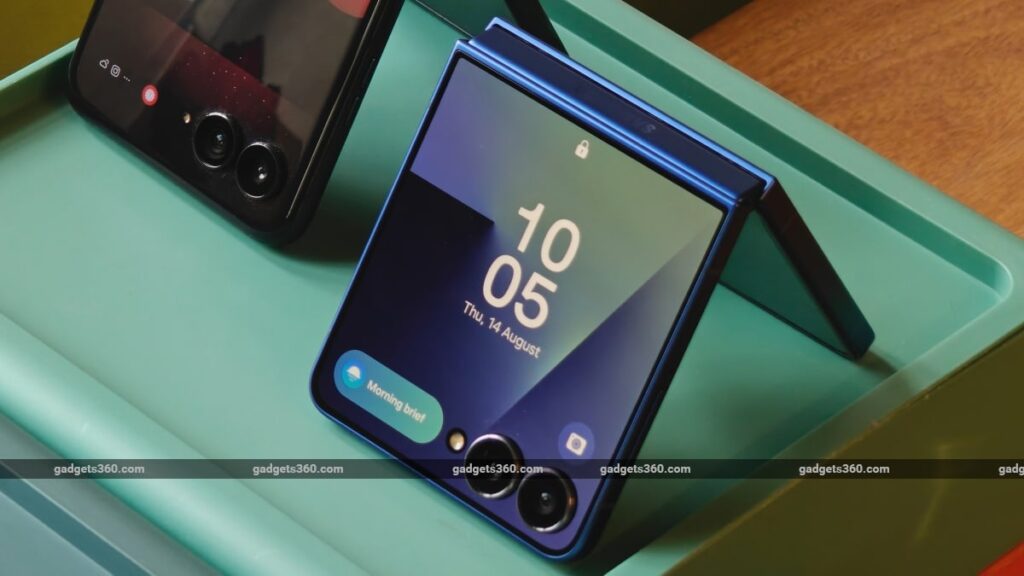
Table of Contents
The Paper Trail to the Next Generation of Foldables
Regulatory filings are rarely the most exciting part of a product launch, but in the world of consumer electronics, the US Federal Communications Commission (FCC) is essentially a crystal ball. When a device appears in these databases, it means the hardware is finalized and the company is preparing for a commercial rollout. Recently, several high-profile Samsung devices have surfaced in these filings, including what appears to be the Samsung Galaxy Z Fold 8 Ultra and the Galaxy Z Flip 8.
These filings—specifically model numbers SM-F976U and SM-F776U—suggest that Samsung is not just iterating on its foldable line but potentially restructuring it. The introduction of an ‘Ultra’ moniker for the Fold series would mark a significant departure from previous years, where the ‘Ultra’ branding was reserved exclusively for the S-series flagship. This move suggests a strategic pivot to capture a higher price ceiling and differentiate between a standard foldable and a professional-grade productivity powerhouse.
- Regulatory Confirmation: The appearance of SM-F976U and SM-F776U in FCC listings confirms that hardware for the Z Fold 8 Ultra and Z Flip 8 is in the final stages of certification.
- The ‘Ultra’ Strategy: Samsung appears to be introducing a tiered foldable strategy, potentially separating the Z Fold 8 into standard and Ultra variants to compete with high-end foldable rivals from Huawei and Honor.
- Ecosystem Sync: The simultaneous listing of the Galaxy Watch 9 and Watch Ultra 2 indicates a coordinated ecosystem launch, likely centered around a mid-year Unpacked event.
- Timing: FCC filings typically precede a public announcement by several weeks, placing a probable launch window in the coming month.
Decoding the FCC Filings: SM-F976U and SM-F776U
To the average consumer, SM-F976U is just a string of characters. To a hardware analyst, it is a blueprint. Historically, Samsung uses the ‘F’ prefix for foldables. The jump to the 700 and 900 series identifies the specific chassis and radio frequency (RF) modules being used. The ‘U’ suffix typically denotes the North American carrier market.
The presence of the Galaxy Z Fold 8 Ultra (SM-F976U) is the most disruptive piece of data. Until now, the Fold has been a singular flagship. By creating an Ultra variant, Samsung may be addressing three specific pain points that have plagued foldable users for years: crease visibility, battery capacity, and camera hardware. In the standard S-series, ‘Ultra’ means a superior zoom lens and a larger battery. Applying this to the Z Fold 8 could mean the integration of a 200MP main sensor—something previously omitted from the Fold series to save internal space.
The Galaxy Z Flip 8: Iteration or Innovation?
The Galaxy Z Flip 8 (SM-F776U) continues the tradition of the compact foldable. While the Flip series has seen slower evolutionary growth than the Fold, the FCC filing confirms it remains a pillar of Samsung’s strategy. The primary question for the Z Flip 8 isn’t about raw power, but about the cover screen utility. Industry trends suggest a push toward larger, more functional exterior displays that allow users to avoid unfolding the phone for basic tasks—a move essential for competing with the Motorola Razr series.
What This Means for the Consumer
The shift toward an ‘Ultra’ foldable isn’t just a naming exercise; it changes the value proposition of the device. If Samsung splits the Fold 8 into two tiers, we can expect a pricing divergence. The standard Z Fold 8 may stay at the $1,799 mark to maintain market share, while the Ultra could push toward $2,199 or higher, justified by upgraded titanium framing, a thinner profile, or an integrated S-Pen with better latency.
For the user, this means more choice but also more complexity. We are seeing the “iPhone-ification” of the foldable market, where a good-enough model exists for the general public and a prestige model exists for power users. If you are a corporate user who treats your phone as a primary tablet, the Z Fold 8 Ultra is the device to watch. If you simply want a foldable that fits in your pocket, the Z Flip 8 remains the logical choice.
The Wearables Component: Galaxy Watch 9 and Watch Ultra 2
It is rarely just about the phones. The FCC listings also include the Galaxy Watch 9 series and the Galaxy Watch Ultra 2. This tells us that Samsung is doubling down on the HealthTech sector. The ‘Ultra’ watch is designed for extreme environments—think hiking, diving, and long-term endurance—while the standard Watch 9 focuses on daily wellness and sleep tracking.
The synergy between the Z Fold 8 Ultra and the Watch Ultra 2 suggests a “Pro” ecosystem. Samsung is likely targeting the ‘Active Professional’—someone who needs a high-productivity screen for work and a rugged, long-battery-life wearable for an active lifestyle. This alignment of product tiers across categories is a classic move to increase the average revenue per user (ARPU) by encouraging customers to upgrade their entire suite of devices.
Technical Breakdown: The Foldable Hurdle
The core challenge for the Z Fold 8 Ultra is material science. To achieve an ‘Ultra’ status, Samsung must solve the thickness problem. Foldables are inherently bulkier than slabs. Current reports from supply chain analysts suggest Samsung is experimenting with a new hinge mechanism that allows the device to fold flatter, reducing the ‘gap’ and improving water resistance (potentially moving toward an IP68 rating for the hinge itself).
| Feature | Z Fold 8 (Expected) | Z Fold 8 Ultra (Predicted) |
|---|---|---|
| Main Camera | 50MP Wide | 200MP ISOCELL |
| Frame Material | Armor Aluminum | Grade 5 Titanium |
| Display | Dynamic AMOLED 2X | Ultra-Thin Glass (UTG) Gen 3 |
| Battery | ~4,400 mAh | ~5,000 mAh+ |
| S-Pen | Supported | Integrated Slot |
Strategic Positioning Against Competitors
Samsung is no longer the only player in the foldable game. In China, brands like Honor and Xiaomi are releasing foldables that are thinner than the Z Fold series and feature faster charging. The move to a Z Fold 8 Ultra is a direct response to this competitive pressure. By introducing a top-tier model, Samsung can push the boundaries of hardware without risking the mass-market appeal of the standard Fold.
Furthermore, the integration of Galaxy AI will likely be the primary software differentiator. We expect the Z Fold 8 Ultra to feature dedicated NPU (Neural Processing Unit) optimizations for multitasking, perhaps allowing for simultaneous AI-driven translation and transcription across three different windows on the large inner display.
Frequently Asked Questions
When will the Samsung Galaxy Z Fold 8 Ultra be officially announced?
While Samsung has not confirmed a date, FCC filings typically appear 4 to 8 weeks before a launch. Based on the timing of these listings and the rumored Galaxy Unpacked event, an announcement in July or August 2026 is highly probable.
Is the Z Fold 8 Ultra replacing the standard Z Fold 8?
Current evidence suggests the Ultra will be an additional high-end tier, not a replacement. This allows Samsung to target both the enthusiast market and the mainstream consumer.
What is the difference between an FCC filing and a product launch?
An FCC filing is a regulatory requirement for any device that uses radio frequencies to ensure it meets US safety and interference standards. It is a prerequisite for sale, but not a marketing launch. Many devices are filed months before they are advertised.
Will the Galaxy Watch 9 have a different design than the Watch 8?
The FCC listings confirm the hardware exists, but they don’t reveal the aesthetic. However, the presence of a ‘Watch Ultra 2’ suggests that the rugged, square-ish design introduced in the first Ultra model will return for a second generation.
Will the Z Flip 8 finally get a larger cover screen?
While not explicitly detailed in the FCC filing, market pressure from competitors like Motorola makes a cover screen expansion almost certain for the Z Flip 8 to remain competitive.
Journalistic Perspective on the ‘Ultra’ Trend
There is a risk in the ‘Ultra’ strategy. When a company segments its flagship into too many tiers, it can lead to feature dilution, where the standard model feels like a ‘compromised’ version rather than a complete product. Samsung must be careful not to make the standard Z Fold 8 feel obsolete upon arrival. However, from a business perspective, the Ultra branding is a powerful tool for maintaining a prestige image in a market where foldables are becoming common.
The real victory for Samsung won’t be in the specs, but in the durability. If the Z Fold 8 Ultra can finally eliminate the screen crease and offer a battery that lasts two full days, it will move the foldable from a ‘luxury curiosity’ to a ‘primary tool’ for the global workforce.