Poco’s New Pad C1 Targets the Budget Tablet Gap with Snapdragon 6s 4G Gen 2
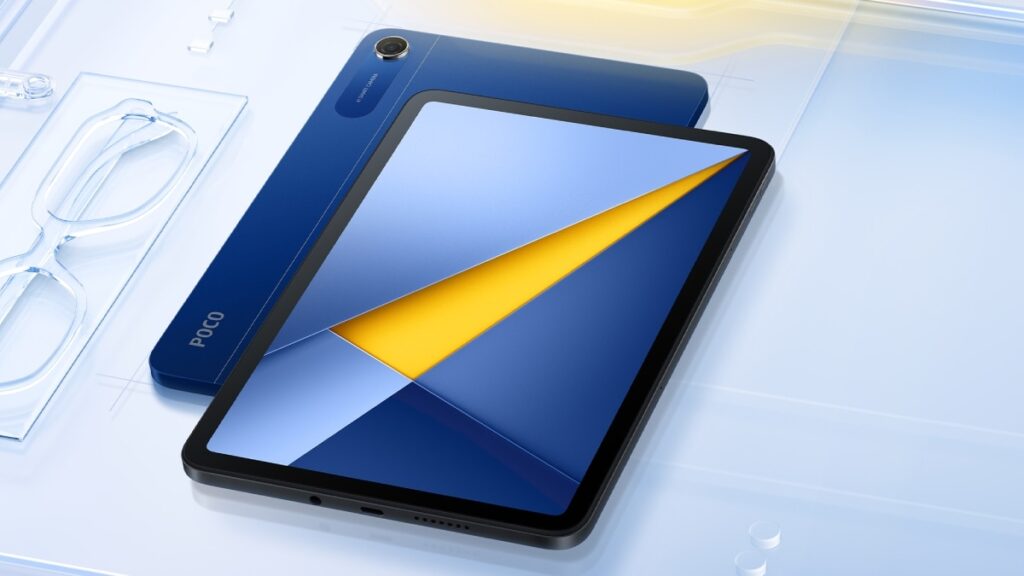
Table of Contents
A Strategic Pivot to the Entry-Level
Poco has officially pulled back the curtain on the Poco Pad C1, a device that suggests the brand is looking to carve out a more aggressive foothold in the budget tablet market. While the industry has seen a surge in high-end, productivity-focused tablets, the Pad C1 is clearly designed for the “consumption” crowd—students and casual users who need more screen real estate than a phone but don’t require the raw power of an iPad Pro or a Samsung Galaxy Tab S series.
The device centers around a 9.7-inch 2K display. In an era where budget tablets often compromise on resolution, the 2K panel is a welcome inclusion, though the real draw is the 120Hz refresh rate. This ensures that navigating the UI and scrolling through social feeds feels fluid, a feature usually reserved for mid-range hardware.
The Silicon Trade-off
Under the hood, the Pad C1 runs on the Snapdragon 6s 4G Gen 2. To be clear, this is not a performance monster. By opting for a 4G-capable chip rather than a 5G variant, Poco is leaning into cost-efficiency. The Snapdragon 6s Gen 2 is designed for stability and power efficiency rather than peak benchmarks, making it a pragmatic choice for a device intended for streaming, reading, and light multitasking.
The hardware configurations are modest, offering either a 4GB RAM and 64GB storage pairing or a slightly more usable 6GB RAM and 128GB storage option. While these numbers might seem low for a modern device, the inclusion of a microSD slot supporting up to 2TB of expandable storage mitigates the storage bottleneck for users who download large quantities of media for offline use.
Software and Build Quality
The tablet debuts with Xiaomi’s HyperOS, which is designed to create a more unified ecosystem across Xiaomi, Redmi, and Poco devices. This integration allows for better synchronization between a Poco smartphone and the Pad C1, potentially including features like shared clipboards or seamless app switching.
Physically, Poco has avoided the all-plastic feel often associated with entry-level tablets. The Pad C1 features a metal unibody design, which not only adds a premium tactile feel but also improves heat dissipation for the Snapdragon chipset. The device is available in two understated colorways: Blue and Grey.
Sustaining the Experience
Battery life is often where budget tablets fail, but the 7,600mAh cell in the Pad C1 should be sufficient to keep up with the 120Hz display. Given the low power draw of the Snapdragon 6s chipset, users can likely expect several days of standby time or a full day of heavy video consumption.
Other notable additions include stereo speakers for improved media consumption and AI-driven face unlock, which provides a quicker, if slightly less secure, alternative to traditional PINs. Connectivity is handled via a standard USB Type-C port, though the specific charging speed remains unconfirmed in the official product documentation.
The Missing Piece: Pricing
Despite the detailed specifications listed on Poco’s official website and accompanying product PDFs, the company has remained tight-lipped regarding the price. There is currently no confirmed region-wise launch timeline or official MSRP.
If Poco prices this aggressively—potentially undercutting the likes of the Lenovo Tab or Samsung’s A-series—it could become a compelling recommendation for those who want a durable, high-refresh-rate screen without paying a premium for 5G or high-end processing power.


