Dark Ships and Digital Silence: How GPS Spoofing Is Masking the Hormuz Standoff
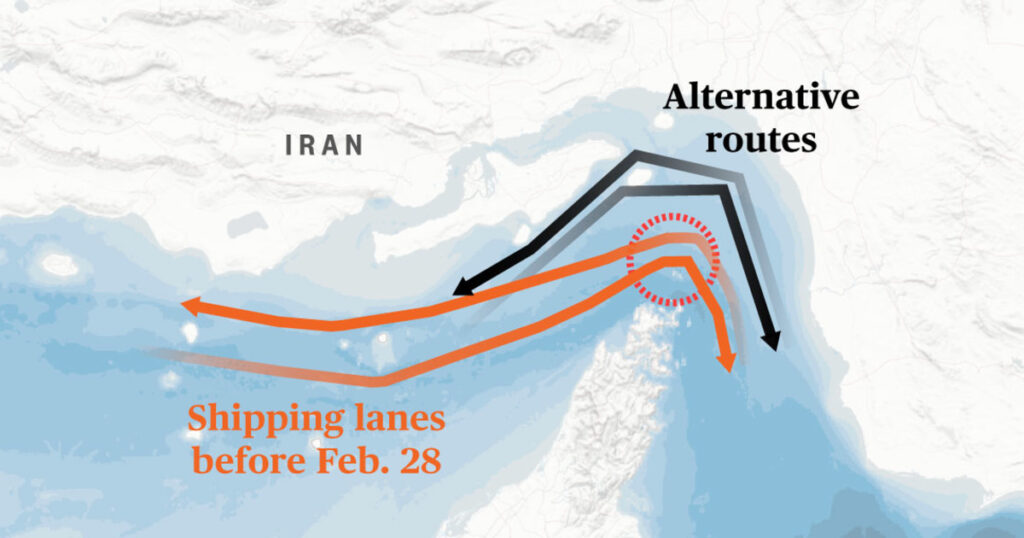
Table of Contents
The Invisible Blockade
For weeks, the Strait of Hormuz has existed in a state of digital schizophrenia. While official reports from Tehran and Washington clash over whether the waterway is open or blockaded, the actual data coming from the ships themselves has become unreliable. The result is a high-stakes game of maritime hide-and-seek that is driving global energy markets into a frenzy.
The current crisis, ignited following U.S.-Israeli strikes on February 28, has transformed one of the world’s most critical chokepoints—responsible for roughly 20% of global oil and natural gas transit—into a laboratory for electronic warfare. As Iran’s Islamic Revolutionary Guard Corps (IRGC) Navy implements toll demands and warns of mined waters, the ships attempting to navigate the strait are increasingly resorting to ‘dark’ transit.
The Mechanics of Digital Camouflage
The primary tool for monitoring global trade is the Automatic Identification System (AIS), a tracking system that uses VHF radio to broadcast a ship’s identity, position, and speed. Under normal conditions, AIS provides a transparent view of global logistics. However, in the Hormuz corridor, this transparency has vanished. Ships are now systematically manipulating their GPS trackers to avoid targeted strikes or to bypass Iranian toll demands.
This isn’t as simple as turning off a switch. Advanced ‘spoofing’ involves transmitting false coordinates to make a vessel appear as if it is miles away from its actual location, or even stationary in a different port. For analysts and newsrooms attempting to track the daily count of tankers, this creates a massive data gap. When a ship ‘goes dark’ or spoofs its location, it disappears from the public map, leaving only satellite imagery—which is slower and more expensive to procure—as a reliable source of truth.
Economic Shockwaves and the ‘Risk Premium’
The uncertainty generated by this digital blackout is being priced directly into the pump. In March, U.S. gas prices surged by over 40%, crossing the $4 per gallon threshold. While there were brief dips in April, May has seen prices hit new highs. This volatility isn’t just about the physical absence of oil, but the information asymmetry created by the conflict.
Traders cannot accurately hedge their positions when they cannot verify how many VLCCs (Very Large Crude Carriers) are successfully clearing the strait. When Iranian media publishes specific ‘safe’ inbound and outbound routes via the IRGC Navy, it further complicates the picture, suggesting a controlled transit system that contradicts the chaotic reality seen on AIS monitors.
A New Era of Maritime Warfare
The situation in Hormuz highlights a broader shift in cybersecurity: the weaponization of positioning, navigation, and timing (PNT) data. The ability to deceive a ship’s navigation system is no longer a theoretical vulnerability; it is a primary tactic in modern asymmetric warfare.
As the IRGC Navy asserts control over the waterway, the reliance on these manipulated signals forces a precarious choice for captains: trust a compromised digital map or sail blind into potentially mined waters. The result is a near-standstill of traffic that serves as a grim reminder of how fragile the global supply chain is when the digital layer of trust is stripped away.