Drone Warfare Escalates as U.S. and Iran Trade Strikes Near Strait of Hormuz
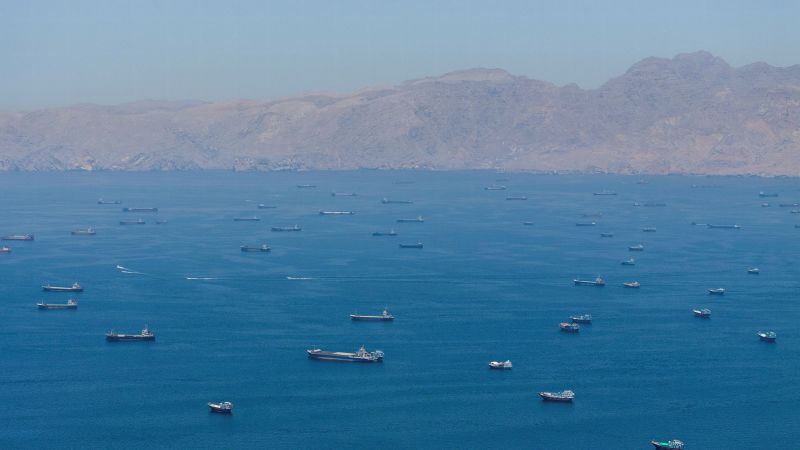
Table of Contents
The New Frontline of Autonomous Attrition
The fragile geopolitical balance in the Persian Gulf fractured again this week as the United States and Iran engaged in a rapid exchange of precision strikes. While the political rhetoric remains centered on ceasefires and diplomatic memoranda, the tactical reality on the ground reveals a deepening reliance on Unmanned Aerial Vehicles (UAVs) to conduct high-stakes kinetic operations with minimal immediate risk to personnel.
The escalation began when U.S. forces targeted a series of Iranian drone launch sites and operational hubs situated around the Strait of Hormuz. According to a senior U.S. official, the objective was the neutralization of launch capabilities that had been identified as primary threats to regional maritime security. The response was swift: Iran’s Islamic Revolutionary Guard Corps (IRGC) launched a retaliatory strike against an American air base, claiming the facility was the origin point of the initial U.S. sorties.
The Technicality of the ‘Standoff’
This cycle of strike-and-retaliation underscores a shift in the nature of conflict in the region. We are no longer seeing traditional air superiority battles, but rather a war of attrition fought via ‘standoff’ technology. By utilizing drones, both the IRGC and the U.S. military can project power across borders without the political fallout of a downed manned aircraft. However, this lowers the threshold for engagement, making ‘tit-for-tat’ strikes more frequent and harder to de-escalate.
The IRGC has increasingly leaned into low-cost, high-impact drone swarms, which complicate the defensive calculus for U.S. Aegis-equipped destroyers and Patriot missile batteries. When a $20,000 drone forces a navy to expend a million-dollar interceptor, the economic asymmetry of the conflict becomes a strategic weapon in itself.
Diplomatic Friction and the Blockade Narrative
Amidst the kinetic activity, the White House and Tehran remain locked in a war of narratives. Reports from Iranian state media suggested that a memorandum of understanding was being negotiated, which would allegedly see the U.S. lift its blockade of Iranian ports in exchange for the guaranteed reopening of the Strait of Hormuz. The White House has dismissed these claims as fabrications, signaling that the administration is not interested in a rushed agreement.
President Donald Trump emphasized a position of patience, stating he would not be pressured into a deal by Iranian attempts to outlast his administration. The mention of the midterms suggests that the geopolitical strategy is being weighed against domestic political timelines, creating a volatile environment where military technology is used to maintain leverage during diplomatic deadlocks.
Parallel Escalation in Lebanon
The volatility is not contained to the Gulf. In Lebanon, the Israeli military has reported strikes on Hezbollah targets in Tyre, further north of the current Israeli-occupied zones. The intensity of the conflict reached a grim peak with a reported missile strike on an apartment complex in Sidon, Lebanon’s third-largest city. These simultaneous flare-ups in different theaters suggest a broader regional instability where the integration of precision-guided munitions and intelligence-gathering drones has accelerated the pace of combat operations.
As both the U.S. and Iran refine their UAV doctrines, the Strait of Hormuz has become a living laboratory for the next generation of electronic warfare. The ability to jam signals, spoof GPS, and deploy autonomous swarms is no longer a theoretical exercise—it is the primary mechanism of engagement in a region where the cost of a full-scale war is too high, but the cost of a drone strike is negligible.