Xiaomi Mix Fold 5 Leaks: HyperOS 4 Debut and the Mystery of the Xring O3 Chip
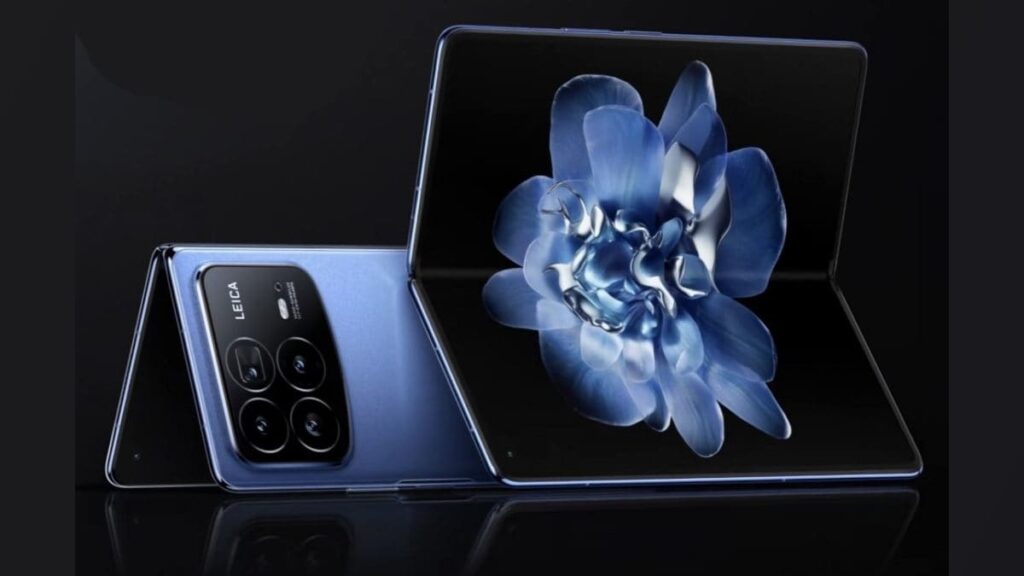
Table of Contents
A Regulatory Paper Trail Points to Xiaomi’s Next Foldable
The cycle of foldable smartphone releases is accelerating, and Xiaomi is positioning itself to maintain its aggressive trajectory in the Chinese domestic market. Recent regulatory filings from China’s Ministry of Industry and Information Technology (MIIT) have surfaced, revealing a device with the model number 2608BPX34. While the filing is technical and dry, the implications for power users and foldable enthusiasts are significant: this is almost certainly the Xiaomi Mix Fold 5.
The appearance of a device in MIIT filings usually signals that a product is in the final stages of pre-production testing and is awaiting a commercial launch window. For Xiaomi, the stakes are high. The Mix Fold 4 established a precedent for thinness and hinge durability, but the Fold 5 is rumored to be the vessel for a massive software pivot—the debut of HyperOS 4—and a potential shift in silicon strategy with the mentioned Xring O3 chipset.
- Regulatory Milestone: Model 2608BPX34 has passed radio certification via MIIT, suggesting an August launch window.
- Software Leap: The device is expected to be the first to ship with HyperOS 4, promising deeper AI integration and efficiency.
- Hardware Mystery: Leaks point to an “Xring O3” chip, potentially a proprietary co-processor or a new iteration of Xiaomi’s internal silicon.
- Connectivity: Confirmed support for 5G and Ultra-Wideband (UWB) for precision tracking and faster device hand-offs.
Decoding the MIIT Filing: More Than Just a Model Number
In the world of hardware leaking, the MIIT (Ministry of Industry and Information Technology) is the gold standard for verification. Unlike Weibo rumors, which can be speculative, an MIIT filing is a legal requirement for any radio-emitting device sold in China. The model number 2608BPX34 aligns with the naming convention previously associated with Xiaomi’s next-generation foldable project.
One of the most critical details in the leak is the inclusion of Ultra-Wideband (UWB) technology. While UWB has been present in high-end flagship slabs, its integration into foldables allows for more precise spatial awareness. This means better integration with digital car keys, more accurate “Find My Device” capabilities, and seamless hand-off between the phone and other Xiaomi ecosystem products like tablets or smart home hubs.
The Naming Pivot: Mix Fold 5 or Xiaomi 17 Fold?
There is a growing conversation among industry insiders and tipsters, including the well-known Weibo source Whylab, that Xiaomi may shift its branding strategy. For years, the “Mix” brand denoted experimental, cutting-edge hardware. However, as foldables move from niche to mainstream, Xiaomi may align the foldable with its primary numbered series—potentially rebranding this device as the Xiaomi 17 Fold to match the upcoming Xiaomi 17 flagship series.
The HyperOS 4 Gamble: What Changes?
If the Mix Fold 5 is indeed the first device to run HyperOS 4, it represents more than just a version increment. HyperOS was designed from the ground up to unify the Xiaomi ecosystem, from watches to electric vehicles (the SU7). Version 4 is expected to double down on on-device AI (Edge AI), reducing the reliance on cloud processing for common tasks.
For a foldable user, HyperOS 4 likely focuses on adaptive layout intelligence. Current foldable software often feels like a stretched-out phone app. The goal for HyperOS 4 is likely a more fluid transition between the cover screen and the inner display, utilizing AI to predict which app a user wants open based on the folding state of the device.
Xring O3: Xiaomi’s Quest for Silicon Independence
Perhaps the most provocative claim in the recent leaks is the mention of the Xring O3 chipset. To be clear, it is highly unlikely that Xiaomi is replacing the primary Qualcomm Snapdragon SoC—which provides the raw 5G and CPU power—with a completely in-house chip. Instead, the Xring O3 likely refers to a proprietary co-processor.
Similar to Apple’s Neural Engine or Google’s Tensor TPU, an Xring O3 chip would likely handle specific workloads: battery management, image signal processing (ISP) for the foldable’s complex camera array, or dedicated AI acceleration for HyperOS 4. By offloading these tasks from the main Snapdragon processor, Xiaomi can achieve better thermal efficiency and longer battery life—two perennial problems for foldable devices.
Comparison: Evolution of Xiaomi Foldables
| Feature | Mix Fold 4 | Mix Fold 5 (Expected) |
|---|---|---|
| OS | HyperOS 1/2 | HyperOS 4 |
| Connectivity | 5G / Wi-Fi 7 | 5G / UWB / Wi-Fi 7 |
| Chipset Strategy | Snapdragon 8 Gen 3 | Snapdragon 8 Gen 4 + Xring O3 |
| Form Factor | Slim profile | Further weight reduction |
| AI Integration | Cloud-based | On-device Edge AI |
Practical Implications: What This Means for the Consumer
For the average consumer, these technical specifications translate into three tangible improvements. First, the UWB support means the phone becomes a more reliable key and tracker, reducing the friction of moving through a smart home or unlocking a vehicle.
Second, the move toward HyperOS 4 suggests a more mature multitasking experience. Foldables fail when the software feels like an afterthought; if Xiaomi can nail the transition between screen sizes, the Mix Fold 5 becomes a genuine productivity tool rather than a luxury gadget.
Third, the Xring O3 chip hints at a focus on efficiency. Foldables are limited by the physical space available for batteries. If Xiaomi can optimize power draw through dedicated silicon, they can keep the device thin without sacrificing the 2-3 hours of extra battery life that users typically crave.
Analyzing the Timeline and Market Positioning
The August launch window mentioned by Whylab is aggressive. Historically, Xiaomi has used the late summer/early autumn window to capture the attention of the market before the massive Q4 holiday rush. By launching in August, Xiaomi can iterate on the software and gather user feedback before the global rollout of its other flagship devices.
In the current market, Xiaomi is fighting a two-front war. In China, it is competing with Huawei’s sophisticated folding tech and Honor’s thinness records. Globally, it is eyeing the dominance of the Samsung Galaxy Z Fold series. The Mix Fold 5 isn’t just about specs; it’s about proving that Xiaomi can out-innovate the industry in both hardware (Xring) and software (HyperOS).
Frequently Asked Questions
Will the Mix Fold 5 be available globally?
While the MIIT certification is for the Chinese market, Xiaomi has been gradually expanding its foldable presence. Whether it launches globally under the “Mix Fold 5” or “Xiaomi 17 Fold” name remains to be seen, but the hardware is designed for global 5G standards.
What is the difference between HyperOS and standard Android?
HyperOS is Xiaomi’s customized layer on top of Android. While it retains the Android core, it optimizes the kernel for better memory management and integrates a unified account system that connects your phone to your Xiaomi car and home appliances.
Does the Xring O3 chip replace the Snapdragon processor?
No. It is almost certainly a complementary chip. High-end smartphones require the modem and CPU power of a Qualcomm or MediaTek chip, but use proprietary chips (like Xring) to handle specific tasks like AI or battery optimization.
When can I expect the Mix Fold 5 to launch?
Based on the MIIT filings and tipster reports, an official unveiling in August is likely, with sales following shortly after in China.
Is the Mix Fold 5 waterproof?
While not explicitly mentioned in the radio certification, previous iterations have moved toward better water resistance. Given the competitive landscape, an IPX8 rating is the expected baseline for 2025 foldables.
Final Journalistic Assessment
The Xiaomi Mix Fold 5 is shaping up to be a pivotal release. By combining a new regulatory-approved hardware iteration with a potential leap to HyperOS 4, Xiaomi is attempting to solve the “software gap” that has long plagued foldables. The most intriguing element remains the Xring O3; if Xiaomi successfully implements a custom silicon strategy, it moves from being a device assembler to a true technology architect, challenging the vertical integration of Apple and Google. For now, the MIIT filings provide the evidence; August will provide the answers.