Xiaomi Attempts to Democratize Mini LED with New FX Series in India
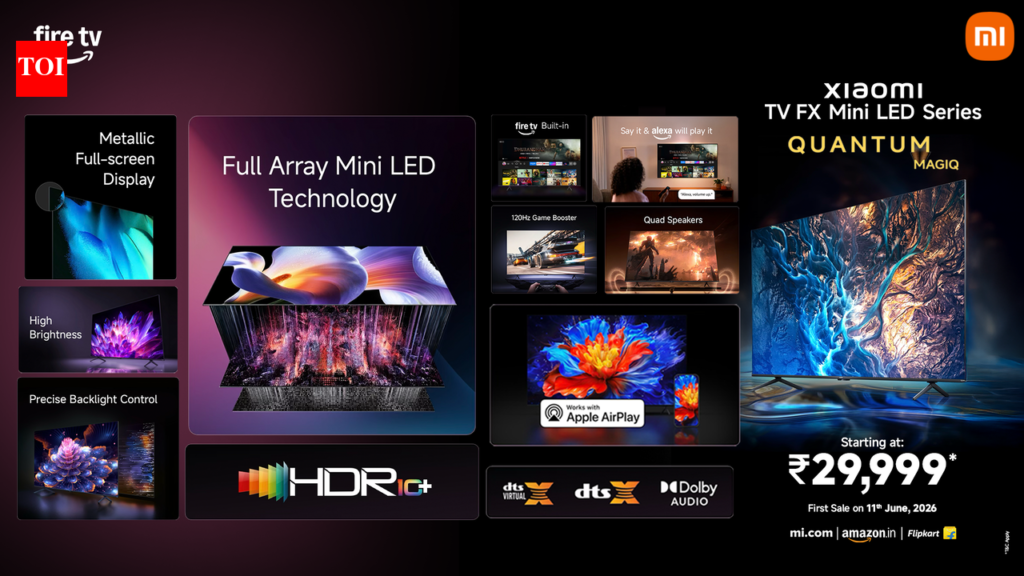
Table of Contents
Xiaomi is making a calculated play for the Indian living room by bringing Mini LED technology down to a price point that was previously reserved for entry-level LED panels. The newly unveiled FX Mini LED TV series, starting at ₹29,999, represents a strategic attempt to bridge the gap between affordable televisions and the high-contrast performance typically found in premium cinema displays.
Mini LED at a Mass-Market Price
For years, Mini LED has been a luxury feature, used primarily to solve the “blooming” and gray-scale issues inherent in standard LED-backlit LCDs. By using significantly smaller LEDs for the backlight, Xiaomi’s FX series can implement more precise local dimming zones. This allows the TV to push deeper blacks and brighter highlights simultaneously, a crucial requirement for HDR content that traditional budget TVs often struggle to replicate.
While Xiaomi has not yet released the exact number of dimming zones for the base model, the shift to Mini LED suggests a move away from the generic edge-lit or direct-lit arrays that dominate the sub-30k price bracket in India. If the panel quality holds up, this could put significant pressure on competitors like Samsung and TCL, who have traditionally guarded Mini LED as a mid-to-high-tier offering.
The Fire TV Pivot
Perhaps more interesting than the hardware is the software choice. The FX series comes integrated with Amazon’s Fire TV OS. This is a notable departure for a company that has spent years refining its own PatchWall interface. By adopting Fire TV, Xiaomi is leaning into a more robust app ecosystem and a more intuitive voice-control experience via Alexa, which has seen massive adoption across Indian households.
Integrating Fire TV essentially turns the hardware into a seamless extension of the Amazon ecosystem, making it a more attractive proposition for users who already rely on Prime Video and Alexa-enabled smart home devices. It reduces the friction of using external streaming sticks, which have long been the workaround for users dissatisfied with built-in smart TV interfaces.
Audio and Connectivity
On the audio front, Xiaomi is opting for a quad-speaker setup featuring Dolby Audio. While thin-bezel TVs rarely offer cinematic sound due to physical space constraints, the quad-array is designed to provide a wider soundstage than the standard dual-downward firing speakers. For the average user, this should mean clearer dialogue and a more filled-out room feel without the immediate need for a dedicated soundbar.
The series will be available in multiple screen sizes, allowing users to scale their experience based on room size. While the ₹29,999 starting price applies to the smallest variant, the larger models are expected to scale linearly, though Xiaomi has not yet disclosed the full price list for the 55-inch and 65-inch iterations.
Market Positioning
The launch timing is precise. As Indian consumers shift from basic 4K toward a demand for better contrast and smarter integration, Xiaomi is positioning the FX series not as a “cheap TV,” but as an “accessible premium” device. The challenge will be maintaining quality control across the Mini LED arrays at this price point—specifically avoiding the uniformity issues that can plague budget-tier LED implementations.
The FX Mini LED series will be available for purchase starting June 11, 2026, across Xiaomi’s online channels and major retail partners in India.


