Waymo’s New ‘Ojai’ Robotaxi Moves Beyond the Jaguar I-Pace with Zeekr Hardware and Gen 6 Sensors
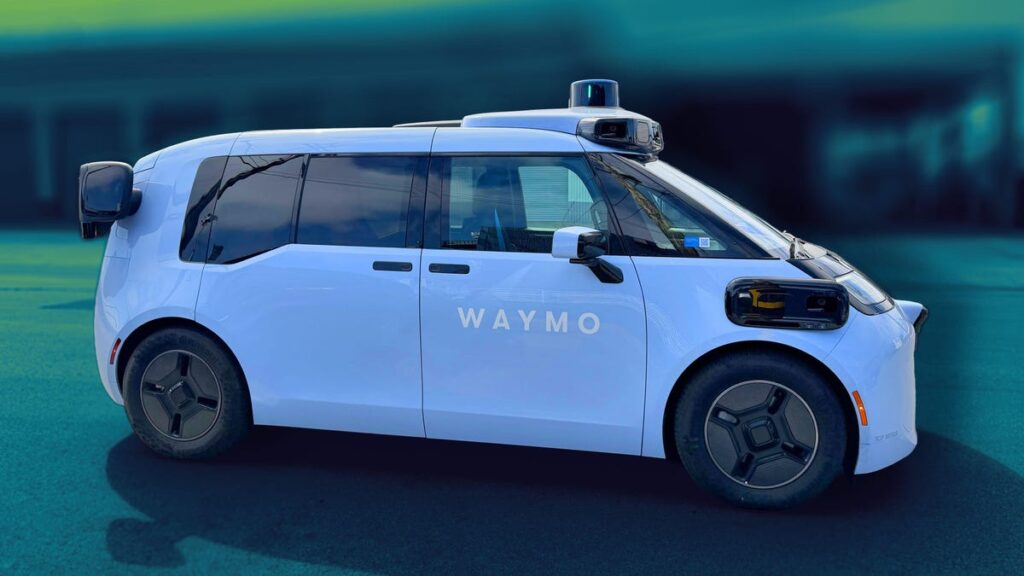
Table of Contents
A Shift in Form Factor
For years, the Jaguar I-Pace has been the face of Waymo’s commercial operations, a sleek but ultimately constrained crossover that often felt like a compromise between a luxury sedan and a utilitarian pod. That era is beginning to wind down. Waymo is now introducing the Ojai—a custom-built vehicle developed in partnership with the Chinese EV manufacturer Zeekr—that prioritizes passenger utility over traditional automotive aesthetics.
The Ojai (a play on the greeting “Oh, hi”) represents a fundamental shift in Waymo’s hardware strategy. While the I-Pace was a modified production car, the Ojai is designed from the ground up to be a purpose-built robotaxi. The most immediate difference is the silhouette: the vehicle is boxier, taller, and significantly more spacious, moving away from the crossover feel toward something more akin to a high-end urban shuttle.
Rethinking the Passenger Experience
Inside, the Ojai addresses the primary pain points of the current fleet. The transition to a flat-floor architecture allows for vastly improved legroom, making the cabin feel less like a cramped backseat and more like a mobile lounge. Access is handled via dual-sliding doors, a critical ergonomic upgrade that simplifies entry and exit in tight urban environments—a common struggle with the swinging doors of the I-Pace.
Crucially, the Ojai is designed with a modular interior. While current versions still feature a steering wheel for regulatory and safety redundancies, Waymo has confirmed that the hardware is designed to eventually allow for the complete removal of the driver’s controls. This would effectively turn the front seat into a fifth passenger spot, maximizing the vehicle’s efficiency as a ride-sharing asset.
Accessibility is also a focal point. The interior controls include Braille integration, signaling Waymo’s intent to make autonomous mobility a viable option for visually impaired passengers who have historically struggled with traditional ride-hailing interfaces.
Gen 6: Solving the Weather Problem
Beyond the chassis, the Ojai serves as the primary vessel for the sixth-generation Waymo Driver. While the previous iterations were highly capable in the sunny climates of Phoenix and San Francisco, inclement weather remained a significant hurdle for L4 autonomy. The Gen 6 suite is specifically engineered to tackle harsher environments, including snow and heavy rain.
One of the most telling additions to the sensor array is the inclusion of a dedicated wiper system for the sensor suite. By ensuring that cameras and LiDAR remain clear of debris and precipitation, the Ojai can maintain high-fidelity object detection in conditions that would typically force a robotaxi to pull over or hand over control.
According to Waymo, this new hardware allows for better detail detection and more accurate object gauging across a wider variety of lighting conditions. This technical leap is not just about safety; it is about scalability. The ability to operate reliably in snow is the prerequisite for Waymo to expand its footprint into the Midwest and Northeast corridors of the U.S.
Rolling Out Across Major Hubs
The deployment is starting in the company’s core strongholds. Fully autonomous rides in the Ojai are currently opening up in San Francisco, Los Angeles, and Phoenix. These cities serve as the primary testing ground for the Zeekr-based fleet before a broader rollout later this summer.
Users can currently express interest in the new vehicle through the Waymo app, where the company is utilizing a staged rollout to monitor how the new form factor performs in real-world traffic patterns. As the Ojai replaces the I-Pace, the goal is a more seamless, accessible, and weather-resistant service that moves closer to the vision of a truly driverless urban transit system.