ViewSonic Bets on Android 16 and Generative AI for New Education-Focused ViewBoard IN05 Series
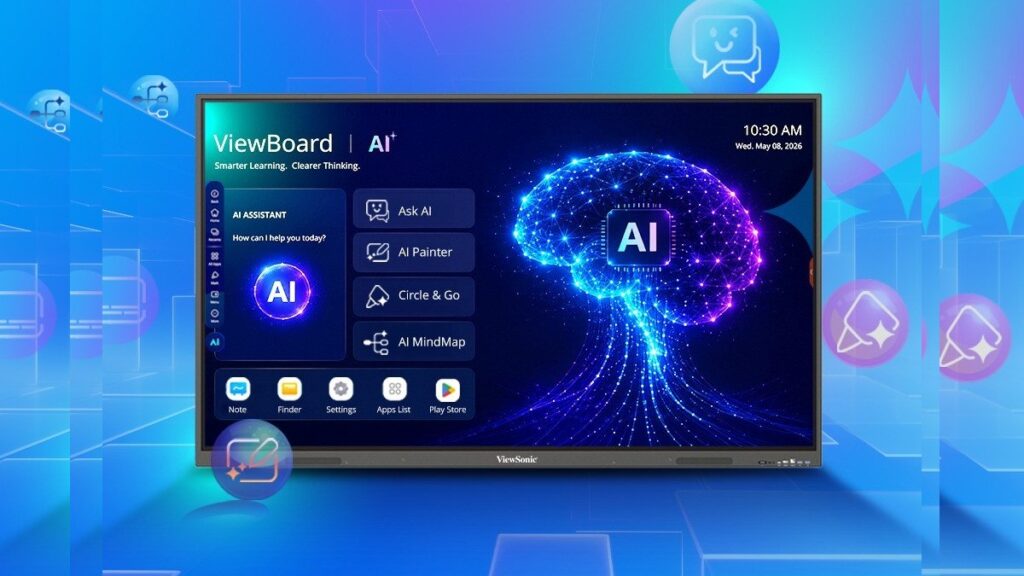
Table of Contents
Bridging the Gap Between Hardware and AI Pedagogy
ViewSonic is attempting to move the interactive whiteboard beyond the role of a glorified projector screen. With the launch of the IN05 series ViewBoard 4K EDLA interactive displays in India, the company is leaning heavily into the convergence of Google’s ecosystem and generative AI to target the evolving needs of modern classrooms.
The IN05 series arrives in three primary sizes—65-inch (IN6505-N), 75-inch (IN7505-N), and 86-inch (IN8605-N)—catering to different room scales from small tutoring centers to large lecture halls. While the physical specs are standard for the category, the underlying software architecture is where ViewSonic is attempting to differentiate itself from competitors like Promethean or SMART Technologies.
The Android 16 Edge and EDLA Certification
Most notably, the IN05 series ships with Android 16. In the fragmented world of interactive displays, where many devices linger on outdated versions of Android or proprietary skins, the jump to the latest iteration suggests a commitment to security and app compatibility. The hardware is EDLA (Enterprise Device Licensing Agreement) certified, meaning these boards have native access to the Google Play Store and Google Workspace integration without the need for clunky third-party workarounds.
Under the hood, the boards are equipped with 8GB of RAM and 128GB of onboard storage. While these numbers may seem modest compared to a high-end tablet, for an interactive display handling 4K streams and collaborative whiteboarding, it provides the necessary headroom to prevent the lag that often plagues older generation boards during multi-user interaction.
AI Integration: Beyond the Buzzwords
ViewSonic isn’t just slapping an “AI” label on the box; they’ve introduced a suite of tools designed to reduce the administrative burden on teachers. The “Ask AI” feature functions as a real-time research assistant, allowing educators to pull facts or simplify complex topics on the fly. Similarly, “AI Mind Map” aims to automate the brainstorming process, converting unstructured notes into visual hierarchies instantly.
Two other features, “Video Pilot” and “Circle Go,” suggest a move toward more intuitive content interaction. “Circle Go” mimics the gesture-based search patterns seen in recent Google Pixel updates, allowing users to circle an object or text on the screen to trigger an immediate search or action—a feature that could significantly speed up the pace of a digital lesson.
Audio and Deployment in the Indian Market
The displays are paired with dual speakers delivering 20W of audio output, sufficient for most classroom settings, though larger halls will likely still require external amplification. ViewSonic has opted for a B2B distribution strategy in India, channeling the IN05 series through authorized education resellers and partners rather than direct retail.
Pricing remains the missing piece of the puzzle. Historically, EDLA-certified boards carry a premium over non-certified alternatives due to the licensing and hardware requirements imposed by Google. However, ViewSonic’s aggressive push into the Indian education sector suggests they may be pricing these to compete with the growing trend of “smart classrooms” pushed by government initiatives.


