Vast Space Pivots Toward High-Power Satellites After Haven-1 Tech Demo Success
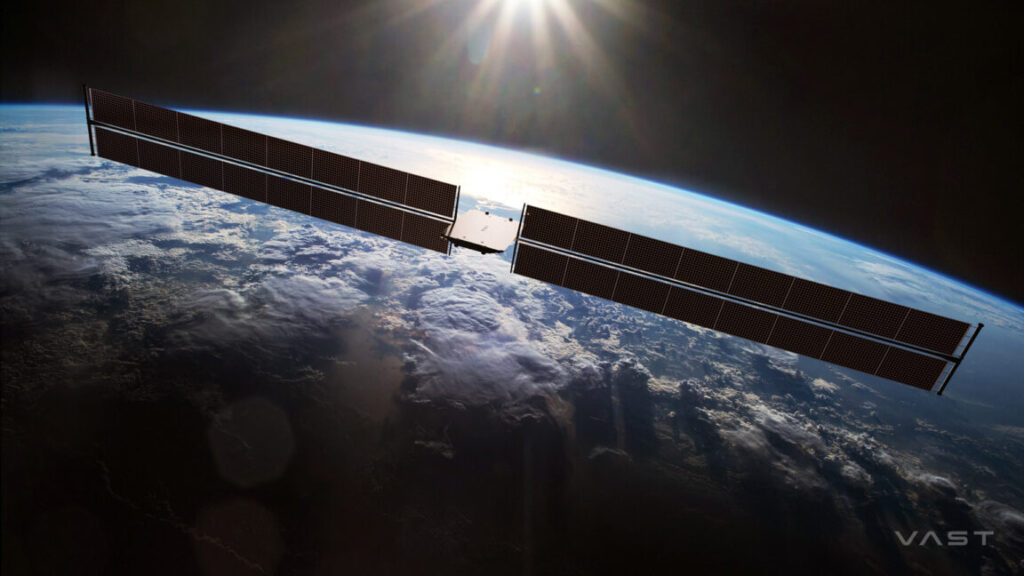
Table of Contents
From Habitats to Hardware
Vast Space, the Long Beach-based company currently racing to deploy the world’s first private space station, is diversifying its portfolio. Following the successful flight and de-orbit of a demonstration spacecraft in late 2023, the company has announced it will begin selling high-power satellite buses, leveraging the same propulsion and power systems developed for its ambitious Haven-1 project.
The move marks a strategic shift for Vast, transforming it from a niche habitation developer into a broader spacecraft manufacturer. According to CEO Max Haot, the decision to enter the satellite market was a matter of timing rather than a change in direction. “Every single successful space company is diversified in its products,” Haot said, suggesting that the internal capabilities built for the space station were too valuable to leave untapped.
The 15 kW Powerhouse
The centerpiece of this new venture is a 15 kW-class satellite bus. In the world of orbital hardware, a “bus” is the structural and functional backbone—providing the power, navigation, and thermal control—that allows a customer to plug in their specific payload, whether that be a camera, a radar array, or a communications antenna.
Vast’s offering is substantial: measuring roughly 3 meters by 4 meters with a total mass of 700 kg, the bus can support a payload of at least 350 kg. These units are designed for a five-year operational lifespan, with a flexible range of deployment from low-Earth orbit (LEO) all the way to lunar orbit.
One of the more intriguing aspects of the hardware is the integration of an NVIDIA Space-1 Vera Rubin Module. This addition is clearly aimed at the emerging trend of orbital edge computing, allowing the satellites to handle complex data inferencing and AI processing in space rather than beaming raw data back to Earth for analysis.
Competing in a Crowded Orbit
Vast is entering a market that has undergone a radical transformation over the last decade. For years, the sector was dominated by traditional defense contractors like Boeing, Lockheed Martin, and Northrop Grumman, who specialized in bespoke, high-cost satellites that often cost hundreds of millions of dollars.
However, the rise of SpaceX’s Falcon 9 and the proliferation of rideshare missions have democratized access to space. Simultaneously, the U.S. Space Development Agency has pivoted toward “proliferated constellations”—deploying hundreds of smaller, cheaper satellites rather than a few irreplaceable giants. This has paved the way for a new breed of modular satellite companies, including Rocket Lab, K2 Space, and True Anomaly.
Vast intends to carve out a niche by targeting “power-hungry” applications. While many new entrants focus on tiny, low-power cubesats, Vast is leaning into the medium-to-large segment. The company has already invested $1 billion in manufacturing facilities, including advanced clean rooms that can pivot between producing space station modules and satellite buses.
The Numbers Game
The scale of the opportunity is staggering. While the total number of satellites in orbit hovered around 4,000 for decades, that number has surged to roughly 14,000 over the last five years, driven largely by the Starlink onslaught. Some industry estimates suggest that in ten years, the number of orbital assets could reach 500,000.
While SpaceX, Amazon, and Blue Origin will likely dominate the bulk of that volume through their own proprietary constellations, Vast is eyeing the remaining commercial gap. Even a small percentage of that projected market would represent thousands of units for independent bus manufacturers.
Vast has already secured its first customer for four satellites, with an option to scale up to 200 units. The company is currently targeting a launch window of at least 10 satellites in the fourth quarter of 2027.