US Seafood Imports at Risk as Petition Targets Chinese Shark Finning Practices
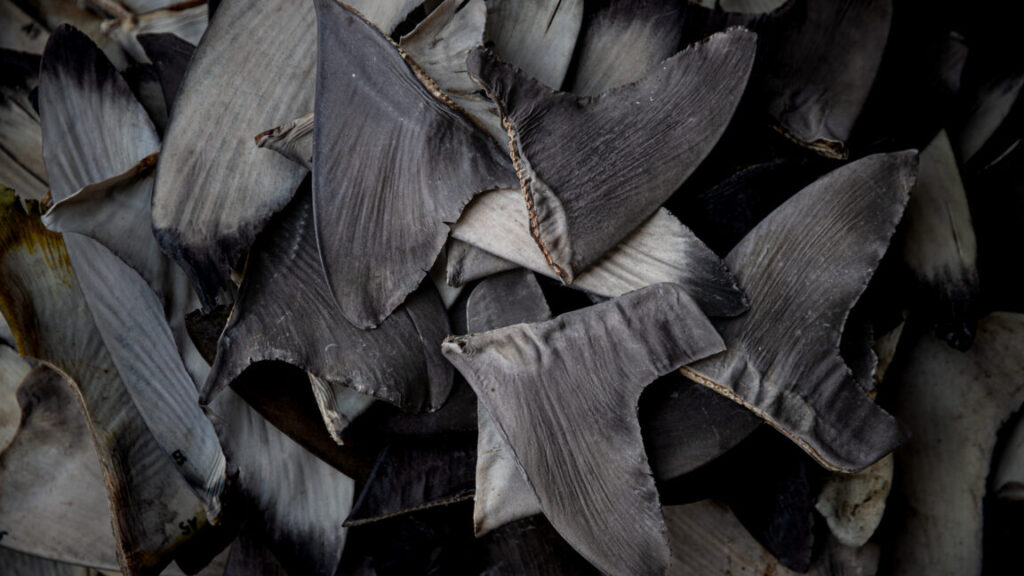
Table of Contents
A Legal Challenge to the High Seas
The global trade of shark fins, a bloody and lucrative industry often hidden from the eyes of port inspectors, may soon collide with U.S. trade policy. The Center for Biological Diversity, a prominent conservation nonprofit, has filed a formal petition urging the United States government to sanction China for its failure to adhere to American shark conservation standards.
At the heart of the dispute is the practice of shark finning—the act of slicing off a shark’s fins and discarding the carcass back into the ocean. While the U.S. has outlawed the practice since 2000, requiring that sharks be landed with fins naturally attached, China employs a different, and more permissive, regulatory framework. This gap in enforcement has become the focal point of a legal effort that could jeopardize up to $1.5 billion in Chinese seafood imports.
The ‘Math Game’ of Regulation
China claims to have banned finning, but the reality on the water is far more complex. Current Chinese regulations allow fisheries to remove fins provided they do not exceed a specific percentage—typically 5%—of the animal’s total body weight upon landing. Conservationists argue that this ratio-based system is fundamentally flawed and virtually impossible to police.
“Once the fins are separated from the bodies, inspectors have a nightmare of a time figuring out which fin belongs to which shark,” said Alex Olivera, a senior scientist at the Center for Biological Diversity. According to Olivera, this turns enforcement into a “math game” rather than a secure chain of custody, allowing protected species to be mixed in or carcasses to be dumped overboard before they ever reach a port.
The biological stakes are high. Shark populations have plummeted by more than 70% since 1970, with over a third of all shark and ray species currently threatened with extinction. Because these apex predators grow slowly and mature late, they are uniquely vulnerable to the scale of industrial fishing conducted by the Chinese fleet, the largest in the world.
Reports from the Deck
While official data from 2023 shows thousands of blue and shortfin mako sharks were discarded in the Pacific, independent investigations suggest the scale of the problem is far larger. Interviews conducted by the Environmental Justice Foundation (EJF) with migrant workers on Chinese distant-water vessels paint a grim picture of life on the rusted decks of the Indian and Pacific Oceans.
Roughly 80% of crew members interviewed in the Southwest Indian Ocean reported engaging in shark finning. In the Southeast Pacific, 60% of workers on Chinese squid jiggers witnessed sharks being returned to the water without their fins. One Indonesian fisher described a routine where entangled sharks were lifted, finned, and tossed back, while some crew members consumed the bone marrow on the spot and sun-dried the fins for sale.
Trade Implications and Diplomatic Friction
If the National Marine Fisheries Service determines that China has violated the U.S. Moratorium Protection Act, the executive branch could move to ban seafood imports from the region. This would mark a significant escalation in trade tensions, transforming an ecological concern into a major economic lever.
The Chinese Embassy in Washington has maintained a posture of general commitment to science-based conservation, stating that China follows international law and rigorous vessel monitoring. However, a spokesperson for the embassy noted they were “not familiar” with the specific petition filed by the Center for Biological Diversity and did not explicitly address the finning allegations or the threat of seafood sanctions.
Beyond the shock factor of finning, scientists like Heidy Martínez warn that the broader issue is one of commodification. While finning is the most visceral symptom, overfishing and accidental bycatch remain the primary drivers of species collapse. For many of these ancient animals, the current industrial fishing model is simply unsustainable.