Urban Bowerbirds are Trading Leaves for Plastic to Win Mating Games
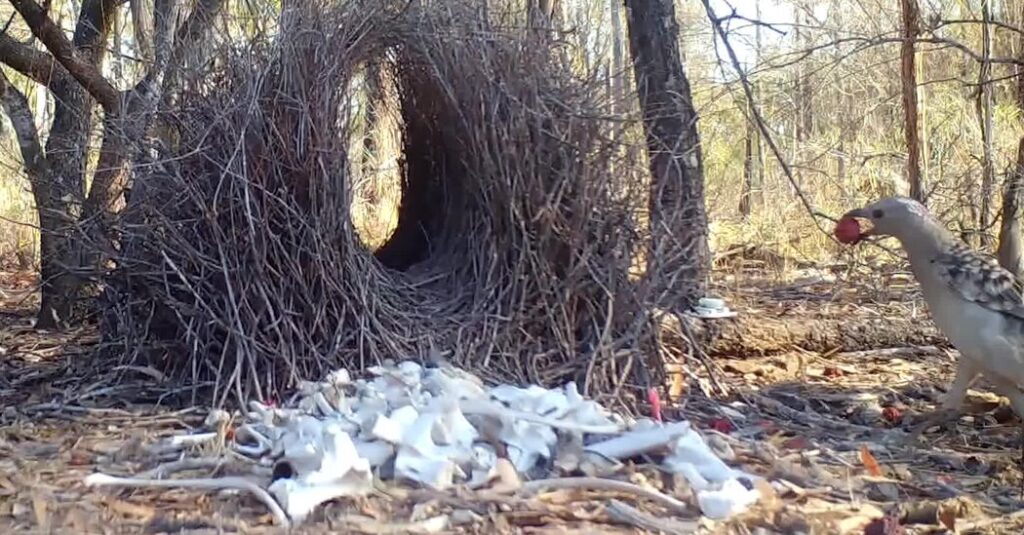
Table of Contents
The Architecture of Attraction
In the forests of northern Australia, the great bowerbird is an architect of obsession. The males spend months constructing intricate tunnels—bowers—that serve as high-stakes stages for courtship. These aren’t nests for raising young, but decadent thrones where females sit to evaluate a male’s fitness based on his dance moves and, crucially, his eye for interior design.
Traditionally, these birds curated collections of flowers, shells, bones, and meticulously selected grasses. However, as urban sprawl pushes deeper into their habitats, the definition of “fashionable” is shifting. A recent study published in Royal Society Open Science indicates that the birds inhabiting human settlements are fundamentally altering their aesthetic preferences, opting for synthetic materials over the biological markers of their ancestors.
Plastic Over Petals
The research, led by Caitlin Evans, a Ph.D. student at the University of Exeter, involved a detailed cataloging of 61 different bowers across Queensland. The team compared the decorating habits of birds living within the city limits of Townsville against those residing on the outskirts of a rural cattle ranch.
The contrast was stark. While rural birds still relied heavily on green leaves and seeds, urban bowerbirds have embraced the colorful debris of human consumption. The study found that urban birds don’t just use plastic because it’s available—they actively prefer it. When presented with a choice between natural and artificial accouterments, the urban population consistently leaned toward the synthetic.
The “statement pieces” in city bowers were far more eclectic than those in the wild. Researchers documented the use of bright plastic packaging, red wire, and even pieces of cash. One particularly striking trend was the use of homegrown hot peppers and vivid shards of green glass, which provided a level of color saturation that natural forest flora rarely matches.
The Evolutionary Trade-off
This shift in behavior highlights a fascinating, if concerning, intersection between biology and anthropogenic impact. For the bowerbird, the goal is maximum visual impact to signal strength and intelligence to a potential mate. In a concrete jungle, a piece of neon-colored plastic is a more powerful signal than a dull leaf.
However, this adaptation comes with inherent risks. The integration of plastics into the mating ritual introduces pollutants and potential choking hazards into the birds’ immediate environment. Moreover, the reliance on human waste creates a dependency on the specific types of refuse generated by urban centers, potentially decoupling the birds’ mating success from the health of their natural ecosystem.
Comparative Decor Preferences
| Environment | Primary Materials | Key “Statement” Items |
|---|---|---|
| Rural (Cattle Ranch) | Green leaves, seeds, shells | Natural bones, rare stones |
| Urban (Townsville) | Plastic packaging, glass, wire | Cash, hot peppers, neon plastics |
The findings suggest that the great bowerbird’s cognitive flexibility—the very trait that makes them such skilled decorators—is what allows them to pivot so quickly to human materials. As they incorporate our trash into their romantic displays, they provide a living ledger of the human footprint on the natural world.