U.S. and China Stabilize Global Energy Markets Amid Historic Middle East Oil Shock
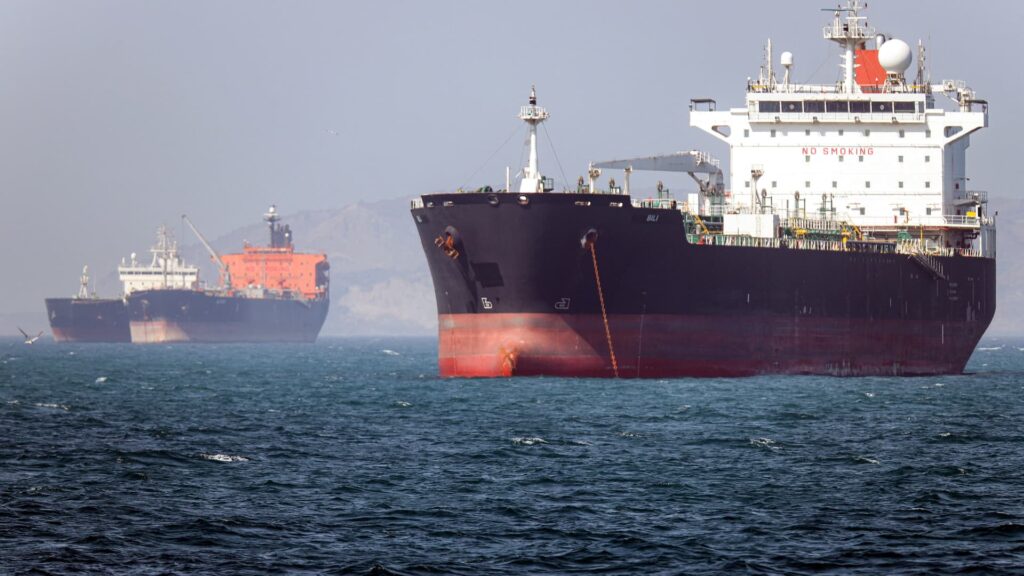
Table of Contents
U.S. and China Stabilize Global Energy Markets Amid Historic Middle East Oil Shock
The global economy is currently weathering the largest oil supply disruption in recorded history, as a blockade of the Strait of Hormuz has effectively severed 10 million barrels per day (bpd) of critical exports from the Persian Gulf.
Despite the severity of the crisis, international energy prices have remained surprisingly stable. While analysts initially feared a runaway surge, Brent crude closed just above $100 per barrel this Thursday—a figure notably lower than the peaks seen during the 2022 Russian invasion of Ukraine, despite a far more significant supply vacuum.
- Main Update: 10 million bpd lost due to Persian Gulf export disruptions.
- Key Feature: Coordinated (though separate) market adjustments by the U.S. and China.
- Supply Gap: 7.1 million bpd offset by U.S. export surges and Chinese import cuts.
- Price Action: Brent crude holding just above $100/barrel, avoiding the feared $120+ mark.
The Geopolitical Buffer: How the World’s Largest Economies Stepped In
The current stability of the energy market is not an accident of timing, but a result of aggressive maneuvers by the world’s two largest economies. According to the latest data from the International Energy Agency (IEA), the U.S. and China are effectively acting as a pressure-relief valve for the global economy.
The U.S., as the premier global oil producer, has ramped up exports from non-Middle Eastern sources by 3.5 million bpd. Simultaneously, China—the world’s largest oil importer—has executed a “remarkable” reduction in its imports, slashing demand by 3.6 million bpd. This combined effort has filled roughly 70% of the void left by the Gulf disruptions.
The Mechanics of Demand Destruction
China’s ability to suddenly reduce its oil intake by an amount equivalent to Japan’s entire daily consumption is a critical factor in preventing a price spiral. This shift is largely enabled by Beijing’s massive strategic stockpiles.
- Strategic Reserves: China held 1.4 billion barrels in reserve as of December 2025.
- Sustainability: Analysts suggest Beijing can sustain this reduced import level for several months.
- Market Impact: This reduction removes immediate upward pressure on Brent crude prices.
Comparing the Stabilization Efforts
While both nations are mitigating the shock, their methods and long-term sustainability differ significantly. The U.S. is pushing more volume into the market, while China is absorbing its own needs from reserves.
| Metric | United States Action | China Action |
|---|---|---|
| Market Role | Increased Export Volume | Decreased Import Volume |
| Volume Impact | +3.5 Million bpd | -3.6 Million bpd |
| Primary Source | Strategic Reserves/Inventories | World’s Largest Strategic Reserve |
| Sustainability | Under pressure; inventory-dependent | High; large reserve cushion |
Why This Matters for Global Inflation
If the U.S. and China had not intervened, energy prices likely would have breached the $120 per barrel threshold. In a globalized economy, energy costs act as a primary driver for inflation. A spike in oil prices leads to higher transportation costs, which cascades into higher grocery and consumer goods prices.
The recent meeting between President Donald Trump and President Xi Jinping in Beijing underscores the geopolitical necessity of this stability. Both leaders have officially agreed that the free flow of energy through the Strait of Hormuz is essential for global economic health. This diplomatic alignment is critical as the world looks toward EV tech and renewable transitions to reduce long-term reliance on these volatile corridors.
The Risk of ‘Inventory Exhaustion’
Despite the current calm, Morgan Stanley strategist Martijn Rats warns that the U.S. position is more precarious. Unlike China, which is drawing from a massive internal lake of oil, the U.S. export surge is heavily reliant on depleting its Strategic Petroleum Reserve (SPR).
With only 413 million barrels at the end of last year and a commitment to deploy 172 million barrels to fight the current shock, the U.S. has limited runway if the blockade persists into the next fiscal year.
What Happens Next
The immediate focus now shifts to the diplomatic effort to reopen the Strait of Hormuz. Energy Secretary Chris Wright has signaled that the U.S. remains committed to growing its domestic supply of refined products and expects China to increase its purchases of American oil in the coming months.
Whether this “natural energy trade” can replace the lost Gulf volumes permanently remains to be seen. For now, the world is relying on a fragile balance of strategic reserves and diplomatic agreements to keep the lights on and the prices manageable.
Source: International Energy Agency (IEA) update, White House official statement, and regulatory filings via U.S. Energy Information Administration.